





What are the conditions for parallel operation of dry type transformers?
Aug 15, 2025
Leave a message
Hey there! As a supplier of dry type transformers, I've had my fair share of questions about the parallel operation of these nifty devices. So, I thought I'd break it down and share what the conditions are for parallel operation of dry type transformers.
First off, let's understand why we might want to operate dry type transformers in parallel. There are a few good reasons. Sometimes, when the load demand exceeds the capacity of a single transformer, running multiple transformers in parallel can handle the extra load. It also provides redundancy. If one transformer goes down, the others can still keep the power flowing, reducing the chances of a complete power outage.
Now, onto the conditions for parallel operation.
1. Voltage Ratio
The voltage ratio of the transformers that are going to be operated in parallel must be the same. The voltage ratio is the ratio of the primary voltage to the secondary voltage. If the voltage ratios are different, there will be a circulating current between the transformers even when there is no load connected. This circulating current can cause unnecessary losses and overheating in the transformers.
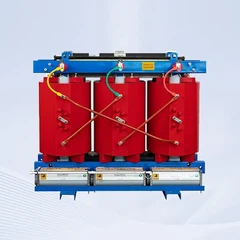
For example, if we have two dry type transformers, and one has a voltage ratio of 11kV to 0.4kV and the other has a slightly different ratio, say 11.2kV to 0.42kV, there will be a difference in the secondary voltages when they are connected in parallel. This voltage difference will drive a current between the transformers, which is not ideal. At our company, we offer high - quality transformers like the SCB13 5000KVA Three Phase Cast Resin Distribution Transformer Dry Type 11KV To 0.4KV with precise voltage ratios to ensure smooth parallel operation.


2. Percentage Impedance
The percentage impedance of the transformers should be the same or very close. The percentage impedance of a transformer is a measure of its internal resistance to the flow of current. When transformers are connected in parallel, the load is shared between them in proportion to their kVA ratings and inversely proportional to their percentage impedances.
If the percentage impedances are significantly different, one transformer may take more load than it can handle while the other may be under - loaded. This can lead to overheating of the over - loaded transformer and inefficient use of the under - loaded one. We make sure that our transformers, such as the 800 KVA 6.6 KV F Class Epoxy Resin Cast Dry Type Transformer, are designed with carefully matched percentage impedances for proper parallel operation.
3. Polarity
The polarity of the transformers must be the same. Polarity refers to the relative direction of the induced voltages in the primary and secondary windings of a transformer. If the polarities are not the same, when the transformers are connected in parallel, there will be a short - circuit condition.
For example, if the positive terminal of one transformer's secondary winding is connected to the negative terminal of another transformer's secondary winding, a large current will flow between them, which can damage the transformers and other electrical equipment in the circuit. We take great care during the manufacturing process to ensure that the polarity of our Three Phase Dry Type Transformer is correct and consistent.
4. Phase Sequence
The phase sequence of the transformers must be the same. In a three - phase system, the phase sequence refers to the order in which the voltages in the three phases reach their maximum values. If the phase sequences of two transformers are different, when they are connected in parallel, there will be a large circulating current between the transformers.
This circulating current can cause excessive heating and damage to the transformers. We test our three - phase dry type transformers thoroughly to ensure that the phase sequence is correct before they leave our factory.
5. Connection Group
The connection group of the transformers should be the same. The connection group indicates how the primary and secondary windings of a three - phase transformer are connected (e.g., delta - delta, star - star, delta - star, etc.). If the connection groups are different, there will be a phase difference between the secondary voltages of the transformers when they are connected in parallel.
This phase difference will result in a circulating current, which can be harmful to the transformers. We have a wide range of dry type transformers with different connection groups, and we can provide detailed information to our customers to ensure that they choose the right transformers for parallel operation.
Considerations for Practical Parallel Operation
In addition to the above technical conditions, there are some practical considerations for parallel operation of dry type transformers.
First, proper protection devices should be installed. Over - current protection, over - voltage protection, and differential protection are some of the common protection devices that can be used to protect the transformers from faults during parallel operation.
Second, regular maintenance and monitoring are essential. We recommend that our customers regularly check the temperature, insulation resistance, and other parameters of the transformers. This can help detect any potential problems early and prevent failures.
Also, when planning to operate transformers in parallel, it's important to consider the future expansion of the load. You may need to choose transformers with a slightly higher capacity than the current load demand to accommodate future growth.
Conclusion
In conclusion, parallel operation of dry type transformers can be a great solution for handling large loads and providing redundancy. However, it's crucial to ensure that the transformers meet the conditions of voltage ratio, percentage impedance, polarity, phase sequence, and connection group.
As a supplier of dry type transformers, we are committed to providing high - quality products that meet these requirements. If you're considering parallel operation of dry type transformers for your project, we'd love to help. Our team of experts can provide you with detailed technical advice and help you choose the right transformers for your needs. Don't hesitate to reach out to us to start a discussion about your procurement needs.
References
- Electrical Power Systems by J. R. Lucas
- Transformer Engineering: Design, Technology, and Diagnostics by T. A. Lipo
Send Inquiry