Why Choose Us
Professional Competence
Products cover 6kV/11kV/22kV/35kV, 50kVA-25000kVA dry-type/oil-immersed types, fulfilling wholesale procurement needs in one stop without multiple supplier coordination. Leveraging proprietary Corten weathering steel technology ensures more stable operation and extended equipment lifespan.
Comprehensive Quality Service
Which continuously satisfy different needs of customer around the world in the steel supply chain area. Professional sales team, providing customers with first-class services; strict purchasing and quality inspection team, carefully selecting high-quality raw materials; advanced scientific and technical team to improve production and reduce costs for customers; excellent design and processing team, carefully crafted and refined; intimate shipping logistics team protecting product transportation.
Excellent Service Team
GNEE with Professional team, Quickly response, Short delivery time, Best competitive price, Best service.
Competitive Pricing
We strive to maintain competitive pricing, offering customers audio and video accessories that deliver high value for their investment.

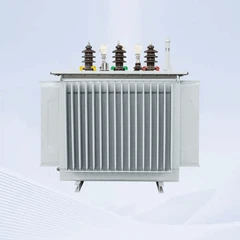
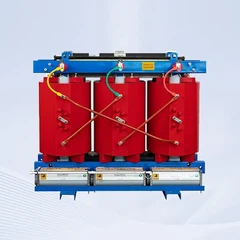
Differences between dry type and Liquid transformer
Safety Requirements and Environmental Considerations
Since dry type power transformers do not use harmful liquids or fluids to function, they do not release harmful gases into the environment. They have no flammable fluid, so low risk of exploding or catching fire.dry transformers are the most preferred for indoor use due to their reliability.
You can easily find them in places such as schools, hospitals, and other public facilities.
When dealing with liquid transformers you need to exercise caution as they can easily explode or catch fire. They are also not good for the environment, making them unsafe for indoor use.
If you have to get a liquid transformer, consider getting one with silicone, or even hydrocarbons for they're nontoxic.
Maintenance
Since dry transformers are air-cooled, they are easy to maintain. They only need a standard visual inspection, depending on your unit and how often you use it. Also, these transformers are resistant to contamination and building up dirt.
Liquid transformers,require more maintenance.apart from inspecting and tightening the connections as you would a dry transformer, you need to check the liquid.you will have to constantly check the gauges and any signs of leaks.you might have to take a liquid sample for dissolved gas analysis.
Equipment Size Requirements and Capacity
Dry type power transformers come with a larger footprint, compared to their liquid counterparts.with an air-cooled device, you will need a larger electrical clearance for easy air circulation.dry type transformer sizes and ratings are limited, making them suitable for small-medium voltage needs.
Liquid transformers come with a smaller footprint, but they equally occupy a lot of space, and maybe more than the dry transformer because of the radiators and flange ends. But they can handle high voltage capacities.
What are the Types of Dry Type Transformers
Cast Resin Dry Type Transformer (CRT)
A cast resin dry type transformer (CRT) is a type of transformer that uses epoxy resin to encapsulate its primary and secondary windings. This protects the windings from moisture, dust, corrosion, and other environmental factors that can affect their insulation and performance.
A CRT is suitable for high humidity areas, indoor installations, and fire-risk areas because it is non-hygroscopic, non-inflammable, and maintenance-free. It can also withstand overloads, partial discharges, and low losses, resulting in high efficiency and long service life.
A CRT is available in ratings from 25 kVA to 12,500 kVA, with insulation class of F (90°C temperature rise).
Vacuum Pressure Impregnated Transformer (VPI)
A vacuum pressure impregnated transformer (VPI) is a type of transformer that uses class H polyester resin to impregnate its windings under vacuum and pressure. This eliminates any air gaps or voids in the insulation, enhancing its mechanical strength, dielectric strength, and thermal stability.
A VPI is suitable for outdoor installations, seismic events, and temperature fluctuations because it has a robust construction, a moisture-resistant enclosure, and a low thermal expansion coefficient. It also has easy maintenance, low fire risk, and high resistance to short circuit currents.
A VPI is available in ratings from 5 kVA to 30 MVA, with insulation class of F (155°C) or H (180°C), and protection up to IP56.

What are the Important Factors to Design a Dry Type Transformer
Choice of insulation type: The insulation type determines the temperature rating, dielectric strength, mechanical strength, and thermal shock resistance of the transformer. Generally, F and H-class insulation materials are used for dry-type transformers because they can withstand high temperatures (up to 155°C and 180°C, respectively) and have good electrical and mechanical properties. Common insulation materials include varnish, epoxy resin, polyester resin, etc.
Selection of winding material: The winding material determines the conductivity, resistance, loss, and mechanical strength of the transformer. Generally, copper and aluminum are used as winding materials for dry-type transformers because they have high conductivity and low cost. Copper has better conductivity and mechanical strength than aluminum, but it is more expensive and heavier. For the same current rating, copper requires less cross-section area than aluminum.
Selection of core material with low hysteresis loss: The core material determines the magnetic flux density, permeability, hysteresis loss, and eddy current loss of the transformer. The core material should have high permeability and low hysteresis loss to reduce the no-load loss and improve the efficiency of the transformer. Common core materials include silicon steel, cold rolled grain oriented steel (CRGO), amorphous metal, etc.
Regulation: The regulation of a transformer is the ratio of the voltage drop at full load to the no-load voltage. The regulation indicates the ability of the transformer to maintain a constant output voltage under varying load conditions. The regulation depends on the impedance and resistance of the transformer. A low impedance and resistance result in low regulation and better voltage regulation. The leakage reactance of a dry-type transformer should be kept within 2% during design to achieve low regulation.
The insulation class and quality of the dry-type transformer should be chosen to withstand high temperatures and harsh environments without degrading. The temperature rise of the transformer should not exceed the limit specified by the insulation class.
Losses: The losses of a transformer are the difference between the input power and the output power. The losses consist of no-load losses and load losses. The no-load losses are independent of the load and include core loss and eddy current loss. The load losses are proportional to the load and include copper loss and stray loss. The losses affect the efficiency, heating, and cooling of the transformer. The core material, winding material, insulation material, and design parameters should be selected to minimize the losses and maximize the efficiency of the dry-type transformer.
Overloading: The overloading of a transformer is the condition when the transformer operates beyond its rated capacity or temperature limit. The overloading causes overheating, insulation breakdown, short circuits, or fire in the transformer. The overloading can be caused by excessive load demand, harmonics, faults, or ambient temperature. The dry-type transformer should be designed with sufficient margin to handle overloads without damaging its components or performance. The dry-type transformer should also be equipped with a fan-cooling system or an air-conditioning system to dissipate the heat generated by overloads.
K-factor: The K-factor is a measure of the ability of a transformer to withstand the heat generated by non-sinusoidal currents in its windings. Non-sinusoidal currents are caused by various electronic devices that produce harmonics in the voltage and current waveforms. Harmonics increase the losses, heating, and distortion of the transformer. A high K-factor indicates that the transformer can handle higher levels of harmonics without overheating or degrading. The dry-type transformer should be designed with a high K-factor to provide long-lasting life and reliable performance in applications that involve non-sinusoidal currents.
What industries are dry-type transformers used in
Mineral Mining
Mineral mining involves highly flammable and explosive minerals (coal, oil, natural gas) that require high safety for transformers.safety is the primary consideration, followed by whether transformers can operate, cool, and maintain normally in harsh environments (high and low temperatures, high temperatures, and dust)
Energy - Power Generation
After the power station generates electricity, it has to go through a long distance to transport the electricity to various regions for supply. During transmission, the high current creates a high heating effect, which melts the wire and causes increased resistive losses. At this time, the current needs to be transmitted through the step-up transformer to increase the voltage and reduce the current, keeping the power constant. High-voltage transmission has higher efficiency and saves operating costs.Choosing a prefabricated compact substation is a good solution.
Environmental factors must first be considered.when photovoltaic power generation is carried out in the desert, in order to avoid the dry-type transformer being completely exposed outdoors, it will be affected by environmental factors such as high temperature, drought, and dust,Equipped with metal housing according to protection level.
Fully considering the harsh climate and environmental conditions during operation in the wind turbine cabin, as well as the limitations of cabin size, dry type transformers that are easy to install, reliable, maintenance free, corrosion resistant, and vibration resistant are the primary considerations
Due to the fact that dry-type transformers can operate in humid environments, we need to consider waterproofing, moisture resistance, air circulation, and other aspects of the transformer. In order to avoid direct contact with the transformer by personnel in humid working environments, a transformer shell must be equipped.

How Do You Protect a Dry Transformer
Dry transformers can make use of different shells and enclosures to protect them from the environment and from tampering.it will depend on the environmental aspect and the transformer's size and power rating.
The IP-20 protective casing prevents the entry of foreign objects bigger than 12 millimeters in diameter. This level of protection provides solid safety for the live parts inside the dry transformer.
The most common type of enclosure is an IP-45 enclosure. This type of enclosure is made of sheet steel and fitted with a door that seals the transformer inside. The IP-45 designation means that the enclosure is dust-tight and protected against water jets.
If you're installing the dry transformer outdoors, then the IP-23 and IP-54 levels of protection are suitable since they are ideal for use in damp or wet conditions.these protective enclosures prevent water ingress which could cause damage to the transformer.
The IP-65 level of protection is the highest, and it's used in hostile environments. This type of enclosure is made of stainless steel and it's fitted with a door that seals the transformer inside.the IP-65 designation means that the enclosure is dust-tight and protected against water jets.
transformer Workshop equipment display
Oil transformation workshop
Dry transformation workshop
Intelligent automatic bending machine
Intelligent laser cutting machine
Fully automatic laminating unit
Fully automatic laminating unit
types of transformer from GNEE
Get Transformer Order specification
GNEE Transformer Order specification
|
When choosing our company's products, please provide the following data to better serve you.
|
|
Demander
|
|
Demander:
|
Telephonemethods:
|
Fax:
|
|
Project technical leader:
|
Telephonemethods:
|
Mailbox:
|
|
Transformer type selection
|
|
□Dry transformer
{□SC(B) Epoxy resin □SC(B) Non-encapsulated}
□American Box(ZGS)
{□Terminal type(-Z-) □Ring network type(-H-)}
□European Box change(YBM){□ Dry change □Oil change}
|
□ Oil-immersed transformer{□ Fully sealed(-M-) □Oil-bearing pillow}
□Amorphous alloy transformer{□Dry amorphous □ Oil amorphous}
□ Special transformer{Rectifier, Furnace, Mine, Etc}
|
Transformer basic data selection
|
Country of use:
|
|
|
Phase number:
|
□Three-phase(S conventional) □ Monophase □Other( )
|
|
Frequency:
|
□50Hz(conventional) □60Hz □ Other( )
|
|
Transformer oil:
|
□#25(conventional) □#45(minimum temperature below-25℃)
|
|
Rated capacity:
|
□( )kVA Conditions of use □Outdoor type □Indoor type
|
|
Altitude:
|
□Less than 1000m(conventional) □1000-2000m □3000m以上 over
|
|
Rated voltage(High voltage)
|
□6kV □10kV □20kV □35kV □66kV □110kV □220kV □Other( )
|
|
Rated voltage(Low pressure)
|
□0.4kV □0.66kV □10kV □10.5kV □35kV □其他 Other( )
|
|
Connected group
|
□Dyn11(conventional) □Yyn0 □YNd11 □li0(Single-phase) □Other( )
|
|
Impedance(%):
|
□4% □4.5% □5.5% □6% □6.5% □7.5% □8% □Other( )
|
|
Voltage regulation mode
|
□Voltage regulation without excitation(conventional) □On-load voltage regulation(Z)
|
|
Voltage regulation range
|
□±2*2.5% □±5% □±3*2.5% □Other( )
|
Transformer accessory selection
|
□Fan □Temperature control{□ Common □With 485 computer interface}
□Dry case{□ Ordinary steel sheet □Aluminum alloy » Stainless steel}
□Protection level of dry case(□IP20(Conventional) □IP( )}
□Dry case height requirements{□None □Requirements[ ]}
□ Cable out mode of the dry variable shell
{□ Up-and-out □ Up-and-down □Down-in/DOWN-out □Down-in/UP-out □Down-in/DOWN-out □Down-in/ side-out [□Left □ Right-out]}
|
|
Note:
1. (Dry change requirements s 100kVA transformer does not include fans, such as fans, need to be charged
2. (Oil changes <630kVA transformer does not include temperature control, gas relay, if necessary, need to increase the fee)
|
Other special requirements(additional charges apply below)
|
Dry transformer
|
□Shell and bottom plate{□Ordinary □Fully sealed} □Travel switch □Magnetic lo
□Zero sequence transformer □Copper bar to the low voltage cabinet
□Protective mesh □Lighting □100kVA or less Fan □Shock absorber
|
|
Oil-immersed transformer
|
□No.45 oil for non-low temperature areas □Designated brand on-load voltage regulator
□400kVA and below low voltage outlet OABC phase with wiring terminals
□630kVA or below requires temperature control
□800kVA or below Low voltage outlet phase 0 requires wiring terminals
□630kVA and below must be equipped with gas relay
|
GNEE TRANSFORMER Industrial Layout
Middle East: Saudi Arabia, UAE, Iraq, Oman, Kuwait (Turkey—transformer accessories permitted)
Africa: gypt, Ethiopia, Angola, Botswana, Burundi, Cape Verde, Congo, Guinea, Ghana, Gabon, Zimbabwe, Cameroon, Kenya, Rwanda, Malawi, Mauritius, Mauritania, Mozambique, South Africa, Nigeria, Somalia, Chad, Central Africa
Europe: Bosnia and Herzegovina, Germany, France, United Kingdom, Belgium, Italy,Bulgaria, North Macedonia, Finland, Norway, Ukraine, Greece, Hungary,
Asia: China, Russia, Ukraine, Kazakhstan, Turkmenistan, Kyrgyzstan, Uzbekistan, Tajikistan, Vietnam, Indonesia, Malaysia, Thailand, Philippines, Cambodia, Myanmar, Mongolia, Taiwan Province, Japan, Bangladesh, Sri Lanka, Lebanon, Saudi Arabia, Turkey, Armenia, Iraq, Iran
North America: Aruba, Panama, Dominican Republic, Costa Rica, Honduras, Caribbean region,Canada, United States, Mexico, El Salvador, Guatemala, Jamaica
South America: Argentina, Paraguay, Ecuador, Colombia, Guyana, Venezuela, Uruguay, Chile
Oceania: Australia, Papua New Guinea. Fiji
Q: What is the difference between dry type and oil type transformer?
A: As the cooling medium, dry type transformer uses air whereas the oil type uses oil
Q: How do you test a dry-type transformer?
A: The transformer testing can be done by measuring the resistance of winding, voltage ratio, phase displacement, load loss, etc
Q: Which oil is filled in a transformer?
A: Insulating oils are filled due to high insulating properties.
Q: Why is the oil used in a transformer?
A: Transformer oil is used for protecting the core & winding of the transformer because they are completely immersed within the oil
Q: What is DGPT in a transformer?
A: DGPT is the detection of gas, pressure & temperature for the transformers.
Q: What is a 2000 KVA Dry Type Transformer?
A: A 2,000 kVA dry type transformer is a type of transformer that uses air as a cooling medium instead of liquid. At the same time, it also uses a power rating of 2,000 kVA or higher. These types of transformers are mostly used in industrial applications where there is a need for high power capacity.
Q: What is a Three-Phase Dry-Type Transformer?
A: A three-phase dry-type transformer is a self-cooled transformer that uses two windings and is available in a wide range of primary and secondary voltage combinations. These units are mostly used in industrial applications where there is a need for high power capacity. In addition, since it's a three-phase transformer, it works on a three-phase power supply, with both primary and secondary windings having three total sets of windings.
Q: What is a 33KV Dry Type Transformer?
A: A 33kV dry type transformer is a high-voltage device known as an epoxy resin-cast transformer. Unlike traditional dry-type transformers, it uses epoxy resin as an insulating material. The higher and lower voltage windings are made from copper foil (strip) and cooled with epoxy resin. This type of transformer is mostly used in outdoor applications where there is a need for high power capacity.
Q: What is a 500 KVA Dry Type Transformer?
A: A 500 kVA dry type transformer is a large, expensive electrical device that converts high-voltage electricity into lower voltages. These devices are usually found in power plants and substations, where they are used to step down the voltage of electricity before it is sent to homes and businesses.
Q: What's the Efficiency of Dry Type Transformers?
A: The energy efficiency of dry-type transformers is available in 35% nominal load and 50% nominal load. The efficiency of a transformer at 35% nominal load is typically 99.5%. The efficiency of a transformer at 50% nominal load is typically 99%.
Q: What is a 1000 KVA Dry Type Transformer?
A: A 1,000 kVA dry type transformer is a large, expensive electrical device that converts high-voltage electricity into lower voltages. These devices are usually found in power plants and substations, where they are used to step down the voltage of electricity before it is sent to homes and businesses.
Q: What is the 2000 KVA Dry Type Transformer Price?
A: A typical 2,000 KVA Dry type transformer has an average price of $24,425.52. However, the price can vary depending on the features and specifications of the transformer. That's why most transformer manufacturers like us at Daelim offer transformers on a quote basis. This way, the customer can get a more accurate price for their specific needs.
Q: How Are Dry Transformers Cooled?
A: Dry-type transformers are cooled in one of two ways: self-cooling or forced cooling.
Self-cooling is the most common cooling method, and it's used for small to medium-sized transformers. The surrounding air cools the transformer, so they are often fitted with fans to circulate the air.
Forced cooling is used for larger transformers that generate more heat. The transformer is cooled by a liquid, typically water or oil. The liquid is circulated to the transformer to remove the heat.
Q: Can Dry Type Transformers Be Used Outside?
A: Yes! Dry-type transformers can be used both indoors and outdoors because of the following features:
It's non-flammable
It's not hygroscopic
It can be fitted inside an IP-45 enclosure
Q: What are the faults of dry type transformers?
A: Vibration and Mechanical Damage: External vibration or impacts can damage the insulation structure inside the transformer, affecting its performance. Electrical Isolation Faults: Electrical isolation issues can result in current or arcing between different voltage levels, damaging the insulation.
Q: What are the requirements for a dry type transformer?
A: Dry type transformers must be installed in a level upright position in an area with free air circulation. The minimum required clearances from adjacent equipment and structures are specified in NFPA 60 (NEC Article 450.21.)
Q: Can you overload a dry type transformer?
A: With a winding temperature rise of 80°C rise and a 220°C insulation system a Dry Type Transformer (VPI) can be overloaded continuously by 30% without any shorting of life expectancy. Refer to Table IV. For information on Short Time overload capability refer to IEEE C57.
Q: What is the maximum capacity of a dry type transformer?
A: Transformer can be installed close to the load center without costly vaults, dikes and special ventilation. Voltage Range: Up to 35kV(including dual voltages)
Capacity: 30 to 40000kVA(AN)
Taps: ±2x2.
Q: What is the minimum clearance around a dry type transformer?
A: Minimum installation clearances are stated on the nameplate of all transformers. The NECT requires a minimum of 36 inches clearance in front of the transformer. Care should be taken to avoid restricting the airflow through the bottom of the transformer.
Q: What is the temperature class of a dry type transformer?
A: 220°C (Class R). 180°C (Class H), 155°C (Class F). 130°C (Class B).