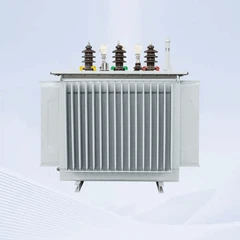
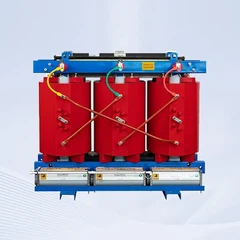

What is Substation Transformer


Substation transformers are designed for installation in large or small three-phase transmission and distribution power systems. The installation location is common and must be on the indoor or outdoor concrete base, which needs to be designed by the power engineer in the early stage of project planning.


Benefits of Substation Transformer
 
01/

Improved Efficiency
Substation transformers can help to improve the overall efficiency of an electrical distribution system. This is because they can convert high-voltage electricity into lower voltages, which can then be used more effectively by businesses.substation transformers can also help to regulate the flow of electricity within a system, which can further improve efficiency levels.

02/

Increased Reliability
Another benefit that businesses can enjoy by investing in substation transformer technology is increased reliability. This is because these transformers are designed to operate reliably even under demanding conditions.substation transformers are often equipped with features that allow them to self-monitor and diagnose any potential problems, which helps to ensure that they always remain operational.

03/

Enhanced Safety
Another key benefit of substation transformer technology is enhanced safety levels. This is because these transformers are designed with safety in mind and feature several safety-enhancing features. many substation transformers are equipped with overcurrent protection devices that prevent dangerous overloads from occurring.these transformers also typically feature enclosures that protect against fire and electrical hazards.

04/

Reduced Maintenance Costs
Businesses can also enjoy reduced maintenance costs when investing in substation transformer technology. This is because the transformers generally require less upkeep and maintenance than other types of transformers.their relatively simple design makes them easier to maintain and repair.

  • 750 KVA Skid Mounted Transformer

    750 kVA Skid mounted transformer Primary Voltage Ratings: 11 kVSecondary Voltage Ratings: 433VPower Rating: 750 kVAStandards: AS/NZS 60076, IEC 60076

  • 1000kVA Skid Mounted Substation Transformer

    1 MVA substation transformerPrimary Voltage Ratings: 11 kVSecondary Voltage Ratings: 433VH.V. TAP RANGE: 10175V-11275VPower Rating: 1000 kVA (1 MVA)Standards: AS/NZS 60076, IEC 60076

  • 4000 KVA Substation Transformer

    4000 kVA (4 MVA) substation transformer has a primary voltage of 25kV and a secondary voltage of 600V. It has a capacity of 3000 kVA for ONAN (Oil Natural Air Natural Cooling) cooling and 4000 kVA

  • 4500 KVA Three-phase Substation Transformer

    The 4500 KVA Three-phase Substation Transformer features a primary voltage of three-phase 11,000V Delta and a secondary voltage of three-phase 1000Y. It utilizes the KNAN cooling method with

  • 10.5 MVA three-phase oil immersed substation transformer

    10.5 MVA substation transformer Primary Voltage Ratings: 13.8 kVSecondary Voltage Ratings: 2.4 kVPower Rating: 7.5MVA, 9.375MVA, 10.5 MVA

  • 3150 kVA oil immersed substation transformer

    3150 kVA oil immersed substation transformerPrimary Voltage Ratings: 13800V DeltaSecondary Voltage Ratings: 480v WyePower Rating: 3.15 MVACertificate: UL/CEStandards: IEC 60076

  • 3000 kVA three-phase oil-filled substation transformer

    3000 kVA substation transformerPrimary Voltage Ratings: 11kV , 44 kV, 4.16 kV, 13.8 kV, 24.94 kV, 34.5 kVSecondary Voltage Ratings: 415V, 600v, 400V, 480vPower Rating: 3000 kVA, 3 MVACONNECTION TYPE:

  • 15 MVA oil immersed seal type power transformer

    15 MVA oil immersed seal type power transformerPrimary Voltage Ratings: 34.5kVSecondary Voltage Ratings: 12.47kVPower Rating: ONAN 15 MVA & ONAF 20MVACertificate: ULStandards: IEEE

  • 300 KVA three-phase oil-filled power transformer

    The 300 kVA three-phase oil-filled power transformer, features a primary voltage of three-phase 27,600V Delta and a secondary voltage of three-phase 480GrdY/277V.Constructed with copper winding

  • 20 MVA Oil Immersed Substation Transformer

    20 MVA Oil Immersed Substation TransformerPrimary Voltage Ratings: 24.94kV (other you need)Secondary Voltage Ratings: 4.16kV (other you need)Power Rating: 20 MVAStandards: IEEE C57, CSACertificate: UL

  • 1000 kVA three-phase oil-filled substation transformer

    With a capacity rating of 1000 KVA (1 MVA), this power transformer boasts a primary voltage of three-phase 13800V Delta and a secondary voltage of three-phase 600GrdY/347V. With low operating costs,

  • 7500 kVA oil immersed substation transformer

    Operating at a primary voltage of 27.6kV and a secondary voltage of 4.16kV, the 7500 kVA substation transformer employs the ONAN (Oil Natural Air Natural) cooling method to maintain optimal operating

First 1234567 Last

Why Choose Us


Professional Competence
GNEE are professional one-stop solution for steel products of China. Self-designed Corten steel design and rust technology have reached the world average technical level.


Comprehensive Quality Service
Which continuously satisfy different needs of customer around the world in the steel supply chain area. Professional sales team, providing customers with first-class services; strict purchasing and quality inspection team, carefully selecting high-quality raw materials; advanced scientific and technical team to improve production and reduce costs for customers; excellent design and processing team, carefully crafted and refined; intimate shipping logistics team protecting product transportation.


Excellent Service Team
GNEE with Professional team, Quickly response, Short delivery time, Best competitive price, Best service.


Competitive Pricing
We strive to maintain competitive pricing, offering customers audio and video accessories that deliver high value for their investment.


S13 transformer 1


Different Types of Substation Transformers

Air-cooled transformers: Air-cooled transformers are typically used in smaller applications where cooling is not as big of a concern. These units rely on natural convection to keep the transformer cool, making them a more cost-effective option.


Oil-cooled transformers: Oil-cooled transformers are often used in larger applications where greater cooling is required. These units use oil to transfer heat away from the transformer, making them more efficient than air-cooled models.


Dry-type transformers: Dry-type transformers do not use oil for cooling, making them a safer option for use in environments where there is a risk of fire. These units rely on air or water cooling to keep the transformer at a safe temperature.


Phase shifting transformers: Phase shifting transformers are used to control the phase shift between two AC circuits. This type of transformer can be used to improve power flow and voltage stability in a power system.


Earthing transformers: Earthing transformers are used to provide an electrical connection between a metallic structure and the earth (ground). This type of transformer is often used in conjunction with lightning protection systems.

How does a substation transformer work


The main power source of the transformer in the substation is to rely on the input alternating current in the distribution network to work. A simple understanding of the principle is that the transformer oil in the substation is composed of two adjacent winding coils. A magnetic field occurs when a voltage floats across one of the winding coils. The magnetic field that occurs here couples to the immediately adjacent coil winding, receives a voltage and reacts to it.
The ratio of the induced voltage of the substation transformer to the loop of the winding coil becomes the forward proportional criterion. For example, when 10,000 loops are transmitted, 1,000 loops will be generated in the distribution test, and the voltage generated by the distribution test will be reduced by 10 times. This principle is well understood, so we can pressurize or depressurize according to the needs of using electricity, so that the balance performance of each part of the power grid can be well met, and the safety and economy of each circuit can be ensured.
Substation transformers also include equipment that controls the entire transmission and distribution network.the circuit breaker transformer is a small transformer, which is mainly used to monitor the safety performance and detect the current and power. In this way, the safe operation of the entire substation equipment can be achieved, complementing the substation transformers. Depending on the transmission and distribution losses, the voltage on the grid can swing outside the acceptable range.
In fact, in many perspectives and aspects, the power system and even the substation transformer is a huge equipment system, which can be related to the life of each of us. Whether it is basic equipment or everyone's daily electricity consumption, electricity will be used, especially reliable and safe electricity. Although the size of the use site, and the voltage level of the power used are different.
Each substation transformer is unique and customized. With the intelligentization of power equipment and the rapid development of various sustainable and environmentally friendly energy generation, it is believed that substation transformers will bring more challenges in our future life. And the possibility of developing more security and reliability.


How much does a substation transformer weight


(KVA)

Rated

Power


(KV)

High

Voltage


(V)

Low

Voltage

Connection

Symbol

(%)

Short

Circuit

Impendence

(W)

Loss

Refernence

Dimension

(W*H*D)

mm

Reference

Weight

kg

(W)

No-load Loss

(W)

On-load Loss

800

4.16

12.00

12.47

13.2

13.8

14.4

23.0

24.94

34.5

34.8 44 or others

208/120

415/240

480/277

400

600

12000

12470

13200

13800

or others

Dyn1

Ynyn0

Dyn11

Dd0

Ynd11

or

others

2.7

3.1

4.35

5.75

6.0

980

9350

1060*1500*1780

2050

1000

1160

11500

1085*1570*1800

2450

1250

1380

13900

1160*1610*1890

2900

1600

1660

16600

1190*1630*1950

3400

2000

2030

18300

1260*1700*2090

4100

2500

2450

19600

1150*2150*2250

4750

3000

3240

26500

1900*2600*2150

6500

5000

4500

27000

2500*2210*3180

9500

7500

7200

32000

3660*3100*5100

13600

10000

8500

35500

3830*2640*2216

15800


The three components of a electrical transformer

The magnetic flux is produced by the primary winding of the transformer when it is connected to the power supply.
The core of the magnetic transformer. The magnetic flux generated by the primary winding will pass through the secondary coil and create a closed magnetic circuit with this low reluctance path.
Transformer secondary coil. The magnetic flux generated by the primary winding, transmitted through the core, will connect with the secondary coil. The windings are wound around the same core and provide the required output transformer.

17373674315901

The Considerations for Buying Substation Transformer


Determine Your Substation Transformer Requirements: Identify the specifications you need, including voltage, capacity, and standard features (bushing design, accessories requirements).


Understand Local Standards and Regulations: Ensure the substation transformer compliance with relevant industry standards and regulations in your region.


Research Reliable Substation Transformer Manufacturers: Look for reputable substation transformer manufacturers with a track record of producing high-quality and reliable transformers. Local project application cases are valuable references.


Check The Substation Transformer Certifications: Verify necessary certifications of substation transformers, such as UL listing, CSA, ISO 9001, or other relevant industry certifications.


Consider The Substation Transformer Energy Efficiency: Evaluate the substation transformer's energy efficiency, considering factors like no-load and load losses.


Explore New and Used Substation Transformers: Decide based on your budget and requirements. For used substation transformers, choose a reputable local supplier and pay attention to warranty and maintenance terms.


Evaluate The Substation Transformer Maintenance Requirements: Understand maintenance needs and consider the long-term operational costs of the substation transformers.


Request Substation Transformer Quotes: Obtain quotes from multiple substation transformer manufacturers to compare prices and terms.


Review Warranty and Support Of The Substation Transformer: Check provided warranties and inquire about available customer support and service options.


Consider Customization: As substation transformers are usually customized, assess the manufacturer's design and production experience and their ability to provide customization services.


Logistics and Delivery: Consider logistics and delivery deadlines to ensure the substation transformer's timely transportation and installation.


Installation and Commissioning: Ensure the manufacturer provides the necessary installation and debugging documents for the transformer. If you lack an installation team, seek local professionals.


1737367883849


Design of a unit substation transformer

Primary High-Voltage Equipment: This includes the incoming primary equipment section, which receives high-voltage electricity from the transmission lines and contains circuit breakers, fusible switches, and metering components.
Power Transformer: The transformer is the primary component of the unit substation assembly. It steps down the high incoming voltage to a lower voltage suitable for local distribution. The type of transformer technology to be used depends on the specific requirements of the unit substation.
Secondary Medium-Voltage Equipment: This section of the unit substation comprises enclosed secondary equipment that receives the stepped-down voltage from the transformer. It includes switchgear, protective devices, and other control equipment.
Enclosure and Cooling System: The components of a unit substation transformer are housed within an enclosure that protects against environmental factors and enhances safety. The enclosure is typically designed to be compact and weather-resistant. Cooling systems, such as fans or radiators, are integrated to maintain optimal operating temperatures of the transformer.
Control, Monitoring, and Protection Systems: Unit substation transformers may include advanced control, monitoring, and protection systems to ensure reliable and safe operation. These systems help monitor voltage levels, temperature, and fault conditions, allowing prompt response and preventive maintenance.


Substation Transformer Sizes


Substation Transformer Sizes

KVA

Width(mm)

Length(mm)

Height(mm)

500

1730

2300

1510

750

1850

1845

1465

1000

2211

1420

1470

1200

2450

1850

1820

1500

1260

1850

1780

2000

1260

2090

1700

2500

2400

2200

2060

3000

1600

2330

1920

3000/4000

2250

2850

1980

3750

2240

2650

2700

4000

2150

3250

2290

5000

3100

3715

3055

6300

3520

2820

3470

6800

3400

2670

3400

7500

3350

3290

2270

12000

3690

3200

3650

10000/12500

2900

3800

3200

18/24MVA

3770

4900

3200

20/26.6MVA

4270

3180

3245


Substation Transformer Ratings


Substation Transformer Ratings

Standard

Ratings

Standard

Ratings

IEEE C57

500kVA

IEEE C57

3/4MVA

AS/NZS 60076

750kVA

IEEE C57

5MVA

AS/NZS 60076

1000kVA

CSA C88

5/6.667MVA

IEEE C57

1500kVA

ANSI C57

2500/3125kVA

CSA C88

1500/2000kVA

IEEE C57

4500/5200 kVA

IEEE C57

2000kVA

IEC60076

6300kVA

CSA C88

2500kVA

IEC60076

6800kVA

IEC/AS/NZS 60076

3000kVA

CSA C88

7500kVA

CSA

3000/4000kVA

IEEE C57

10000kVA

IEEE C57

3000/3750kVA

IEEE C57

10000/12500kVA

IEEE C57

4000kVA

IEC60076

12000kVA


What Is The Difference Between Pad-Mounted And Substation Transformers
 
1. Installation Location

Pad-mounted transformers: These transformers are designed to be installed at ground level, often on a concrete pad or platform. They are typically found in residential, commercial, or industrial areas, where they provide local power distribution.
Substation transformers: These transformers are installed within a power substation, which is a dedicated facility that receives high-voltage electricity from transmission lines and converts it to lower voltages for distribution. Substations are usually located on the outskirts of cities or in rural areas.

2. Size and Capacity

Pad-mounted transformers: They are generally smaller in size and have lower capacity compared to substation transformers. They are designed to handle lower voltage levels, usually up to a few thousand volts.
Substation transformers: These transformers are much larger and have higher capacity. They are capable of handling high-voltage electricity, often ranging from tens of thousands to hundreds of thousands of volts.

3. Purpose and Function

Pad-mounted transformers: They are primarily used for local distribution of power to homes, businesses, and other smaller loads. They step down the voltage from the distribution lines to a level suitable for consumption by end-users.
Substation transformers: They play a crucial role in the transmission and distribution of electricity. They step down the voltage received from the transmission lines to a level appropriate for distribution to the local power grid. Substation transformers also provide voltage regulation and ensure the efficient flow of electricity through the grid.

4. Design and Features

Pad-mounted transformers: These transformers are designed to be compact and aesthetically pleasing since they are often located in residential or commercial areas. They may have features such as tamper-resistant enclosures and noise reduction measures.
Substation transformers: They are built with robust construction to withstand high voltages, harsh environmental conditions, and heavy electrical loads. They may include additional features like cooling systems, monitoring equipment, and protective devices to ensure reliable operation within the substation.


Our Factory


The products have passed SGS, intertek, CCC, CE and other international certifications. Noise, easy installation, energy saving and emission reduction, long service life, etc. The product production cycle is short, easy to install, and fast delivery. At present, the company has more factories.Our team is composed of very professional engineers. We strive to deliver you on time within the budget Power equipment, and provide excellent product quality. Provide you with the ultimate experience.


202404181604086634e.jpg (1600×398)


Certificate 


20240418141329319fb.jpg (921×500)


FAQ
 

Q: How many transformers are usually required in a substation to operate in parallel?

A: Generally, substations require more than two main transformers to run in parallel, and once a transformer fails, it will not cause a complete power outage in the substation.
2 Generally, the main transformers in the substation are in parallel, not in parallel operation, and its high-voltage side or low-voltage side is connected to a busbar.

Q: Why is there no fence for the 66kV station transformer and 35kV station transformer of a substation?

A: The substation is a special environment. There is an access control system. Generally, people who do not understand electricity do not enter. electrical equipment within a specific interval, such as station transformers, do not need fences.
The purpose of setting fences is to prevent If people enter by mistake, if the station is used in a place that is not easy for people to enter by mistake, such as in a cabinet, on a high platform, etc., there is no need to set.

Q: Are there 2-3 main transformers in the substation?

A: Generally, there are 2-3 units. It is said that there are 8 units, but I have never seen that. It will be very complicated because the power supply and distribution system specification requires two incoming lines from different substations to meet the primary load. Especially important loads plus self-contained generators are already very reliable.

Q: What is the main function of the transformer in the power system?

A: The role of the transformer in the power system is to transform the voltage in order to facilitate the transmission of power. After the voltage is boosted by the step-up transformer, the line loss can be reduced, the economy of power transmission can be improved, and the purpose of long-distance power transmission can be achieved. The step-down transformer can turn the high voltage into the voltage required by the user at all levels to meet the needs of the user.

Q: General requirements for cooling devices for electrical substation transformers?

A: The cooling device of Electrical Substature Transformers is usually designed according to customer requirements and the environment used. There will be oil-natural air-natural cooling (ONAN), oil natural air forced cooling (ONAF), oil-forced air-forced cooling (OFAF), oil forced water forced cooling (OFWF), oil-directed air-forced cooling (ODAF), oil-directed water-forced cooling (ODWF).

Q: How many electrical transformers are in a substation?

A: Determined according to the number of voltage levels. If it is a 35kv substation, two are generally used, one for 35kv and one for 10kv. No more than three high voltage levels. Special requirements are excluded.
Specification requirements: 220kv substations should be connected to two working transformers with the same capacity from the low voltage of the main transformer, which can be used as a backup for each other and run separately. Each working transformer is selected according to the calculated load of the whole institute. When there is only one main transformer, one of the transformers used should be connected to the external power supply. Therefore, the 220kv substation backup power supply is at least 0 and at most one.

Q: What is the difference between a padmount transformer and padmount substation?

A: Because of padmount substation's strong environmental adaptability, small size, compact structure, easy transportation, flexible combination, convenient installation, short construction period, small footprint, low operating cost, no pollution, maintenance-free, easy-to-achieve safety automation, etc. widespread attention. It is widely used in the construction and renovation of small and medium-sized substations in urban and rural areas, factories and mines, and substations for mobile operations.
Therefore, pad-mount substations are easy to transfer and can penetrate into the load center, reducing the power supply radius of the city and improving terminal use. Especially for the transformation of rural power grids and urban power grids, it is known as a feasible model for the construction of modern substations.
Pad Mount Transformer is a separate transformer device that can connect to high and low -voltage control cabinets, isolation switches, inverters,s and other load equipment. Commonly used for power distribution systems, factories, power distribution stations, residential areas, commercial areas, etc.

Q: What is electrical substation transformer?

A: Electrical substation transformers are the most critical primary equipment in substations. Its main function is to increase or decrease the electric energy voltage of the power system to facilitate the reasonable transmission, distribution and use of electric energy. Substation transformers are divided into two categories according to the winding conductor material, copper windings and aluminum windings. Factory substations generally use double-winding transformers.

Q: What is the difference between substation transformer and distribution transformer?

A: While power transformers are designed to step up or down voltage levels for transmission purposes, distribution transformers are made specifically to provide stepped-down voltages to consumers.

Q: What is the difference between transformer yard and substation?

A: A transformer is an electrical machine which either steps up, or steps down, voltage. A substation is a location where transformation and/or switching takes place. In its simplest form, a substation can be a pole- or pad-mounted transformer, together with its protective equipment (hv and lv fuses).

Q: Do all substations have transformers?

A: Substations generally have switching, protection and control equipment, and transformers.

Q: What is a 3-phase transformer used in substation?

A: 3-phase transformers are used to transform 3-phase voltage in a 3-phase electrical system, and windings can be connected in several combinations. For example, the primary may be connected in Delta and secondary in Wye or vice-versa.

Q: Is it safe to live near transformer substation?

A: From the electricity system, high-voltage power lines produce higher fields than substations. As a whole, not many people live within 100 yards of a high-voltage power line. More people live close to a substation of one sort or another, but even if you live very close, the level of exposure is minimal.

Q: Why are substation transformers so heavy?

A: They are composed of 2 sets of copper wire windings wrapped around a laminated iron core. The weight of the transformer comes from the iron core and the copper wire. The larger the current the transformer is designed for the larger gauge the secondary winding needs to be.

Q: How much does a substation transformer cost?

A: While the cost for one additional transformer foundation and appurtenant materials might cost about $150,000, the transformer itself might cost anywhere from $900,000.00 to $1,200,000.00 depending on it's capacity.

Q: How do you test a substation transformer?

A: The routine test items for power transformers are as follows:
Insulating oil test.
Measure the DC resistance of the winding together with the bushing.
Check the voltage ratio of all taps.
Check the three-phase wiring group of the transformer and the polarity of the single-phase transformer lead wire.

Henan GNEE Electric Co., Ltd. is one of the most professional substation transformer manufacturers and suppliers in China, also supports customized service. Welcome to buy durable substation transformer in stock here and get pricelist from our factory. We also accept customized orders.

substation transformer testing kit, American Type Compact Substation, Dry Type Transformer Unitized Substation

Send Inquiry