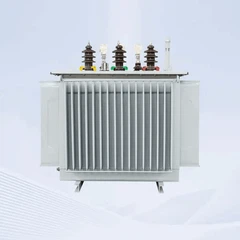
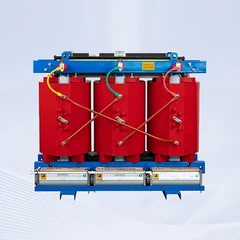

What is Power Transformer


Power transformers are electrical instruments used in transmitting electrical power from one circuit to another without changing the frequency. They operate by the principle of electromagnetic induction. They are used in transmitting electrical power between generators and distribution primary circuits.


Benefits of Power Transformer
 
01/

Simple Working Principle
A transformer's working principle is simple to understand. They essentially consist of a winding, two windings, or more windings with different numbers of turns around a magnetic core. Step-up and step-down transformers are made possible by varying the number of turns across one winding. The transformer is one of the easiest electrical components to understand.

02/

The cost of transformers is relatively low
Voltage transmission, distribution, and electrical isolation are all carried out by transformers, which are relatively inexpensive components. Small transformers integrated into electrical circuits are low-cost components.transformers that are larger and used for electrical distribution are more expensive. This is the biggest pro of electrical transformers.

03/

Multiply electrical tapping points
Different voltage levels can be drawn from multiple tapping points on some transformers. A circuit that includes components that operate at different voltage levels can benefit from this. Electrical tapping points are typically based on the incoming supply voltage or the primary winding voltage.

04/

Possible to Connect In Reverse
It is possible to use some transformers in two different ways. Some transformers can be reverse-connected, so they can be used as step-down or step-up transformers.

05/

There are no moving parts in Transformers
Electromagnetic induction transfers energy across the windings of transformers without any moving mechanical parts.

06/

Efficient Components
A transformer is an energy-efficient electrical device around 97% of the time. It is high for an electrical component because there is often a variety of energy losses, including heat, sound, and vibration.

First 1234567 Last

Why Choose Us


Professional Competence
GNEE are professional one-stop solution for steel products of China. Self-designed Corten steel design and rust technology have reached the world average technical level.


Comprehensive Quality Service
Which continuously satisfy different needs of customer around the world in the steel supply chain area. Professional sales team, providing customers with first-class services; strict purchasing and quality inspection team, carefully selecting high-quality raw materials; advanced scientific and technical team to improve production and reduce costs for customers; excellent design and processing team, carefully crafted and refined; intimate shipping logistics team protecting product transportation.


Excellent Service Team
GNEE with Professional team, Quickly response, Short delivery time, Best competitive price, Best service.


Competitive Pricing
We strive to maintain competitive pricing, offering customers audio and video accessories that deliver high value for their investment.


S11 transformer 38


How Power Transformers Work

Electrical transformers rely on Faraday's law of electromagnetic induction to work. The law states that the intensity of the electromagnetic force that's induced is identical to the rate at which the current changes.
To explain this law in layman's terms, consider the following scenario: Whenever a current flows through a conductor, an electromagnetic force is created along the current's path. The strength of the electromagnetic force, which has the technical name "magnetic flux density,” is proportional, or equal, to the amount of the electric current that's flowing through the material. The stronger the current the greater the surrounding electromagnetic field and vice-versa.
Now, this assumes the current is stable and traveling at a constant pace.alternating current, the type found in power lines, consists of electrons whose flow and polarity constantly changes.
Faraday noted that when the current was fluctuating it caused the magnetic field that was generated to also fluctuate, and this gave birth to another electric current. Case in point, if we put another conductor next to our first conductor that's receiving fluctuating electric current, the first conductor's electromagnetic field will generate current and transmit it to the second conductor.
The current flowing through the first conductor is called primary current and the one that's newly generated and flowing in the second conductor is called secondary current. The secondary current is essentially passed through empty space (air) from one conductor to another.
Transformers employ this concept of secondary current to regulate power. Please note that the application may vary depending on the type of transformer e.g. step up or step down transformers.


Importance of Power Transformers

Efficiently transfers the electrical energy – Power Transformers are highly important for an electrical power system. They are helpful in the efficient and safe transmission of power, which helps reduce power loss. Especially when the power transformers transfer energy over long distances, some energy gets lost in the process. But with the help of a power transformer, it is possible to reduce this loss. It is done by regulating the voltage of the electrical energy for efficient transmission.


Suitable for multiple industrial and commercial applications – Power Transformers greatly help in industrial and commercial applications. It is useful for power generation, transmission, and distribution to long distances. Power transformers are also helpful in stepping down the voltage to the required level in commercial buildings to function elevators, HVAC systems, and other equipment. It is used in oil and gas production, extraction, and refining. Power transformers are best suited for solar farms, windmills, and other renewable energy systems. They are also used in different industrial plants.


Protects electrical system from damage – It is also crucial for power transformers. Power transformers comprise multiple protective components like circuit breakers and fuses.they help prevent damage to the electrical system and heavy-duty machinery. It is also one of the major reasons why they are used in industries with heavy machinery.

S11 transformer 13

Other parts of power transformers


Insulating Materials
Insulating materials are used to isolate the windings from the core, the primary and the secondary windings, and each turn of the windings. These materials protect the transformer from damage. Transformer insulators should have high dielectric strength, good mechanical properties, and can withstand high temperatures.
Paper and pressboard can be used as an insulator (i.e., dry-type transformers);transformer oils are more common compared to solid insulating materials. They provide enhanced insulation between conducting parts, act as a coolant for the coil and windings assembly, and have fault detection features. Hydrocarbon mineral oils consisting of aromatics, paraffin, naphthene, and olefins are used as transformer oils. Oil contamination must be prevented to preserve the oil's dielectric properties and insulating features.


Tap Changer
Tap changers are devices that regulate the transformer's output voltage as it responds accordingly to the varying input voltage and load by adjusting the number of turns in one winding. This adjustment, therefore, changes the turn ratio. During offloading conditions, the output voltage increases, whereas during loaded conditions, the output voltage decreases. Tap changers are typically connected in the HV winding to make fine voltage regulations and minimize core losses of the transformer. The current is also lower in the HV winding, which minimizes the risk of sparking and igniting the transformer oil.
There are two types of tap changers. Onload tap changers are designed to tap the voltage without disrupting the current flow to the load. Whereas offload tap changers require disconnecting the load of the transformer before operating.


Bushings in Transformers
Bushings are insulated barriers that contain the terminal that connects the current-carrying conductor from an electrical network to the ends of the transformer windings. The bushing insulation is typically made from porcelain or epoxy resin. The bushings are mounted over the main tank.


Transformer Tank
The transformer tank (or the main tank) houses and protects the core, windings, and other components from the external environment. It serves as the container for the transformer oil. It is constructed from rolled steel plates or aluminum sheets.


Types of Power Transformers
 

Step-up and step-down transformers: These transformers are used to increase or decrease the voltage level of an AC supply. A step-up transformer has more turns in the secondary winding than in the primary winding, while a step-down transformer has fewer turns in the secondary winding than in the primary winding.


Single-phase and three-phase transformers: These transformers are used to handle single-phase or three-phase AC supplies. A single-phase transformer has one primary winding and one secondary winding, while a three-phase transformer has three primary windings and three secondary windings that are connected in star or delta configuration.


Two-winding and autotransformers: These transformers have either two separate windings or one common winding for both primary and secondary circuits. A two-winding transformer is used when the voltage ratio is greater than 2, while an autotransformer is used when the voltage ratio is less than 2.


Distribution and power transformers: These transformers are used for different purposes in the power system network. A distribution transformer is used to step down the voltage for distribution to domestic or commercial users. It has good voltage regulation and operates at full load or near full load most of the time. A power transformer is used to step up or step down the voltage for transmission between generating stations and substations. It has poor voltage regulation and operates at variable loads depending on the demand.


Instrument transformers: These transformers are used to measure high voltages and currents in a circuit by stepping them down to lower values that can be measured by conventional instruments. They include current transformers (CT) and potential transformers (PT).


Oil-cooled and dry-type transformers: These transformers differ in their cooling methods. Oil-cooled transformers use mineral oil as a cooling medium that circulates through radiators or heat exchangers. Dry-type transformers use air as a cooling medium that flows through vents or fans.


Core type and shell type transformers: These transformers differ in their core shapes and winding arrangements. A core-type transformer has a rectangular core with two vertical limbs and a horizontal yoke. The windings are cylindrical and concentric and are placed on both limbs. A shell-type transformer has a central limb and two outer limbs that form a shell around the windings. The windings are sandwiched between the limbs and have multiple layers.


Outdoor and indoor transformers: These transformers differ in their installation locations and protection levels. Outdoor transformers are designed to withstand harsh weather conditions and are usually oil-cooled and enclosed in metal tanks. Indoor transformers are designed to operate in controlled environments and are usually dry-type and enclosed in metal cabinets.


Features of Power Transformer


Rated Power

3 MVA to 200 MVA

Typical Primary Voltages

11, 22, 33, 66, 90, 132, 220 kV

Typical Secondary Voltages

3.3, 6.6, 11, 33, 66, 132 kV

Phases

Single or three-phase transformers

Rated Frequency

50 or 60 Hz

Cooling Type

Oil Forced Air Forced Cooling

Installations

Outdoor or Indoor

Tapping

On-load or off-load tap changers


The Differences between Power Transformers and Distribution Transformers
S13 transformer 14
S11 transformer 38
S11 transformer 9
SCB10 transformer 9

Type of Network
The first parameter to consider is the type of network that suits both types of transformers.
Power transformers and distribution transformers perform better when used for certain types of networks. Power transformers are used in high voltage transmission networks, and distribution transformers are used in low voltage distribution networks.


Size
Power transformers are much larger than distribution transformers because they are designed with more specifications in mind.


Designed Efficiency
Power transformers are the first transformers of a complete power system circuit, as they are used at the source.they are designed to give maximum efficiency, i.e., around 99.5%.distribution transformers are designed to provide 50-70% efficiency.


Availability of Ratings
Power transformers have available units for voltage ratings between 33kV to 700kV. In comparison, distribution transformers are used in much lower voltage networks and come in voltage ratings between 230V to 33kV.


Efficiency Formula
The efficiency formula for a power transformer is a simple ratio of the transformer's output power to its input power. On the other hand, the efficiency formula for a distribution transformer is measured by taking the ratio of the transformer's output to input in kilowatt-hours. This measurement is done for 24-hour periods.


Application
Power transformers are used at power generating stations and power transmission substations.distribution transformers facilitate the domestic and industrial consumption of electrical energy.


Maximum Rating of Usage
A power transformer has to deliver power to the rest of the system, so it must be able to handle the flow of tremendous amounts of electrical power at any given time. Power transformers commonly have a maximum power rating of 200 MVA or above.the distribution transformers have to deliver much less power and have a rating of less than 200 MVA.


Operating Condition
Power transformers deliver power to more Loads and always function at full Load. The distribution transformers operate at less than full Load.


Flux Density
Power transformers have a greater flux density than distribution transformers.


Load Fluctuation
The Load connected to a distribution transformer represents a smaller portion of the power system than the total Load connected to a power transformer. the Load constantly fluctuates in the case of a distribution transformer, but rarely for power transformers.


Usage
Power transformers and distribution transformers have different functions. Power transformers perform several functions in high voltage networks that require them to either step up or down the voltage as required.distribution transformers are only used to connect end-users to the power system to facilitate a unidirectional power flow by stepping down the voltage.


Design of the Core
The last difference between the two types is their core design. Power transformers must operate at maximum efficiency, which is only possible when the core design allows maximum flux density. These cores are also meant to operate close to the saturation point of the B-H curve. This will enable designers to reduce the core mass.


Our Factory


The products have passed SGS, intertek, CCC, CE and other international certifications. Noise, easy installation, energy saving and emission reduction, long service life, etc. The product production cycle is short, easy to install, and fast delivery. At present, the company has more factories.Our team is composed of very professional engineers. We strive to deliver you on time within the budget Power equipment, and provide excellent product quality. Provide you with the ultimate experience.


202404181604086634e.jpg (1600×398)


Certificate 


20240418141329319fb.jpg (921×500)


FAQ
 

Q: How Do You Keep Your Power Transformer Running Smoothly?

A: The key to ensuring the reliability and longevity of your power transformer is to maintain and test it properly. Regularly scheduled maintenance, such as cleaning and tightening connections, can help prevent failures and prolong the life of your transformer. Additionally, regular power transformer testing, including load testing, can help identify potential issues before they become major problems.

Q: How Do I Choose The Right Transformer For My Needs?

A: You should first consider the load you’ll be running through the transformer. This will determine the transformer’s capacity, measured in kVA (kilovolt-amperes). Additionally, you’ll need to consider the voltage and frequency of the supply, as well as the type of transformer you’ll need (e.g. dry-type, oil-immersed, etc.). In general, it’s best to talk to a qualified power supplies distributor to learn more about power transformer sizing.

Q: When Can You Reverse Connect A Transformer?

A: Reverse connecting a transformer is when the primary and secondary windings are switched. This can be done in certain situations, such as when the transformer is used to step down voltage rather than step up the voltage. However, it is important to note that reverse-connecting a transformer can cause damage to the transformer and should be done with caution or avoided entirely.

Q: Can Transformers Change The Frequency Of The Supply?

A: Transformers are not designed to change the frequency of the supply. Instead, they are designed to transfer electrical energy from one circuit to another, with the primary winding connected to the incoming supply and the secondary winding connected to the outgoing supply. To change the frequency of the supply, you would need a frequency converter.

Q: What Type Of Transformer Will I Need For Imported Equipment?

A: The type of transformer you will need for imported equipment will depend on the voltage and frequency of the supply in the country of origin. It is important to note that not all countries have the same voltage and frequency, so you must verify the correct power transformer specifications before purchasing a transformer. If you’re simply looking to use an imported appliance, or use your electronics in another country, a standard 110 V to 220 V converter should work perfectly well for low-current devices.

Q: How Do You Improve Power Transformer Efficiency?

A: There are several ways to improve the efficiency of a power transformer. One of the easiest ways is to use equipment with a higher efficiency rating as specified by the power transformer manufacturers. Additionally, regularly scheduled maintenance and load testing can help improve efficiency by identifying and addressing potential issues.

Q: How To Protect Power Transformers Against Power Outages?

A: Power outages and similar events can cause significant damage to power transformers. To protect your transformers, it is important to have a backup generator in case of blackouts. Additionally, installing surge protection devices can help protect against voltage spikes and similar hazards.

Q: How Can I Reduce The Environmental Impact Of My Transformer Equipment?

A: One way to reduce the environmental impact of your equipment is to use oil-free transformers. Oil-free transformers, also known as dry-type or air-cooled transformers, do not use oil as a cooling and insulation medium like traditional transformers. Instead, they use air or other non-toxic gases to cool the transformer and solid insulation materials, such as epoxy or silicone, to insulate the windings.

Q: What are the major failure in power transformer?

A: The most common failure in transformers is insulation degradation due to overloading conditions, switching surges, lightening etc. The heating of transformer can increase the temperature of insulation system and eventually can decrease the effectiveness of insulation.

Q: What is typical for a power transformer?

A: Summary. Power transformers are static electrical instruments used in transmitting electrical power from one circuit to another without varying the frequency. They have a voltage range varying between 33kV-400kV.

Q: How do I choose a power transformer?

A: Step 1: Define your load characteristics.
Step 2: Choose your transformer type.
Step 3: Evaluate your system configuration.
Step 4: Consider your environmental conditions.
Step 5: Compare your maintenance requirements.
Step 6: Analyze your cost-effectiveness.

Q: What current do transformers need?

A: Transformers only work on alternating current (a.c.). The current in the primary coil causes it to become an electromagnet. The continually changing current produces a continually changing magnetic field in an iron core.

Q: What is the most common cause of transformer damage?

A: Partial discharge present during voltage testing often indicates some sort of mechanical failure. Electrical failure typically involves line surges, which is a very common cause of transformer failure. Voltage spikes, switching surges and line faults are a few common culprits of electrical failure.

Q: What is the most important factor to design a power transformer?

A: An ideal transformer would have perfect coupling (no leakage inductance), perfect voltage regulation, perfectly sinusoidal exciting current, no hysteresis or eddy current losses, and wire thick enough to handle any amount of current.

Q: How do I know what size transformer I need?

A: Note down the load voltage.
Next, note down the load current.
Multiply the voltage by the current.
Divide the result by 1000.
The result is the minimum kVA(kilovolt-amperes) for a single-phase transformer.

Henan GNEE Electric Co., Ltd. is one of the most professional power transformer manufacturers and suppliers in China, also supports customized service. Welcome to buy durable power transformer in stock here and get pricelist from our factory. We also accept customized orders.

pole-mounted transformer, transformer competition, transformer website

Send Inquiry