





What is the power rating of a step - down power transformer?
Sep 05, 2025
Leave a message
A step - down power transformer is a crucial device in the electrical power system, playing a vital role in voltage conversion. As a step - down power transformer supplier, I have in - depth knowledge of these transformers and their power ratings. In this blog, we will explore what the power rating of a step - down power transformer is, its significance, and how it impacts various applications.
Understanding the Power Rating of a Step - Down Power Transformer
The power rating of a step - down power transformer is a measure of the maximum amount of electrical power that the transformer can handle safely and efficiently over a continuous period. It is typically expressed in volt - amperes (VA), kilovolt - amperes (kVA), or megavolt - amperes (MVA).
The power rating is determined by several factors. Firstly, the physical size and construction of the transformer core and windings play a significant role. A larger core and thicker windings can handle more power. The core is usually made of a magnetic material such as silicon steel, which provides a low - reluctance path for the magnetic flux. The windings are made of copper or aluminum conductors, and their cross - sectional area affects the current - carrying capacity.
Secondly, the insulation materials used in the transformer also influence the power rating. High - quality insulation materials can withstand higher voltages and temperatures, allowing the transformer to operate at a higher power level. Insulation breakdown can lead to short - circuits and damage to the transformer, so proper insulation is essential for ensuring the transformer's reliability and power - handling capability.
Significance of the Power Rating
The power rating of a step - down power transformer is of utmost importance in electrical systems. It determines the maximum load that the transformer can supply without overheating or suffering damage. If a transformer is overloaded, the temperature of the windings will increase, which can cause the insulation to degrade over time. Eventually, this can lead to a short - circuit and a complete failure of the transformer.
In industrial applications, the power rating of the step - down transformer must be carefully selected to match the power requirements of the equipment. For example, large manufacturing plants with heavy machinery may require high - power transformers to ensure a stable power supply. On the other hand, in residential areas, smaller transformers with lower power ratings are sufficient to meet the electricity needs of households.
Calculating the Power Rating
The power rating of a step - down transformer can be calculated using the formula (P = VI), where (P) is the power in volt - amperes (VA), (V) is the voltage, and (I) is the current. In a transformer, there are two sets of windings: the primary winding and the secondary winding. The power in the primary winding ((P_1)) is equal to the power in the secondary winding ((P_2)) in an ideal transformer, neglecting losses. That is (P_1=V_1I_1 = P_2=V_2I_2), where (V_1) and (I_1) are the voltage and current in the primary winding, and (V_2) and (I_2) are the voltage and current in the secondary winding.
However, in real - world transformers, there are losses such as copper losses (due to the resistance of the windings) and core losses (due to hysteresis and eddy currents in the core). These losses reduce the efficiency of the transformer, and the output power is slightly less than the input power. The efficiency ((\eta)) of a transformer is given by the formula (\eta=\frac{P_2}{P_1}\times100%).
Types of Step - Down Transformers and Their Power Ratings
There are various types of step - down transformers, each with different power ratings to suit different applications.
- Small - scale Step - Down Transformers: These are commonly used in low - power electronic devices such as chargers, adapters, and small appliances. Their power ratings can range from a few VA to a few hundred VA. For example, a mobile phone charger may use a step - down transformer with a power rating of 5 - 10 VA.
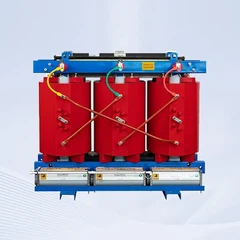
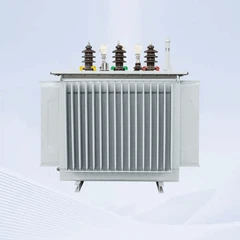
- Medium - scale Step - Down Transformers: These are used in commercial buildings, small industries, and residential areas. Their power ratings typically range from a few kVA to a few hundred kVA. For instance, a small office building may use a 500kva Oil - immersed Power Step Down Transformers to supply electricity to its lighting, air - conditioning, and other equipment.
- Large - scale Step - Down Transformers: These are used in high - voltage transmission and distribution systems, as well as large industrial plants. Their power ratings can be in the range of several MVA. For example, a large manufacturing plant may require a 31500kVA Two Winding Transformer to meet its high - power demands. In high - voltage transmission systems, 110kv66kv Power Transformer are used to step down the voltage from the transmission level to the distribution level.
Factors Affecting the Selection of the Power Rating
When selecting a step - down power transformer, several factors need to be considered.
- Load Requirements: The power rating of the transformer should be sufficient to meet the maximum power demand of the load. It is important to consider both the continuous load and any peak loads that may occur. For example, if a factory has some equipment that operates intermittently at a high power level, the transformer should be able to handle these peak loads without overloading.
- Future Expansion: It is advisable to select a transformer with a slightly higher power rating than the current load requirements to accommodate future expansion. This can save the cost and inconvenience of replacing the transformer in the future when additional equipment is added.
- Efficiency: A transformer with a higher efficiency will consume less energy and reduce operating costs. When comparing transformers with different power ratings, it is important to consider their efficiency at different load levels.
- Voltage Regulation: Good voltage regulation is essential to ensure a stable voltage supply to the load. The transformer should be able to maintain the output voltage within an acceptable range even when the load changes.
Our Offerings as a Step - Down Power Transformer Supplier
As a step - down power transformer supplier, we offer a wide range of transformers with different power ratings to meet the diverse needs of our customers. Our transformers are designed and manufactured using the latest technology and high - quality materials to ensure reliability, efficiency, and long - term performance.
We have a team of experienced engineers who can provide technical support and assistance in selecting the right transformer for your specific application. Whether you need a small - scale transformer for a household appliance or a large - scale transformer for an industrial plant, we can offer you a suitable solution.


Conclusion
The power rating of a step - down power transformer is a critical parameter that determines its performance and suitability for different applications. Understanding the power rating and its significance is essential for ensuring the safe and efficient operation of electrical systems. As a step - down power transformer supplier, we are committed to providing high - quality transformers with accurate power ratings to meet the needs of our customers.
If you are in the market for a step - down power transformer, we invite you to contact us for a detailed discussion about your requirements. Our team of experts will be happy to assist you in selecting the right transformer and providing you with a competitive quote. Let's work together to find the perfect power - transformation solution for your project.
References
- Electric Power Systems: Analysis and Control by J. Arrillaga and B. J. Chapman
- Transformers: Principles, Design, and Applications by T. A. Lipo
Send Inquiry