







What is the role of the winding in a dry type transformer?
Aug 28, 2025
Leave a message
Hey there! As a supplier of dry type transformers, I've seen firsthand the crucial role that windings play in these electrical workhorses. So, let's dive right in and talk about what the winding in a dry type transformer is all about.


First off, what exactly is a winding? Well, think of it as a coil of wire that's wrapped around a core. In a dry type transformer, there are usually two types of windings: the primary winding and the secondary winding. The primary winding is connected to the input voltage source, and the secondary winding is connected to the load.
The main job of the winding is to transfer electrical energy from the primary side to the secondary side through electromagnetic induction. When an alternating current (AC) flows through the primary winding, it creates a changing magnetic field around the core. This changing magnetic field then induces a voltage in the secondary winding, which can be used to power electrical devices.
One of the key factors that determines the performance of a dry type transformer is the design and construction of the windings. The number of turns in each winding, the type of wire used, and the way the windings are arranged all have a big impact on the transformer's efficiency, voltage regulation, and other important characteristics.
Let's start with the number of turns. The ratio of the number of turns in the primary winding to the number of turns in the secondary winding determines the voltage transformation ratio of the transformer. For example, if the primary winding has 100 turns and the secondary winding has 10 turns, the transformer has a voltage transformation ratio of 10:1. This means that if the input voltage is 1000 volts, the output voltage will be 100 volts.
The type of wire used in the windings is also important. Copper is the most commonly used material for transformer windings because it has high electrical conductivity and is relatively easy to work with. Aluminum is another option, but it has lower conductivity than copper, so larger cross-sectional areas of wire are needed to achieve the same electrical performance.
In addition to the number of turns and the type of wire, the way the windings are arranged can also affect the performance of the transformer. There are two main types of winding arrangements: concentric and interleaved. In a concentric winding arrangement, the primary and secondary windings are placed one on top of the other around the core. In an interleaved winding arrangement, the primary and secondary windings are interleaved with each other, which can help to reduce the leakage inductance and improve the voltage regulation of the transformer.
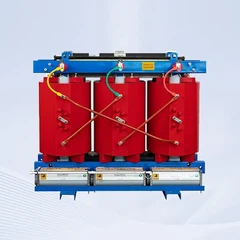
Another important aspect of the winding design is the insulation. In a dry type transformer, the windings are typically insulated with a resin or epoxy material to protect them from moisture, dust, and other environmental factors. The insulation also helps to prevent electrical breakdown and short circuits between the windings.
Now, let's talk about some of the specific roles that the windings play in a dry type transformer.
Voltage Transformation
As I mentioned earlier, the main function of the windings is to transfer electrical energy from the primary side to the secondary side through electromagnetic induction. By changing the number of turns in the primary and secondary windings, the transformer can step up or step down the voltage as needed. This is essential for matching the voltage requirements of different electrical devices and for transmitting electrical power over long distances.
Power Transfer
In addition to voltage transformation, the windings also play a crucial role in power transfer. The power transferred from the primary side to the secondary side of the transformer is equal to the product of the voltage and the current. The windings are designed to carry the electrical current without overheating or causing excessive power losses.
Protection
The windings also provide some degree of protection for the transformer and the electrical system. For example, if there is a short circuit or overload in the secondary circuit, the windings can act as a fuse by limiting the current flow and preventing damage to the transformer and other components.
Cooling
In a dry type transformer, the windings are usually cooled by natural convection or forced air circulation. The design of the windings can affect the cooling efficiency of the transformer. For example, using a larger cross-sectional area of wire can reduce the resistance and heat generation in the windings, which can help to improve the cooling performance.
So, as you can see, the winding is a critical component of a dry type transformer. It plays a vital role in voltage transformation, power transfer, protection, and cooling. At our company, we take great care in designing and manufacturing high-quality windings for our dry type transformers to ensure optimal performance and reliability.
If you're in the market for a dry type transformer, we have a wide range of products to choose from. Check out our Sc13-250 Low Loss Resin Cast Dry Type Transformer 250kVA 10/0.4kv From GNEE, 250kVA 10kV Epoxy-resin Insulation Dry-type Transformer, and Three Phase Dry Type Transformer Cast Coil Step Up Transformer 33KV. These transformers are designed to meet the highest standards of quality and performance, and they're backed by our excellent customer service and technical support.
If you have any questions or would like to discuss your specific requirements, please don't hesitate to contact us. We're here to help you find the right dry type transformer for your needs and to ensure a smooth and successful procurement process.
References:
- Electrical Power Systems by J. R. Lucas
- Transformer Engineering: Design, Technology, and Diagnostics by T. A. Lipo
Send Inquiry