







Prefabricated Substations For The Data Center Industry
Have questions? GNEE sales representatives are available for live chat now
Send E-mail: sales@gneeelectric.com
Tel: +8615824687445
Henan GNEE Electric Co., Ltd. is one of the most reliable manufacturers and suppliers of prefabricated substations for the data center industry in China. If you're going to buy customized prefabricated substations for the data center industry made in China, welcome to get quotation from our factory. Quality products and reasonable price are available.
What Is a Prefabricated Data Center Substation?
The prefabricated data center substation is an integrated, purpose-built power solution engineered for the strict reliability standards of colocation, hyperscale AI, enterprise and edge data-center sites. Variants include compact, containerized and skid-mounted modular units.
All key primary and secondary components are assembled, wired and validated inside controlled factory conditions before shipment:

MV switchgear - Isolates and manages medium-voltage power circuits. Available in SF6-free configurations (vacuum circuit breakers with dry-air, N₂, CO₂ or solid insulation) for compliance with EU F-gas Regulation (EU) 2024/573, which prohibits new switchgear using fluorinated gases in MV primary and secondary distribution: up to and including 24 kV from 1 January 2026, and above 24 kV up to and including 52 kV from 1 January 2030. At high-voltage level (>52 kV), low-GWP alternatives (GWP < 1) bridge the transition to the 2028/2032 deadlines.
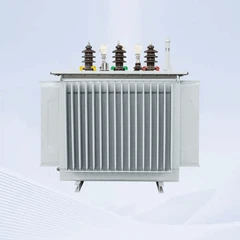
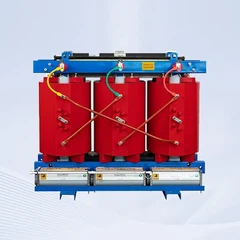
Power transformers - the core equipment of a data center transformer substation: safely step down utility MV to facility-grade operating voltage for server and cooling loads. Dry-type cast-resin transformers suit indoor/containerized installations with low fire load; sealed oil-immersed or natural-ester units are offered for outdoor duty where fire-safety margins allow.
Intelligent protection relays & automation - Supports IEC 61850-based substation automation and communications (IEC 61850-8-1 GOOSE, IEC 61850-9-2 sampled values), offering fault detection, fast isolation, condition-based asset monitoring and remote supervision. Optional process-bus architectures with merging units (IEC 61869-9) replace large volumes of conventional copper control cabling, substantially reducing material cost and installation labor on typical deployments.
Climate-controlled enclosures - Integrated HVAC (compressor-based air conditioning or air-to-air heat exchanger, as applicable), anti-condensation heaters, fire detection/suppression and environmental monitoring protect electrical hardware in hot, cold, humid or coastal outdoor conditions.
Auxiliary systems - Grounding, metering, safety interlocks, local HMI panels and optional cybersecurity-hardened OT interfaces complying with IEC 62443 for critical-infrastructure cybersecurity.
Upon arrival at site, the unit only requires positioning on prepared foundations plus main power and control cable connections. Complex assembly, wiring and most functional testing are already completed at the manufacturer's plant.
Core Benefits of Prefabricated Data Center Substation Solutions

Accelerated project delivery and faster time-to-compute
Compared with traditional field-built data center substation yards, prefabricated solutions typically compress on-site construction and commissioning timelines by 30–50% (industry-reported range).
Factory assembly runs in parallel with site civil preparation work, removing sequential-construction bottlenecks.
This advantage is critical for AI-focused projects where delayed power-on directly delays revenue generation.
Factory Acceptance Testing (FAT) and Site Acceptance Testing (SAT) catch wiring, protection-setting and interlock issues off-site, lowering costly rework risk during field commissioning.
Dramatically reduced physical footprint
A compact substation for data centers delivers the same power-handling capacity within far smaller space requirements.
For HV incoming circuits (≥66 kV), gas-insulated switchgear (GIS) typically occupies roughly one-third of the footprint of an equivalent air-insulated yard; at MV level, air-insulated or SF6-free sealed switchgear keeps the station compact.
Control-room space is also significantly reduced by adopting fiber-optic communication and multifunction intelligent electronic devices (IEDs).
For data-center campuses where land is expensive or scarce, a smaller footprint frees valuable real estate for additional IT load capacity instead of electrical-yard infrastructure.


Higher quality consistency & improved site safety
Most high-risk electrical assembly moves from open-air construction zones into controlled factory workshops.
This reduces on-site arc-flash risks, minimizes reliance on hard-to-source local MV specialists, and delivers repeatable quality across multi-phase campus expansions.
Pre-validated protection logic and safety interlocks arrive ready to deploy, lowering hazards during energization phases.
Flexible scalability for phased growth
Modular and containerized data center substation architectures support phased capacity expansion.
Operators can deploy initial power blocks matching current IT load, then add further substation modules as AI and compute requirements increase, avoiding large-scale upfront over-investment.
This "grow-as-you-go" model aligns capital expenditure with actual business demand for hyperscale, colocation and edge-data-center operators.


Sustainability and lower carbon footprint
Modern prefabricated data center transformer substation designs significantly reduce copper-control-cable consumption, cutting raw-material use, transport weight and embodied carbon.
SF6-free MV switchgear and low-GWP HV alternatives help operators phase out high-impact SF6 greenhouse-gas dielectric media ahead of EU F-gas Regulation (EU) 2024/573 deadlines.
Condition-based asset management extends equipment service life and reduces waste from premature component replacement.
Optimized CAPEX and predictable OPEX
While upfront equipment costs need evaluation against alternatives, prefabricated solutions reduce on-site civil-work scope, shorten overall project schedules, and lower field-labor expenditure.
Standardized modular configurations improve cost predictability for multi-building data-center campuses.
Built-in remote monitoring and predictive maintenance features help reduce routine on-site inspection workload and total operational expense over the asset lifecycle.
Prefabricated vs Traditional Field-Built Data Center Substation
|
Item |
Prefabricated / Compact Substation |
Traditional field-erected Substation |
|
Construction location |
Factory assembly + minimal site connection |
Almost all assembly, wiring and testing performed on-site |
|
Project timeline |
On-site work compressed to weeks; parallel factory/site workflows |
Many-month sequential civil, installation and commissioning cycles |
|
Footprint |
Compact, space-saving modular / containerized layouts |
Large land requirement for AIS yards plus dedicated relay-building |
|
Field labor demand |
Low; only final connections required |
Heavy requirement for skilled on-site MV electricians |
|
Quality consistency |
Validated via FAT & SAT in controlled factory environment |
Heavily dependent on site-team competency and weather conditions |
|
Scalability |
Supports phased modular capacity expansion |
Major expansions often require full redesign and new civil construction |
|
Cybersecurity readiness |
Pre-engineered for IEC 62443 OT-security standards |
Security features added post-design in most legacy builds |
Critical Design Considerations When Specifying a Data Center Prefabricated Substation
When evaluating a prefabricated package substation for data centers, engineering and procurement teams should review these key points:
Uptime & redundancy requirements - Match substation design to your data-center Tier classification (Uptime Institute Tier III concurrent-maintenance or Tier IV fault-tolerant). Define N+1 or 2N power-system redundancy needs early in specification work.
Voltage & power capacity - Confirm utility incoming voltage and required MVA/MW load rating, plus typically 15–20% planning headroom (industry common practice) for future AI-driven load growth. Select the correct MV configuration (e.g. 6/10 kV per GB/T 156 in China; 11/20/33 kV per IEC 60038) for grid interconnection. HV incoming circuits (≥66 kV) are normally handled by a dedicated GIS main substation, with prefabricated MV substations distributing power across the campus.
Feed architecture & resilience - Specify dual independent utility feeders, bus-section (bus-coupler) switching with interlocks, ATS/STS interface points, and prepared cable entries for standby diesel gensets and battery energy storage (BESS).
Power quality & harmonics - IT loads fed through UPS and switch-mode supplies generate harmonics and reactive power. Specify active harmonic filtering / power-factor correction, and derate busbars and transformers accordingly. Large chiller/CRAC motor starting may require soft-starters or variable-frequency drives.
Enclosure environmental rating - Specify weatherproof, climate-controlled enclosures matching site conditions: −25 °C to +40 °C standard ambient for outdoor units (IEC 62271-202), altitude up to 1000 m (high-altitude versions 2000/3000/4000 m available), coastal salt-air, high humidity or dust-prone locations. Define the ingress-protection rating (IP54/55/65 typical; louvered natural-ventilation designs around IP23 with forced cooling) and corrosion protection per ISO 12944 (C3/C4/C5).
Digital & cybersecurity requirements - Confirm IEC 61850-based automation for substation communications and IEC 62443 for operational-technology cybersecurity. Clarify SCADA/BMS integration interfaces and network-segmentation needs for OT systems.
Sustainability compliance - Evaluate SF6-free MV switchgear (mandatory under EU F-gas Regulation (EU) 2024/573 for new MV switchgear from 2026/2030) and low-GWP HV alternatives if subject to EU F-gas or local greenhouse-gas restrictions.
Transport & site constraints - Verify module dimensions, weight, lifting access, road-transport permits and on-site foundation specifications before finalizing layout.
Standards certification - Confirm conformance to applicable IEC, IEEE/ANSI or national standards for the target market (e.g. IEC 62271-202 prefabricated substations, IEC 60076 transformers, IEC 61439 low-voltage switchgear assemblies, IEC 60076-11 dry-type transformers).
Data Center Power Architecture at a Glance
|
Level |
Typical voltage |
Typical equipment |
|
Utility HV incoming (mega-campuses, ≥100 MW) |
66 / 110 / 132 / 220 kV |
Dedicated GIS main substation (outside compact substation scope) |
|
Campus MV distribution |
10 / 11 / 20 / 22 / 33 kV |
Prefabricated / containerized substations - GNEE scope |
|
MV-to-LV transformation |
MV → 400 / 480 V |
Distribution transformers (dry-type typical for indoor/containerized) |
|
IT load supply |
400 / 480 V (230 V rack level) |
UPS → PDU → rack power supplies |
Real-World Use Cases


- Hyperscale AI data center campuses - Large-scale modular and compact substation units enable tens-of-megawatt to 100 MW+ campus loads to be deployed in phased power blocks, keeping pace with fast-growing GPU-based compute clusters.
- Colocation facilities - Containerized substation packages support multi-tenant power-distribution requirements with high availability and space-optimized layouts.
- Edge data-center sites - Where real estate is extremely limited, compact prefabricated designs fit within constrained urban or remote edge-computing locations.
GNEE Electric Capability at a Glance
|
Parameter |
GNEE Electric Offering |
|
Transformer capacity |
Dry-type up to 5 000 kVA; oil-immersed up to 10 000 kVA (large-capacity line capacity ~2 400 units/year) |
|
Voltage levels |
6 / 10 kV (China, GB/T 156); 20 / 33 kV (IEC 60038) - mainstream levels supported |
|
Enclosure protection |
IP54 / IP55 / IP65 (louvered ventilation designs around IP23 with forced cooling) |
|
Corrosion protection |
ISO 12944 C3 / C4 / C5 (carbon-steel enclosure, painted + galvanized as standard) |
|
Certifications |
IEC conformity + EU CE marking (LVD 2014/35/EU & EMC 2014/30/EU; EN 62271 / EN 60076 series) |
|
Customization |
Anti-condensation, anti-corrosion, CCTV monitoring, fire suppression; special enclosure materials on request |
|
Warranty |
3 years domestic / 1 year export (1/3/5-year options affect quotation) |
|
Delivery |
~2 months for standard configurations (HV switchgear: standard no-brand; ABB/Schneider finished panels on request) |
|
Services |
Free remote engineering guidance; paid on-site training per duration |
Conclusion
As global demand for AI and cloud compute continues to surge, prefabricated, compact, containerized and modular data center substation designs are transforming how mission-critical power infrastructure is delivered. These solutions directly resolve key industry pain-points: schedule pressure, skilled-labor shortages, land constraints, sustainability mandates and strict uptime objectives for hyperscale, colocation, enterprise and edge-data-center projects.
Factory-built modular electrical infrastructure is no longer a niche alternative - it has become a mainstream technical choice for modern digital-infrastructure developments worldwide.
Talk With GNEE Electric About Your Project
If you are planning a new-build or upgrade for data-center power infrastructure, GNEE Electric's engineering team can support your specification process. Please share project-critical details for a customized technical proposal:
- Target power capacity / MW rating of your facility
- Incoming utility voltage and local applicable standards (IEC / IEEE / ANSI etc.)
- Site environmental conditions (temperature range, coastal / dust exposure, indoor or outdoor installation)
- Required redundancy level (N+1 / 2N) and data-center Tier target
- Project timeline and any transport-or-site-layout constraints
Send your project requirements to sales@gneeelectric.com or WhatsApp +86 15824687445, and our power-infrastructure specialists will get back to you with tailored recommendations for your compact or full-scale prefabricated data center substation solution.

FAQ
Q1: What is the difference between a compact substation for data centers and a traditional data center substation?
A: A compact substation (prefabricated / containerized variant) is factory-integrated and pre-tested under controlled conditions. Traditional substations require nearly all assembly, wiring and commissioning to be completed on-site, needing longer timelines, larger land area and significantly more field-based skilled labor.
Q2: Can a modular data center substation support Tier-IV fault-tolerant requirements?
A: Yes. Modular and containerized systems can be engineered for 2N redundant architectures to satisfy Uptime Institute Tier IV fault-tolerant uptime specifications, with full factory testing of protection and interlock schemes before site delivery.
Q3: Is a prefabricated data center substation suitable for outdoor installation?
A: Yes. Most compact and containerized models are built with weather-tight, climate-controlled enclosures designed for permanent outdoor deployment, rated for −25 °C to +40 °C ambient (standard), with IP54–IP65 protection and corrosion protection per ISO 12944 (C3/C4/C5) for coastal or industrial environments.
Q4: Can prefabricated data-center substations integrate renewable-energy and battery-energy-storage systems?
A: Yes. Modern designs support connections to on-site solar generation and BESS assets, enabling BESS-backed power resilience for grid outages and peak shaving, and supporting operators' net-zero carbon roadmaps.
Q5: What transformer capacities and voltage levels can GNEE Electric provide for data center substations?
A: GNEE Electric offers dry-type transformers up to 5 000 kVA and oil-immersed transformers up to 10 000 kVA, at mainstream voltage levels of 6/10 kV (China, GB/T 156) and 20/33 kV (IEC 60038), with IEC conformity and EU CE certification.
Disclaimer
This article represents general industry technical knowledge. All substation hardware must be specified, installed and commissioned in full compliance with local grid codes, electrical safety regulations and project-specific engineering assessments.
Hot Tags: prefabricated substations for the data center industry, China prefabricated substations for the data center industry manufacturers, suppliers, factory
You Might Also Like


Send Inquiry