





How does a pole distribution transformer step down voltage?
Jul 16, 2025
Leave a message
As a supplier of pole distribution transformers, I've witnessed firsthand the crucial role these devices play in our electrical infrastructure. Today, I'm excited to delve into the fascinating world of how a pole distribution transformer steps down voltage.
The Basics of a Pole Distribution Transformer
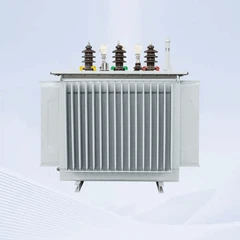
Before we explore the voltage - stepping - down process, let's understand what a pole distribution transformer is. A pole distribution transformer, also known as a Pole Mounted Distribution Transformer, is typically mounted on utility poles in residential, commercial, and industrial areas. Its primary function is to transform high - voltage electricity from the power grid into a lower, safer voltage suitable for end - users.
The Structure of a Pole Distribution Transformer
A pole distribution transformer consists of several key components. The core is usually made of laminated steel sheets. These laminations help reduce eddy current losses, which are unwanted electrical currents induced in the core. Wrapped around the core are two sets of coils: the primary winding and the secondary winding.
The primary winding is connected to the high - voltage side of the power grid. The number of turns in the primary winding is designed according to the input high - voltage level. The secondary winding, on the other hand, is connected to the low - voltage side that supplies power to consumers. The ratio of the number of turns in the primary winding ($N_p$) to the number of turns in the secondary winding ($N_s$) is a critical factor in determining the voltage transformation ratio.
The Principle of Electromagnetic Induction
The operation of a pole distribution transformer is based on the principle of electromagnetic induction, which was discovered by Michael Faraday in the 19th century. When an alternating current (AC) flows through the primary winding, it creates a changing magnetic field around the core.
According to Faraday's law of electromagnetic induction, a changing magnetic field induces an electromotive force (EMF) in a nearby conductor. In the case of a transformer, the changing magnetic field produced by the primary winding induces an EMF in the secondary winding.
The induced EMF in the secondary winding ($E_s$) and the primary winding ($E_p$) are related to the number of turns in each winding by the following formula:
$\frac{E_s}{E_p}=\frac{N_s}{N_p}$
This formula is known as the transformer turns ratio equation. If the number of turns in the secondary winding is less than the number of turns in the primary winding ($N_s<N_p$), the secondary voltage ($E_s$) will be lower than the primary voltage ($E_p$), resulting in a step - down transformer.
Step - Down Voltage Calculation
Let's take a practical example to illustrate how a pole distribution transformer steps down voltage. Suppose the primary voltage $E_p$ is 10,000 volts, and the number of turns in the primary winding $N_p$ is 1000. If the number of turns in the secondary winding $N_s$ is 100, we can calculate the secondary voltage $E_s$ using the turns ratio equation.
$\frac{E_s}{10000}=\frac{100}{1000}$
$E_s = 1000$ volts
So, in this example, the transformer steps down the voltage from 10,000 volts to 1000 volts.
Different Types of Pole Distribution Transformers for Voltage Step - Down
We offer a variety of pole distribution transformers to meet different voltage step - down requirements. For small - scale applications, such as single - family homes, our 50 KVA Pole Mounted Transformer is a popular choice. It can efficiently step down the voltage to provide a stable power supply for household appliances.
In industrial and commercial areas where three - phase power is required, our 3 Phase Pole Mounted Transformer is ideal. Three - phase transformers are designed to handle larger loads and can step down three - phase high - voltage power to a suitable level for commercial equipment and machinery.
Efficiency and Losses in Pole Distribution Transformers
While pole distribution transformers are very effective at stepping down voltage, they are not 100% efficient. There are two main types of losses in a transformer: copper losses and core losses.
Copper losses occur due to the resistance of the copper wire in the windings. When current flows through the windings, some electrical energy is dissipated as heat according to Joule's law ($P = I^{2}R$), where $I$ is the current and $R$ is the resistance of the winding.


Core losses are mainly composed of hysteresis losses and eddy current losses. Hysteresis losses occur because of the repeated magnetization and demagnetization of the core material. Eddy current losses, as mentioned earlier, are caused by the induced currents in the core.
To minimize these losses, modern pole distribution transformers are designed with high - quality materials and advanced manufacturing techniques. For example, using low - loss laminated steel for the core and high - conductivity copper for the windings can significantly improve the efficiency of the transformer.
The Importance of Voltage Step - Down
The step - down of voltage by pole distribution transformers is of utmost importance for several reasons. Firstly, high - voltage electricity is more suitable for long - distance transmission because it reduces the power loss during transmission. However, high - voltage electricity is dangerous and cannot be directly used by most household and commercial appliances.
By stepping down the voltage, pole distribution transformers make electricity safe and usable for end - users. They ensure that the electrical equipment in our homes, offices, and factories can operate properly without being damaged by excessive voltage.
Conclusion
In conclusion, a pole distribution transformer steps down voltage through the principle of electromagnetic induction. The ratio of the number of turns in the primary and secondary windings determines the voltage transformation ratio.
As a supplier of pole distribution transformers, we are committed to providing high - quality products that can efficiently step down voltage while minimizing losses. Whether you need a small - capacity single - phase transformer or a large - scale three - phase transformer, we have the right solution for you.
If you are interested in our Pole Mounted Distribution Transformer, 50 KVA Pole Mounted Transformer, or 3 Phase Pole Mounted Transformer, please feel free to contact us for more information and to discuss your specific requirements. We look forward to working with you to meet your power distribution needs.
References
- Electric Machinery Fundamentals, Stephen J. Chapman
- Power System Analysis and Design, J. Duncan Glover, Mulukutla S. Sarma, Thomas J. Overbye
Send Inquiry