





How to reduce the phase - angle error of dry type transformers?
May 14, 2025
Leave a message
In the realm of electrical power distribution, dry type transformers play a crucial role in ensuring the efficient and reliable transfer of electrical energy. However, one persistent challenge that often affects the performance of these transformers is the phase - angle error. As a leading dry type transformer supplier, we understand the significance of minimizing this error to enhance the overall quality and functionality of our products. In this blog post, we will explore various strategies and techniques on how to reduce the phase - angle error of dry type transformers.
Understanding Phase - Angle Error in Dry Type Transformers
Before delving into the solutions, it is essential to have a clear understanding of what phase - angle error is. In a dry type transformer, the phase - angle error refers to the difference between the phase angle of the secondary voltage and the phase angle of the primary voltage. This error can have a significant impact on the accuracy of power measurement, the performance of electrical equipment connected to the transformer, and the overall efficiency of the power system.
Several factors can contribute to the phase - angle error in dry type transformers. One of the primary factors is the magnetizing current. The magnetizing current is the current required to establish the magnetic field in the transformer core. It is non - linear and lags the primary voltage by approximately 90 degrees. The presence of this non - linear current can cause a shift in the phase angle between the primary and secondary voltages.
Another factor is the winding resistance and leakage reactance. The resistance of the transformer windings causes a voltage drop, which can affect the phase angle of the voltage. Similarly, the leakage reactance, which represents the magnetic coupling between the primary and secondary windings that does not contribute to the transfer of power, can also introduce phase - angle errors.

Strategies to Reduce Phase - Angle Error
Core Material Selection
The choice of core material is crucial in reducing the phase - angle error. High - quality magnetic materials with low core losses and high permeability can significantly reduce the magnetizing current. For example, grain - oriented electrical steel is a popular choice for transformer cores. It has a highly ordered crystal structure that allows for efficient magnetic flux flow, resulting in lower magnetizing current and reduced phase - angle error.
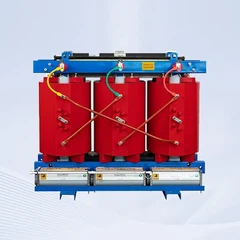
At our company, we carefully select the core materials for our dry type transformers. Our 50kVA 10kV Epoxy Resin Casting Dry Type Power Transformer is designed with a high - quality core material that minimizes the magnetizing current, thereby reducing the phase - angle error.
Winding Design Optimization
The design of the transformer windings also plays a vital role in reducing the phase - angle error. By optimizing the winding configuration, we can minimize the winding resistance and leakage reactance. One approach is to use a concentric winding arrangement, where the primary and secondary windings are placed concentrically around the core. This configuration reduces the leakage flux and improves the magnetic coupling between the windings, resulting in lower leakage reactance and reduced phase - angle error.
In addition, the cross - sectional area of the winding conductors can be carefully selected to minimize the winding resistance. A larger cross - sectional area reduces the resistance, which in turn reduces the voltage drop and the associated phase - angle error. Our Scb 1000kVA Dry Type Cast Resin Distribution Transformer features an optimized winding design that effectively reduces the phase - angle error.

Temperature Management
Temperature can have a significant impact on the performance of dry type transformers and the phase - angle error. As the temperature increases, the resistance of the winding conductors also increases, which can lead to a larger voltage drop and increased phase - angle error. Therefore, proper temperature management is essential.
We use advanced cooling systems in our dry type transformers to maintain optimal operating temperatures. For example, some of our transformers are equipped with forced - air cooling systems that ensure efficient heat dissipation. By keeping the temperature within the specified range, we can minimize the increase in winding resistance and reduce the phase - angle error. Our Durable 600kVA To 2500kVA High Voltage Transformers For Industrial are designed with effective temperature management systems to ensure stable performance and low phase - angle error.

Precision Manufacturing Processes
Precision in manufacturing is crucial for reducing the phase - angle error. During the manufacturing process, strict quality control measures should be implemented to ensure that the transformer components are accurately assembled. Any misalignment or improper connection can introduce additional magnetic losses and increase the phase - angle error.
At our manufacturing facilities, we use state - of - the - art equipment and advanced manufacturing techniques to ensure the highest level of precision. Our skilled technicians carefully assemble each transformer, paying close attention to every detail. This commitment to precision manufacturing helps us to produce dry type transformers with minimal phase - angle error.
Testing and Calibration
Once the dry type transformer is manufactured, it is essential to conduct thorough testing and calibration to ensure that the phase - angle error meets the required standards. Various testing methods can be used, such as the use of a phase - angle meter to measure the actual phase - angle error.
If the measured phase - angle error exceeds the acceptable limits, calibration can be performed. Calibration may involve adjusting the winding turns ratio or using compensating devices to correct the phase - angle error. By regularly testing and calibrating our transformers, we can ensure that they consistently deliver high - quality performance.

Conclusion
Reducing the phase - angle error of dry type transformers is a multi - faceted process that requires careful consideration of various factors, including core material selection, winding design optimization, temperature management, precision manufacturing, and testing and calibration. As a dry type transformer supplier, we are committed to providing our customers with high - quality transformers that have minimal phase - angle error.
Our 50kVA 10kV Epoxy Resin Casting Dry Type Power Transformer, Scb 1000kVA Dry Type Cast Resin Distribution Transformer, and Durable 600kVA To 2500kVA High Voltage Transformers For Industrial are all designed and manufactured with these principles in mind. If you are in the market for dry type transformers with low phase - angle error, we invite you to contact us for more information and to discuss your specific requirements. Our team of experts is ready to assist you in finding the right transformer solution for your needs.
References
- Grover, F. W. (1946). Inductance Calculations: Working Formulas and Tables. Dover Publications.
- Westinghouse Electric Corporation. (1964). Electrical Transmission and Distribution Reference Book. Westinghouse Electric Corporation.
- IEEE Std C57.12.00-2010, IEEE Standard General Requirements for Liquid - Immersed Distribution, Power, and Regulating Transformers.
Send Inquiry