





What is the reactive power consumption of dry transformers?
May 14, 2025
Leave a message
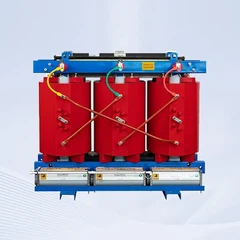
Reactive power consumption is a crucial aspect when it comes to understanding the performance and efficiency of dry transformers. As a supplier of dry transformers, I've witnessed firsthand the importance of delving into this topic. In this blog, we'll explore what reactive power consumption of dry transformers is, its implications, and how it relates to our product offerings, such as the Three Phase Dry Type Transformer, High Quality 70kva Three Phase Dry Type Isolation Power Transformer, and SCB - 2500kVA 35kV Dry Type Transformer Supplier.

Understanding Reactive Power
Before we dive into the reactive power consumption of dry transformers, let's first understand what reactive power is. In an AC electrical system, power can be divided into two components: active power (P) and reactive power (Q). Active power is the power that is actually consumed by the load to perform useful work, such as heating, lighting, or mechanical motion. It is measured in watts (W) and is responsible for the real energy transfer in the system.
Reactive power, on the other hand, is the power that oscillates between the source and the load due to the presence of inductive or capacitive elements in the circuit. Inductive loads, such as motors and transformers, require a magnetic field to operate, and this magnetic field stores and releases energy in each AC cycle. Capacitive loads, such as capacitors, store and release electrical energy in an electric field. Reactive power is measured in volt - amperes reactive (VAR).
Reactive Power Consumption in Dry Transformers
Dry transformers, like all electrical transformers, consume reactive power. There are two main sources of reactive power consumption in dry transformers:
Magnetizing Reactive Power
The magnetizing reactive power is required to establish the magnetic field in the transformer's core. When an alternating voltage is applied to the primary winding of a transformer, a current flows through the winding to create a magnetic flux in the core. This current, known as the magnetizing current, is responsible for the magnetizing reactive power consumption. The magnetizing current is mainly inductive, and its magnitude depends on the design of the transformer, the core material, and the applied voltage.
In dry transformers, the core is typically made of high - quality magnetic materials, such as grain - oriented silicon steel. These materials have low core losses and relatively low magnetizing currents, which helps to reduce the magnetizing reactive power consumption. However, even with high - quality materials, a certain amount of reactive power is still required to maintain the magnetic field in the core.
Leakage Reactive Power
The leakage reactive power is caused by the leakage flux in the transformer. The leakage flux is the magnetic flux that does not link both the primary and secondary windings of the transformer. When current flows through the windings, a magnetic field is created around the windings, and some of this magnetic field does not couple with the other winding. This leakage flux induces a voltage in the windings, which results in a reactive power component.
The leakage reactive power consumption depends on the design of the transformer, the winding configuration, and the load current. Transformers with a large leakage reactance will have a higher leakage reactive power consumption. In dry transformers, the winding design is optimized to reduce the leakage reactance and, consequently, the leakage reactive power consumption.
Implications of Reactive Power Consumption
The reactive power consumption of dry transformers has several implications for the electrical system:
Increased Line Losses
Reactive power flowing through the transmission and distribution lines causes additional current to flow in the lines. This increased current leads to higher resistive losses (I²R losses) in the lines, which results in wasted energy and increased operating costs. By reducing the reactive power consumption of dry transformers, the line losses can be minimized, leading to a more efficient electrical system.
Reduced Power Factor
The power factor (PF) of an electrical system is defined as the ratio of the active power to the apparent power (S = √(P²+Q²)). A low power factor indicates that a significant amount of reactive power is being consumed in the system. Many utility companies charge industrial and commercial customers for a low power factor, as it requires them to supply more apparent power to meet the customer's active power demand. By reducing the reactive power consumption of dry transformers, the power factor of the system can be improved, which can result in lower electricity bills for the customers.
Voltage Drop
Reactive power flow in the electrical system can cause a voltage drop in the transmission and distribution lines. A large voltage drop can affect the performance of electrical equipment connected to the system, leading to reduced efficiency and potential damage to the equipment. By controlling the reactive power consumption of dry transformers, the voltage drop in the system can be minimized, ensuring a stable voltage supply to the loads.
How Our Dry Transformers Address Reactive Power Consumption
As a supplier of dry transformers, we are committed to designing and manufacturing transformers with low reactive power consumption. Our Three Phase Dry Type Transformer is designed with advanced core materials and optimized winding configurations to minimize both the magnetizing and leakage reactive power consumption. The high - quality core materials reduce the magnetizing current, while the precise winding design reduces the leakage reactance.
Our High Quality 70kva Three Phase Dry Type Isolation Power Transformer is specifically engineered for applications where a high level of isolation and low reactive power consumption are required. The isolation feature of this transformer helps to protect the load from electrical noise and interference, while the low reactive power consumption ensures efficient operation and a high power factor.
The SCB - 2500kVA 35kV Dry Type Transformer is a high - capacity transformer designed for medium - voltage applications. With its state - of - the - art design and high - quality components, this transformer offers low reactive power consumption, even at high loads. This makes it an ideal choice for industrial and commercial applications where energy efficiency and reliable operation are crucial.

Conclusion and Call to Action
In conclusion, understanding the reactive power consumption of dry transformers is essential for optimizing the performance and efficiency of electrical systems. Our dry transformers are designed to minimize reactive power consumption, which helps to reduce line losses, improve the power factor, and ensure a stable voltage supply.
If you are looking for high - quality dry transformers with low reactive power consumption, we invite you to contact us for procurement and further discussions. Our team of experts is ready to assist you in selecting the right transformer for your specific application.
References
- "Electric Power Systems: Analysis and Design" by J. Duncan Glover, Mulukutla S. Sarma, and Thomas J. Overbye.
- "Transformers: Design, Manufacture, and Testing" by A. K. Sachdev.
- IEEE Standard C57.12.00 - 2010, "Standard General Requirements for Liquid - Immersed Distribution, Power, and Regulating Transformers".
Send Inquiry