


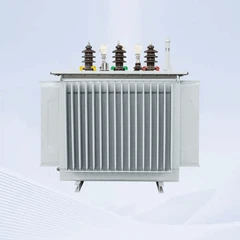






How to test the performance of pole mounted transformers?
May 29, 2025
Leave a message
Hey there! As a supplier of pole mounted transformers, I've had my fair share of experiences with these nifty pieces of equipment. One of the most crucial aspects of ensuring that our transformers are top - notch is testing their performance. In this blog, I'm gonna walk you through how we test the performance of pole mounted transformers.
Visual Inspection
First things first, we start with a good old - fashioned visual inspection. When the transformers arrive at our facility or when they're being installed on the poles, we take a close look at them. We check for any visible signs of damage like cracks in the casing, loose connections, or signs of corrosion. A damaged transformer can lead to all sorts of problems, from reduced efficiency to complete failure.
For instance, if there's a crack in the transformer's oil tank, it can cause oil leakage. And the oil in a transformer is super important as it acts as an insulator and a coolant. Without enough oil, the transformer can overheat and malfunction. So, we make sure that everything looks in tip - top shape before moving on to more in - depth testing.


Turns Ratio Test
The turns ratio test is a fundamental test for pole mounted transformers. The turns ratio is the ratio of the number of turns in the primary winding to the number of turns in the secondary winding. This ratio determines the voltage transformation of the transformer.
To conduct this test, we use a turns ratio tester. We connect the tester to the primary and secondary windings of the transformer. The tester then applies a known voltage to the primary winding and measures the induced voltage in the secondary winding. By comparing these voltages, we can calculate the turns ratio.
If the measured turns ratio is different from the specified turns ratio, it could indicate a problem with the transformer windings. Maybe there's a short - circuit in one of the windings or a broken wire. A faulty turns ratio can lead to incorrect voltage output, which can damage the electrical equipment connected to the transformer. You can learn more about Power Pole Transformer and how these tests are relevant to their performance.
Insulation Resistance Test
Another important test is the insulation resistance test. The insulation in a transformer is what prevents current from flowing where it shouldn't. Over time, the insulation can degrade due to factors like heat, moisture, and electrical stress.
We use an insulation resistance tester, also known as a megger, to perform this test. We connect the megger to the transformer windings and the transformer tank. The megger applies a high - voltage DC signal to the windings and measures the resistance of the insulation.
A low insulation resistance value indicates that the insulation is compromised. This could lead to electrical leakage, which not only wastes energy but also poses a safety hazard. For example, if the insulation between the windings and the tank breaks down, there could be a short - circuit, which might cause a fire or damage the transformer beyond repair.
No - Load Test
The no - load test helps us determine the core losses of the transformer. Core losses occur due to hysteresis and eddy currents in the transformer's core. These losses are present even when there is no load connected to the secondary winding.
To perform the no - load test, we apply a rated voltage to the primary winding while keeping the secondary winding open - circuited. We measure the input voltage, current, and power. The power consumed during the no - load test is mainly due to the core losses.
By analyzing the no - load test results, we can assess the quality of the transformer's core. High core losses mean that the transformer is less efficient, as more energy is being wasted in the core. This can increase the operating costs of the transformer over time.
Load Test
The load test is conducted to evaluate the performance of the transformer under actual operating conditions. In this test, we connect a load to the secondary winding of the transformer and measure the output voltage, current, and power.
We vary the load to simulate different operating scenarios. By doing this, we can determine how the transformer behaves under light loads, full loads, and overloads. For example, we can check if the output voltage remains within the acceptable range as the load changes.
If the output voltage drops too much under load, it could indicate that the transformer has a high internal impedance. This can cause problems for the electrical equipment connected to the transformer, as they may not receive the proper voltage they need to operate correctly. You can find more details about 50 KVA Single - Phase Pole - Mounted Transformer and how load testing is important for its performance.
Temperature Rise Test
Temperature is a critical factor in the performance and lifespan of a transformer. The temperature rise test is carried out to determine how much the temperature of the transformer increases under normal operating conditions.
We run the transformer at its rated load for a specific period of time and continuously monitor the temperature of the windings and the oil. The temperature rise should be within the specified limits. If the temperature rises too high, it can accelerate the aging of the insulation and reduce the lifespan of the transformer.
Excessive temperature can also cause the oil to break down, losing its insulating and cooling properties. This can lead to further problems like increased electrical stress and potential short - circuits.
Dielectric Dissipation Factor Test
The dielectric dissipation factor test, also known as the tan delta test, is used to assess the condition of the insulation in the transformer. The dielectric dissipation factor is a measure of the energy dissipated in the insulation when an alternating voltage is applied.
We use a dielectric test set to perform this test. The test set applies an AC voltage to the transformer insulation and measures the phase difference between the voltage and the current. From this, we can calculate the dielectric dissipation factor.
An increasing dielectric dissipation factor indicates that the insulation is deteriorating. This could be due to factors like moisture ingress, aging, or electrical stress. Early detection of insulation deterioration through the dielectric dissipation factor test can help us take preventive measures to avoid transformer failure.
Conclusion
Testing the performance of pole mounted transformers is a multi - step process that involves a variety of tests. Each test provides valuable information about the condition and performance of the transformer. By conducting these tests regularly, we can ensure that our Single Phase Pole Mounted Distribution Transformer meets the highest standards of quality and reliability.
If you're in the market for pole mounted transformers and want to ensure that you're getting the best product, feel free to reach out to us. We're always ready to discuss your requirements and provide you with top - quality transformers that have been rigorously tested.
References
- Electrical Power Systems Quality by Roger C. Dugan, Mark F. McGranaghan, Surya Santoso, and H. Wayne Beaty
- Transformer Engineering: Design, Technology, and Diagnostics by G. B. Ghosh
Send Inquiry