





What is the efficiency of a pole distribution transformer?
May 29, 2025
Leave a message
In the realm of electrical power distribution, pole distribution transformers play a pivotal role. As a dedicated supplier of Pole Distribution Transformer, I've witnessed firsthand the significance of these transformers in ensuring a stable and efficient power supply. In this blog, we'll delve into the concept of the efficiency of a pole distribution transformer, exploring its importance, factors affecting it, and how to optimize it.
Understanding the Efficiency of a Pole Distribution Transformer
Efficiency is a crucial metric when it comes to pole distribution transformers. It is defined as the ratio of the output power to the input power, usually expressed as a percentage. Mathematically, it can be represented as:
[ \text{Efficiency}(\eta)=\frac{\text{Output Power}(P_{out})}{\text{Input Power}(P_{in})}\times100% ]
A high - efficiency transformer means that a large proportion of the electrical energy input into the transformer is effectively transferred to the output, with minimal losses. For pole distribution transformers, which are often used in residential, commercial, and small - scale industrial settings, high efficiency is essential for several reasons.
Firstly, it helps in reducing energy wastage. In an era where energy conservation is of utmost importance, minimizing losses in power distribution can lead to significant savings in the long run. Secondly, high - efficiency transformers generate less heat. This not only extends the lifespan of the transformer but also reduces the need for additional cooling mechanisms, which can be costly to install and maintain.
Factors Affecting the Efficiency of Pole Distribution Transformers
Core Losses
The core of a pole distribution transformer is typically made of laminated steel. When an alternating current passes through the transformer, the magnetic field in the core causes the magnetic domains to constantly realign. This process results in two types of core losses: hysteresis losses and eddy current losses.
Hysteresis losses occur due to the energy required to reverse the magnetization of the core material. The shape and properties of the hysteresis loop of the core material determine the magnitude of these losses. Materials with a narrow hysteresis loop, such as high - grade electrical steel, can significantly reduce hysteresis losses.
Eddy current losses are caused by the induced currents that circulate within the core. These currents generate heat and waste energy. To minimize eddy current losses, the core is made of thin laminations, which are insulated from each other. This increases the resistance of the path for the eddy currents, thereby reducing their magnitude.
Copper Losses
Copper losses, also known as I²R losses, occur in the windings of the transformer. When current flows through the copper windings, the resistance of the wire causes some of the electrical energy to be converted into heat. The magnitude of copper losses is proportional to the square of the current flowing through the windings and the resistance of the wire.
To reduce copper losses, thicker copper wires can be used in the windings. This reduces the resistance of the windings and, consequently, the amount of heat generated. Additionally, proper design of the winding configuration can also help in minimizing these losses.
Load Factor
The load factor is another important factor that affects the efficiency of a pole distribution transformer. It is defined as the ratio of the average load to the peak load over a given period. A low load factor means that the transformer is often operating at a fraction of its rated capacity.
Transformers are most efficient when they are operating near their rated load. When the load is too low, the core losses remain relatively constant, while the copper losses decrease. As a result, the overall efficiency of the transformer decreases. On the other hand, if the load exceeds the rated capacity of the transformer, the copper losses increase significantly, also leading to a decrease in efficiency.
Measuring the Efficiency of Pole Distribution Transformers
To accurately measure the efficiency of a pole distribution transformer, standardized testing procedures are used. One of the most common methods is the short - circuit test and the open - circuit test.
In the open - circuit test, the secondary winding of the transformer is left open, and a rated voltage is applied to the primary winding. This test is used to measure the core losses of the transformer. The input power measured during this test is approximately equal to the core losses.
In the short - circuit test, the secondary winding is short - circuited, and a reduced voltage is applied to the primary winding such that the rated current flows through the windings. This test is used to measure the copper losses of the transformer. The input power measured during this test is approximately equal to the copper losses at full - load.
Once the core losses and copper losses are determined, the efficiency of the transformer at different loads can be calculated using the formula mentioned earlier.

Optimizing the Efficiency of Pole Distribution Transformers
As a Pole Distribution Transformer supplier, we take several steps to ensure that our transformers have high efficiency.
Advanced Core Materials
We use high - quality electrical steel with a low hysteresis loop for the core of our transformers. This helps in reducing hysteresis losses and improving the overall efficiency. Additionally, the laminations are carefully designed and insulated to minimize eddy current losses.
Optimal Winding Design
Our engineers pay close attention to the design of the windings. We use thick copper wires with low resistance to reduce copper losses. The winding configuration is also optimized to ensure uniform current distribution, further minimizing losses.
Load Management
We provide guidance to our customers on load management. By understanding the load profile of the area where the transformer will be installed, we can recommend the appropriate size of the transformer. This ensures that the transformer operates near its rated load most of the time, maximizing its efficiency.
Specific Examples of Efficient Pole Distribution Transformers
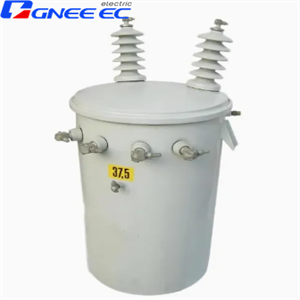
One of our popular products is the 50 KVA Pole Mounted Transformer. This transformer is designed for use in small - scale residential and commercial areas. It features a high - efficiency core made of advanced electrical steel and well - designed copper windings.
The Pole Type Distribution Transformers in our product line are also engineered for maximum efficiency. These transformers come in various capacities and are suitable for a wide range of applications. They are built with the latest technology to ensure minimal losses and long - term reliability.
Conclusion
The efficiency of a pole distribution transformer is a critical factor in ensuring a reliable and cost - effective power supply. By understanding the factors that affect efficiency, such as core losses, copper losses, and load factor, and taking appropriate measures to optimize them, we can provide high - quality transformers that meet the needs of our customers.
If you are in the market for a pole distribution transformer, we invite you to reach out to us for a detailed discussion. Our team of experts can help you select the right transformer for your specific requirements, ensuring maximum efficiency and performance. Let's work together to build a more energy - efficient future.
References
- Electric Power Systems: Analysis and Design, by J. Duncan Glover, M. S. Sarma, and Thomas J. Overbye.
- Transformer Engineering: Design, Technology, and Diagnostics, by M. G. Say.
- IEEE Standards for Power Transformers Testing.
Send Inquiry