







How to troubleshoot dry type transformer faults?
Aug 13, 2025
Leave a message
Hey there! As a supplier of dry type transformers, I've dealt with my fair share of transformer issues. In this blog, I'll share some tips on how to troubleshoot dry type transformer faults.


1. Understanding the Basics of Dry Type Transformers
Before we jump into troubleshooting, let's quickly go over what dry type transformers are. These transformers use air as the cooling medium instead of oil, which makes them a great choice for indoor use, especially in places where fire safety is a big concern. They're commonly used in commercial buildings, hospitals, and data centers.
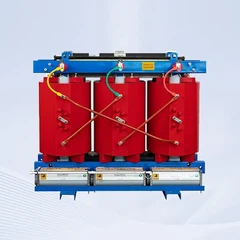
We offer a range of dry type transformers, like the Customizable 10kv Resin Insulated Dry Type Power Distribution Transformer, the Scb 1000kVA Dry Type Cast Resin Distribution Transformer, and the 33kv To 400V 415V 433V 3 Phase Cast Resin Dry Type Transformer. Each of these has its own unique features and applications.
2. Common Faults and Their Symptoms
Overheating
One of the most common problems with dry type transformers is overheating. You can tell if a transformer is overheating if you notice a burning smell, or if the temperature indicator shows a reading higher than normal. Overheating can be caused by a few things, like overloading, poor ventilation, or a short circuit in the windings.
Noise
Unusual noises coming from the transformer can also be a sign of trouble. A humming or buzzing sound that's louder than usual could mean there's a problem with the core or the windings. It could be due to loose parts, a short circuit, or a problem with the electrical connections.
Voltage Fluctuations
If you're experiencing voltage fluctuations, it could be a fault in the transformer. This can cause problems for the equipment connected to the transformer, like lights flickering or electronics malfunctioning. Voltage fluctuations can be caused by issues with the primary or secondary windings, or problems with the tap changer.
3. Troubleshooting Steps
Visual Inspection
The first step in troubleshooting is to do a visual inspection. Check the transformer for any obvious signs of damage, like cracks in the insulation, loose connections, or signs of overheating. Look for any signs of burning or melting on the windings or the terminals.
Temperature Check
Use a thermal imaging camera or a temperature sensor to check the temperature of the transformer. Make sure the temperature is within the normal operating range. If it's too high, you need to find out what's causing the overheating. Check the ventilation system to make sure it's working properly, and look for any signs of overloading.
Electrical Testing
Perform electrical tests to check the integrity of the windings and the connections. Use a megohmmeter to measure the insulation resistance of the windings. A low insulation resistance could indicate a short circuit or a problem with the insulation. You can also use a multimeter to check the voltage and the current at the primary and secondary terminals.
Noise Analysis
If you're hearing unusual noises, try to isolate the source of the noise. Check the core and the windings for any loose parts. You can use a vibration sensor to measure the vibration levels of the transformer. High vibration levels could indicate a mechanical problem.
Voltage Testing
To troubleshoot voltage fluctuations, use a voltmeter to measure the voltage at different points in the circuit. Check the voltage at the primary and secondary terminals of the transformer, and at the points where the equipment is connected. If the voltage is too high or too low, you need to find out what's causing the problem. It could be a problem with the transformer itself, or with the power supply.
4. Preventive Maintenance
Preventive maintenance is key to avoiding transformer faults. Regularly inspect the transformer for any signs of wear and tear. Clean the transformer to remove any dust or debris that could affect its performance. Make sure the ventilation system is clean and working properly.
Check the electrical connections regularly to make sure they're tight and free of corrosion. Tighten any loose connections and replace any corroded parts. Also, monitor the temperature and the operating conditions of the transformer to detect any potential problems early.
5. When to Call a Professional
Sometimes, troubleshooting transformer faults can be complex, and it's best to call a professional. If you're not sure how to perform the electrical tests or if you're unable to find the source of the problem, it's time to bring in an expert. A professional technician has the knowledge and the tools to diagnose and fix the problem safely and effectively.
6. Conclusion
Troubleshooting dry type transformer faults requires a systematic approach. By doing a visual inspection, performing electrical tests, and following the troubleshooting steps, you can identify and fix most problems. Remember, preventive maintenance is the best way to avoid transformer faults in the first place.
If you're in the market for a dry type transformer or need help with troubleshooting, don't hesitate to reach out. We're here to provide you with the best products and support. Whether you need a Customizable 10kv Resin Insulated Dry Type Power Distribution Transformer, a Scb 1000kVA Dry Type Cast Resin Distribution Transformer, or a 33kv To 400V 415V 433V 3 Phase Cast Resin Dry Type Transformer, we've got you covered.
References
- Electrical Power Transformer Engineering, Second Edition by Turan Gönen
- Handbook of Transformer Technology: Design and Application by George M. Anderson
Send Inquiry