





What are the advantages and disadvantages of different connection modes for distribution transformers?
Jul 01, 2025
Leave a message
Hey there! As a supplier of distribution transformers, I've been in the thick of understanding the ins and outs of different connection modes for these crucial pieces of equipment. Today, I'm gonna break down the advantages and disadvantages of various connection modes for distribution transformers.
Let's start with the Y - Y connection. This connection mode is quite straightforward. One of the big advantages is that it's simple to implement. The neutral point in a Y - Y connected transformer can be grounded, which provides a stable reference potential. This is super useful in systems where a stable voltage is required for single - phase loads. For example, in residential areas where most of the appliances are single - phase, a Y - Y connected distribution transformer can ensure a reliable power supply.
Another advantage is that the phase voltage is relatively easy to calculate. Since the line voltage is √3 times the phase voltage in a balanced Y - connected system, it simplifies the electrical design and maintenance work. This makes it easier for electricians and engineers to troubleshoot any issues that may arise.


However, the Y - Y connection also has its fair share of disadvantages. One major drawback is the presence of third - harmonic currents. In a three - phase system, the third - harmonic components of the three phases are in phase with each other. When the neutral is not properly grounded or has a high impedance, these third - harmonic currents can cause overheating in the transformer windings. This not only reduces the efficiency of the transformer but also shortens its lifespan.
Moreover, if the load is unbalanced, the neutral current can become quite large. This can lead to voltage unbalance across the phases, which can damage sensitive electrical equipment. In some cases, it may even cause the protection devices to trip, disrupting the power supply.
Now, let's talk about the Δ - Y connection. This is a very popular connection mode, especially in power distribution systems. One of the main advantages is that it can effectively suppress third - harmonic currents. The delta connection on the primary side provides a closed path for the third - harmonic currents, preventing them from flowing into the power grid. This helps to improve the power quality and reduce interference with other electrical equipment.
The Δ - Y connection also allows for easy step - up or step - down of the voltage. The delta side can be used for high - voltage applications, while the star side can be used for low - voltage distribution. This makes it suitable for a wide range of applications, from industrial plants to commercial buildings.
On the flip side, the Δ - Y connection has some disadvantages. The cost of manufacturing a Δ - Y connected transformer is usually higher than that of a Y - Y connected one. This is because the delta winding requires more copper and has a more complex structure. Additionally, the protection scheme for a Δ - Y connected transformer is more complicated. Since the delta side has no neutral, special protection devices are needed to detect faults and ensure the safety of the system.
Next up is the Y - Δ connection. Similar to the Δ - Y connection, the Y - Δ connection can also suppress third - harmonic currents. The star - connected primary side provides a stable neutral point, which is beneficial for grounding and reducing voltage unbalance. The delta - connected secondary side can be used to supply three - phase loads without the need for a neutral.
However, one of the disadvantages of the Y - Δ connection is that it can cause a phase shift between the primary and secondary voltages. This phase shift can be a problem in some applications, especially those that require precise synchronization of electrical signals. For example, in some industrial processes where multiple transformers are used in parallel, the phase shift can lead to circulating currents, which can reduce the efficiency of the system.
Finally, we have the Δ - Δ connection. This connection mode is mainly used in high - voltage applications where a three - phase, three - wire system is sufficient. One of the advantages of the Δ - Δ connection is that it can handle large unbalanced loads without causing significant voltage unbalance. Since there is no neutral in the system, the problem of neutral current and voltage unbalance is eliminated.
The Δ - Δ connection also has a high short - circuit capacity. This means that it can withstand short - circuit currents for a longer time without being damaged. This is important in industrial environments where short - circuits are more likely to occur.
But, the Δ - Δ connection also has its limitations. Similar to the other delta - connected transformers, it can generate third - harmonic voltages. These third - harmonic voltages can cause interference with communication systems and other sensitive equipment. Additionally, the Δ - Δ connection is not suitable for supplying single - phase loads, as there is no neutral available.
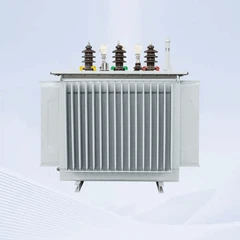
As a distribution transformer supplier, we offer a wide range of products to meet different customer needs. For example, our S11 Oil Type Distribution Transformer is a reliable and efficient option for many applications. It is designed with high - quality materials and advanced manufacturing techniques to ensure long - term performance. We also have Substation Distribution Transformers that are suitable for large - scale power distribution systems. And if you're looking for a solution for low - voltage distribution, our 380V Communication Low Voltage Distribution Cabinet is a great choice.
If you're in the market for distribution transformers and want to learn more about the best connection mode for your specific application, don't hesitate to reach out. We're here to help you make the right decision and ensure that you get the most out of your investment. Whether you're a small business owner or a large industrial enterprise, we have the expertise and products to meet your needs. Let's start a conversation and find the perfect distribution transformer solution for you!
References:
- Electric Power Systems by J. R. Lucas
- Power System Analysis and Design by J. Duncan Glover, Mulukutla S. Sarma, Thomas J. Overbye
Send Inquiry