

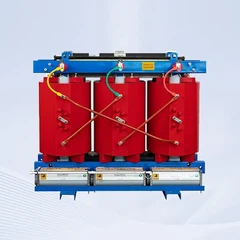
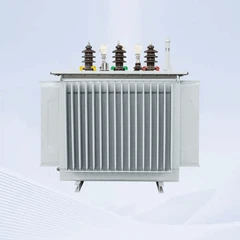




What are the indicators for judging the performance of a 75 kva dry type transformer?
Jun 24, 2025
Leave a message
When it comes to evaluating the performance of a 75 kVA dry type transformer, several key indicators come into play. As a supplier of 75 kVA dry type transformers, I understand the importance of these indicators for both our customers and the overall functionality of the transformers. In this blog post, I will delve into the primary indicators that can help you judge the performance of a 75 kVA dry type transformer.
1. Efficiency
Efficiency is one of the most crucial indicators of a transformer's performance. It measures how effectively the transformer converts electrical power from the input side to the output side, with minimal losses. High - efficiency transformers are more cost - effective in the long run as they consume less energy and generate less heat.
The efficiency of a 75 kVA dry type transformer is typically calculated using the formula:
[
\text{Efficiency}(\eta)=\frac{\text{Output Power}(P_{out})}{\text{Input Power}(P_{in})}\times100%
]
The losses in a dry type transformer mainly consist of core losses (hysteresis and eddy current losses) and copper losses (I²R losses in the windings). Core losses are constant and occur as long as the transformer is energized, while copper losses vary with the load current.
For a 75 kVA dry type transformer, a high - quality unit should have an efficiency of around 98% or higher at full load. This means that only about 2% of the input power is lost during the transformation process. Our transformers are designed with advanced core materials and optimized winding configurations to achieve high efficiency levels, reducing your energy costs over time.
2. Temperature Rise
Temperature rise is another vital indicator of a transformer's performance. It refers to the increase in temperature of the transformer windings and core above the ambient temperature during normal operation. Excessive temperature rise can lead to insulation degradation, reduced lifespan, and even failure of the transformer.


Dry type transformers are designed to operate within specific temperature limits. For example, Class F insulation dry type transformers can withstand a maximum temperature rise of 100°C above an ambient temperature of 40°C. This means that the maximum winding temperature can reach 140°C under full - load conditions.
To ensure proper temperature control, our 75 kVA dry type transformers are equipped with efficient cooling systems. These may include natural convection or forced - air cooling, depending on the application requirements. By maintaining a low temperature rise, we can extend the lifespan of the transformer and enhance its reliability.
3. Load Capacity
The load capacity of a 75 kVA dry type transformer indicates the maximum amount of electrical power it can handle continuously without exceeding its temperature limits. It is crucial to select a transformer with an appropriate load capacity to avoid overloading, which can cause damage to the transformer and disrupt the power supply.
In addition to the continuous load capacity, some dry type transformers can also handle short - term overloads. However, the duration and magnitude of the overload should be within the manufacturer's specifications. Our 75 kVA dry type transformers are designed to handle a certain degree of short - term overload, providing flexibility in applications where the load may vary.
4. Insulation Resistance
Insulation resistance is a measure of the electrical resistance of the insulation materials used in the transformer. It is an important indicator of the integrity of the insulation system. A high insulation resistance value indicates that the insulation is in good condition and can effectively prevent electrical leakage.
Low insulation resistance can be caused by factors such as moisture ingress, aging of the insulation materials, or physical damage. Regular insulation resistance testing is recommended to detect any potential problems early. Our 75 kVA dry type transformers are manufactured with high - quality insulation materials and undergo strict quality control to ensure a high insulation resistance value.
5. Voltage Regulation
Voltage regulation is the ability of a transformer to maintain a relatively constant output voltage under varying load conditions. It is expressed as a percentage and is calculated using the formula:
[
\text{Voltage Regulation}(%)=\frac{V_{no - load}-V_{full - load}}{V_{full - load}}\times100%
]
where (V_{no - load}) is the output voltage when there is no load on the transformer, and (V_{full - load}) is the output voltage at full load.
Good voltage regulation is essential for applications that require a stable power supply. For a 75 kVA dry type transformer, a voltage regulation of less than 5% is considered acceptable. Our transformers are designed with precision winding techniques and appropriate tap changers to achieve excellent voltage regulation, ensuring a stable power supply to your equipment.
6. Noise Level
The noise level of a dry type transformer is an important consideration, especially in applications where noise pollution is a concern, such as in commercial buildings or hospitals. The noise is mainly generated by the magnetostriction of the core material and the vibration of the windings.
Modern dry type transformers are designed to operate quietly. Our 75 kVA dry type transformers are constructed with low - noise core materials and advanced manufacturing processes to reduce the noise level. The noise level of our transformers is typically below 60 dB(A) under normal operating conditions, which is relatively quiet and will not cause significant interference in most environments.
7. Short - Circuit Withstand Capability
The short - circuit withstand capability of a transformer refers to its ability to withstand the mechanical and thermal stresses caused by a short - circuit fault in the electrical system. During a short - circuit, a large current flows through the transformer, which can generate significant mechanical forces and heat.
A 75 kVA dry type transformer should be designed to withstand short - circuit currents for a certain period without suffering permanent damage. Our transformers are designed with robust winding structures and appropriate protection devices to ensure high short - circuit withstand capability.
Related Products
If you are interested in other types of dry type transformers, we also offer a wide range of products, including the 630 KVA - 0.4/0.4 KV Isolation Dry Type Transformer, Double High - Voltage Dry - Type Transformer, and 250kVA Dry Type Cast Resin Transformer. These products are also designed with high - quality materials and advanced technology to meet your specific requirements.
Conclusion
In conclusion, when judging the performance of a 75 kVA dry type transformer, it is essential to consider multiple indicators, including efficiency, temperature rise, load capacity, insulation resistance, voltage regulation, noise level, and short - circuit withstand capability. As a professional supplier of 75 kVA dry type transformers, we are committed to providing high - quality products that meet or exceed these performance indicators.
If you are in the market for a 75 kVA dry type transformer or any other related products, we invite you to contact us for a detailed discussion. Our team of experts will be happy to assist you in selecting the most suitable transformer for your application and provide you with competitive pricing and excellent after - sales service.
References
- Electric Power Systems: Analysis and Design, by J. Duncan Glover, Mulukutla S. Sarma, and Thomas J. Overbye.
- Transformers: Principles, Applications, and Maintenance, by Robert C. Dorf and Ian J. D. Macdonald.
Send Inquiry