





What are the mechanical stresses on a large power transformer during operation?
Jun 03, 2025
Leave a message
What are the mechanical stresses on a large power transformer during operation?
As a supplier of large power transformers, I've witnessed firsthand the complex interplay of forces and stresses that these crucial pieces of equipment endure during operation. Understanding these mechanical stresses is vital for ensuring the reliability, longevity, and safety of power transformers in various electrical systems.
1. Electromagnetic Forces
One of the primary sources of mechanical stress in large power transformers is electromagnetic forces. When an alternating current flows through the transformer windings, it creates a magnetic field. The interaction between the magnetic field and the current - carrying conductors generates electromagnetic forces.
These forces are proportional to the square of the current flowing through the windings. During normal operation, the electromagnetic forces are relatively stable. However, in the event of a short - circuit, the current can increase significantly, sometimes reaching several times the rated current. For example, in a fault scenario, the short - circuit current can cause the electromagnetic forces to rise to extremely high levels.
The radial and axial electromagnetic forces act on the transformer windings. Radial forces tend to push the windings outwards or inwards, depending on the direction of the current and the magnetic field. Axial forces, on the other hand, act along the axis of the windings. Excessive radial forces can cause the windings to deform, leading to insulation damage and potential short - circuits within the windings. Axial forces can cause the windings to shift axially, which may also damage the insulation and mechanical support structures.
To withstand these forces, we design our Power Voltage Transformers with robust winding structures. We use high - strength conductors and carefully engineered insulation materials to ensure that the windings can resist the mechanical stresses caused by electromagnetic forces. Additionally, we conduct detailed electromagnetic field simulations during the design phase to accurately predict the forces and optimize the winding configuration.
2. Thermal Stresses
Thermal stresses are another significant factor affecting large power transformers. During operation, power transformers generate heat due to losses in the windings (copper losses) and the core (iron losses). The heat generated must be dissipated to maintain the transformer's temperature within safe limits.


However, uneven heating can occur within the transformer. For example, the inner layers of the windings may experience higher temperatures than the outer layers because of the higher current density and the insulation's thermal resistance. This temperature difference creates thermal expansion differences between different parts of the transformer.
As materials expand and contract with temperature changes, thermal stresses are induced. These stresses can cause mechanical deformation of the windings, core, and other components. Over time, repeated thermal cycling can lead to fatigue in the materials, reducing their mechanical strength. For instance, the insulation materials may crack or delaminate due to thermal stresses, which can compromise the electrical insulation properties of the transformer.
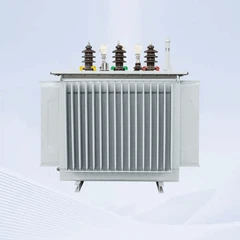
To manage thermal stresses, we incorporate efficient cooling systems in our transformers. Our 160kVA Oil Immersed Step Up Power Transformer uses oil as a coolant. The oil circulates through the transformer, absorbing heat from the windings and core and transferring it to the radiator. We also design the transformer's structure to ensure uniform heat distribution as much as possible, reducing the temperature differences within the transformer.
3. Vibration and Acoustic Stresses
Vibration and acoustic stresses can also impact the mechanical integrity of large power transformers. The electromagnetic forces mentioned earlier can cause the windings and core to vibrate. Additionally, the cooling fans and pumps in the transformer's cooling system can generate vibrations.
These vibrations can be transmitted throughout the transformer structure, causing wear and tear on the components. Over time, the continuous vibration can loosen connections, damage insulation, and even lead to the failure of mechanical support structures. Acoustic stresses are related to the noise generated by the transformer. The vibration of the windings and core produces audible noise, which can cause stress on the insulation materials and other components, especially in long - term operation.
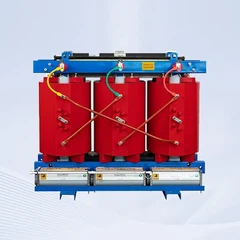
To mitigate vibration and acoustic stresses, we use vibration - damping materials in the construction of our transformers. We also carefully balance the rotating parts of the cooling system to reduce vibration levels. For our 11KV/33KV Cast Resin Dry Type Power Transformer, we design the resin - cast windings to have high mechanical stiffness, which helps to reduce vibration and noise generation.
4. External Forces
External forces can also act on large power transformers. During transportation, the transformer may be subjected to shocks and vibrations. Improper handling during installation can also cause mechanical damage. In addition, environmental factors such as earthquakes, high - wind conditions, and flooding can exert external forces on the transformer.
Earthquakes can generate strong ground motions that can cause the transformer to move or tip over. High - wind forces can exert pressure on the transformer's enclosure, potentially deforming it. Flooding can damage the transformer's electrical insulation and mechanical components.
To protect our transformers from external forces, we design them with strong enclosures and mechanical support structures. We conduct seismic analysis during the design process to ensure that the transformer can withstand the expected seismic forces. Our transformers are also designed to be resistant to high - wind and flood conditions, with proper sealing and waterproofing measures.
Conclusion
In conclusion, large power transformers are subjected to a variety of mechanical stresses during operation, including electromagnetic forces, thermal stresses, vibration and acoustic stresses, and external forces. As a supplier of large power transformers, we take these stresses into account at every stage of the design, manufacturing, and installation process.
By using advanced design techniques, high - quality materials, and efficient cooling and protection systems, we ensure that our transformers can withstand these mechanical stresses and provide reliable service for many years. If you are in need of a large power transformer that can meet your specific requirements and withstand the rigors of operation, we invite you to contact us for procurement and technical discussions. We are committed to providing you with the best - in - class power transformers and excellent customer service.
References
- Gross, G. W., & McPherson, G. (1998). Power system analysis and design. PWS Publishing.
- Chapman, S. J. (2012). Electric machinery fundamentals. McGraw - Hill.
- El - Hawary, M. E. (2008). The electrical engineering handbook. CRC Press.
Send Inquiry