





What is the partial discharge characteristic of an oil - immersed transformer?
Aug 08, 2025
Leave a message
Hey there! As a supplier of oil - immersed transformers, I've been getting a lot of questions lately about the partial discharge characteristic of these transformers. So, I thought I'd write this blog to share some insights and clear up any confusion.
First off, let's talk about what partial discharge is. In simple terms, partial discharge is a localized electrical discharge that occurs within an insulating material in an oil - immersed transformer. This can happen when there are small voids, impurities, or defects in the insulation. It's like a mini - lightning strike inside the transformer. And if not properly managed, it can lead to serious problems over time.
One of the key characteristics of partial discharge in an oil - immersed transformer is its invisibility and inaudibility in the early stages. You can't just look at the transformer and tell if there's partial discharge going on. It usually starts as a very small, intermittent event that might not cause any immediate damage. But as it progresses, it can erode the insulation, leading to a breakdown of the transformer's electrical integrity.
The frequency of partial discharge is another important characteristic. It can vary depending on a few factors. For example, the type of insulation material used in the transformer plays a big role. Some materials are more prone to partial discharge at certain frequencies. Also, the voltage level applied to the transformer affects the frequency. Higher voltages generally increase the likelihood of partial discharge and can change its frequency pattern.
The magnitude of partial discharge is also crucial. A small - magnitude partial discharge might not be a huge concern right away, but if it keeps increasing, it's a sign that something is wrong. The magnitude can be measured in picocoulombs (pC). A normal, well - functioning oil - immersed transformer might have very low levels of partial discharge, say less than 10 pC. But if the levels start to rise above 100 pC or more, it's time to take a closer look.
Now, let's talk about how partial discharge affects the performance of an oil - immersed transformer. When partial discharge occurs, it generates heat and chemical reactions within the insulation. These reactions can break down the insulation material, reducing its dielectric strength. This means that the insulation is less able to withstand the electrical stress, increasing the risk of a short - circuit or other electrical failures.
Another impact is on the oil itself. The oil in an oil - immersed transformer acts as both an insulator and a coolant. Partial discharge can cause the oil to degrade, forming gases and sludge. These by - products can further reduce the insulation properties of the oil and clog the cooling channels, leading to overheating.
So, how can we detect partial discharge in an oil - immersed transformer? There are several methods. One common method is the electrical method, which measures the electrical pulses generated by partial discharge. This can be done using sensors installed on the transformer. Another method is the acoustic method, which listens for the sound waves produced by partial discharge. Special microphones are used to pick up these sounds.
As a supplier, we take partial discharge very seriously. We use advanced testing equipment during the manufacturing process to ensure that our transformers meet the highest standards. We test for partial discharge at different voltage levels and under various operating conditions to make sure that our products are reliable and long - lasting.
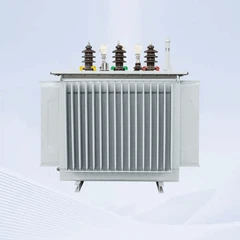
Now, if you're in the market for an oil - immersed transformer, we've got a great range of products to offer. Check out our Oil Immersed Distribution Transformer, which is perfect for a variety of distribution applications. It's designed to be efficient and reliable, with low partial discharge levels.


If you need a more powerful transformer, our 2000kVA 33/0.4KV Oil Immersed Transformer is a great choice. It's built to handle heavy loads and has been rigorously tested for partial discharge to ensure its performance.
We also have a wide selection of Oil Immersed Electrical Power Transformers that are suitable for large - scale power generation and distribution. These transformers are designed with the latest technology to minimize partial discharge and maximize efficiency.
If you're interested in learning more about our products or have any questions about partial discharge in oil - immersed transformers, don't hesitate to get in touch. We're here to help you make the right choice for your electrical needs. Whether you're a small business or a large utility company, we've got the expertise and the products to meet your requirements.
In conclusion, understanding the partial discharge characteristic of an oil - immersed transformer is essential for ensuring its reliable operation. By being aware of the signs and taking proactive measures, you can avoid costly breakdowns and extend the lifespan of your transformer. So, if you're looking for a high - quality oil - immersed transformer with low partial discharge, give us a shout. We're confident that we can provide you with the best solution for your electrical system.
References
- Electrical Insulation Handbook for Power Apparatus and Systems by Donato M. Montanari
- Transformer Engineering: Design, Technology, and Diagnostics by G. C. Swarmy
Send Inquiry