





What is the power transfer efficiency of a 750 kva dry type transformer?
Jun 03, 2026
Leave a message
As a supplier of 750 kVA dry type transformers, I am often asked about the power transfer efficiency of these important electrical devices. Understanding the power transfer efficiency is crucial for both consumers and businesses, as it directly impacts energy consumption, cost, and overall performance. In this blog post, I will delve into the concept of power transfer efficiency in 750 kVA dry type transformers, exploring the factors that influence it and how it can be optimized.
What is Power Transfer Efficiency?
Power transfer efficiency is a measure of how effectively a transformer converts electrical power from its input to its output. It is expressed as a percentage and represents the ratio of the output power to the input power. In the case of a 750 kVA dry type transformer, the efficiency indicates how much of the electrical power supplied to the transformer is successfully transferred to the load without being lost as heat or other forms of energy.
Mathematically, power transfer efficiency (η) is calculated using the following formula:
[ \eta = \frac{P_{out}}{P_{in}} \times 100% ]
where ( P_{out} ) is the output power and ( P_{in} ) is the input power.
Factors Affecting Power Transfer Efficiency
Several factors can influence the power transfer efficiency of a 750 kVA dry type transformer. These include:
1. Core Losses
Core losses, also known as iron losses, occur in the transformer's core due to the alternating magnetic field. These losses are composed of hysteresis losses and eddy current losses. Hysteresis losses are caused by the magnetization and demagnetization of the core material, while eddy current losses are due to the circulating currents induced in the core. To minimize core losses, high-quality core materials with low hysteresis and eddy current characteristics are used.
2. Copper Losses
Copper losses, also referred to as I²R losses, occur in the transformer's windings due to the resistance of the copper conductors. These losses are proportional to the square of the current flowing through the windings. To reduce copper losses, larger cross-sectional area conductors are used, which have lower resistance.
3. Load Factor
The load factor, which is the ratio of the average load to the maximum load, also affects the power transfer efficiency. A transformer operates most efficiently when it is operating at or near its rated capacity. If the load is too low, the transformer may not be fully utilized, resulting in lower efficiency. On the other hand, if the load is too high, the transformer may overheat, leading to increased losses and reduced efficiency.
4. Temperature
The temperature of the transformer also plays a significant role in its power transfer efficiency. As the temperature increases, the resistance of the copper conductors increases, leading to higher copper losses. Additionally, high temperatures can also cause the core material to lose its magnetic properties, resulting in increased core losses. To maintain optimal efficiency, it is important to ensure that the transformer operates within its specified temperature range.

Optimizing Power Transfer Efficiency
To optimize the power transfer efficiency of a 750 kVA dry type transformer, the following steps can be taken:
1. Selecting the Right Transformer
Choosing a transformer with a suitable capacity for the load is essential. A transformer that is too large will operate at a low load factor, resulting in lower efficiency. Conversely, a transformer that is too small may be overloaded, leading to increased losses and reduced efficiency. It is important to accurately calculate the load requirements and select a transformer with a capacity that matches the load.
2. Using High-Quality Materials
Using high-quality core materials and copper conductors can significantly reduce core losses and copper losses, respectively. High-quality core materials have low hysteresis and eddy current characteristics, while high-quality copper conductors have low resistance.
3. Proper Installation and Maintenance
Proper installation and maintenance of the transformer are crucial for ensuring optimal efficiency. The transformer should be installed in a well-ventilated area to prevent overheating. Regular maintenance, such as cleaning the transformer and checking the connections, can also help to ensure that the transformer operates efficiently.
4. Monitoring and Control
Monitoring the performance of the transformer and adjusting the load as needed can help to optimize the power transfer efficiency. By using monitoring systems, it is possible to track the input and output power, temperature, and other parameters of the transformer. Based on the data collected, adjustments can be made to the load to ensure that the transformer operates at or near its rated capacity.
Our Product Range
As a leading supplier of 750 kVA dry type transformers, we offer a wide range of products to meet the diverse needs of our customers. Our transformers are designed and manufactured using the latest technology and high-quality materials to ensure optimal performance and efficiency.
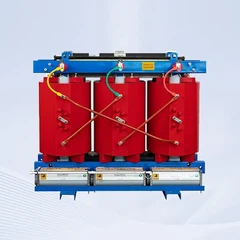
One of our popular products is the GNEE 35kv Three-phase Dry-type Durable Moisture-proof Transformer. This transformer is designed for use in a variety of applications, including industrial, commercial, and residential settings. It features a durable and moisture-proof design, making it suitable for use in harsh environments.
Another product in our range is the SCB12 200kVA Dry Type Transformer. This transformer is ideal for small to medium-sized applications, such as office buildings, shopping malls, and hospitals. It offers high efficiency and reliability, making it a popular choice among our customers.
We also offer the SCB12-1600 KVA-10/0.4 KV Step-down Dry-type Transformer, which is suitable for large-scale applications, such as industrial plants and power stations. This transformer features a high capacity and low losses, making it an efficient and cost-effective solution for power distribution.

Contact Us for Purchase and Consultation
If you are interested in purchasing a 750 kVA dry type transformer or have any questions about our products, please do not hesitate to contact us. Our team of experts is available to provide you with detailed information about our products and help you choose the right transformer for your needs. We look forward to working with you and helping you optimize your power distribution system.
References
- Electric Power Systems, by A. J. Wood and B. F. Wollenberg
- Power System Analysis and Design, by J. D. Glover, M. S. Sarma, and T. J. Overbye
- Transformers: Theory, Design, and Application, by T. A. Lipo
Send Inquiry