

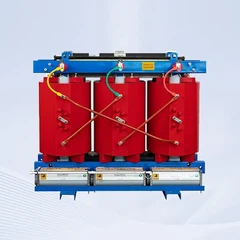




What is the starting method for a load connected to a 1500 kva dry type transformer?
Sep 09, 2025
Leave a message
As a supplier of 1500 kVA dry type transformers, I often encounter inquiries about the starting methods for loads connected to these transformers. Understanding the appropriate starting method is crucial for ensuring the efficient and reliable operation of both the transformer and the connected load. In this blog post, I will delve into the various starting methods available for loads connected to a 1500 kVA dry type transformer, discussing their advantages, disadvantages, and suitability for different applications.
Direct On-Line (DOL) Starting
Direct On-Line (DOL) starting is the simplest and most straightforward method of starting a motor. In this method, the motor is directly connected to the power supply, allowing it to draw full voltage and current from the transformer. DOL starting is commonly used for small to medium-sized motors with a relatively low starting current requirement.
One of the main advantages of DOL starting is its simplicity and low cost. It requires minimal equipment and can be easily implemented. Additionally, DOL starting provides the highest starting torque, allowing the motor to accelerate quickly to its rated speed. However, DOL starting also has some drawbacks. The high inrush current drawn by the motor during starting can cause a significant voltage drop in the electrical system, which may affect other connected loads. This can lead to issues such as flickering lights, reduced motor performance, and even damage to sensitive equipment.
Star-Delta Starting
Star-Delta starting is a popular method for starting three-phase induction motors. In this method, the motor is initially connected in a star configuration during the starting period, which reduces the voltage applied to the motor windings and limits the starting current. Once the motor has reached a certain speed, it is switched to a delta configuration, allowing it to operate at full voltage.
The main advantage of star-delta starting is its ability to reduce the starting current by approximately one-third compared to DOL starting. This helps to minimize the voltage drop in the electrical system and reduces the stress on the transformer. Star-delta starting is also relatively simple and cost-effective, requiring only a star-delta starter and a few additional control components. However, star-delta starting has some limitations. It provides a lower starting torque compared to DOL starting, which may not be suitable for applications that require a high starting torque. Additionally, the switching operation from star to delta can cause a transient voltage spike, which may need to be addressed to prevent damage to the motor and other equipment.
Auto-Transformer Starting
Auto-transformer starting is another method used to reduce the starting current of a motor. In this method, an auto-transformer is used to step down the voltage applied to the motor during the starting period. The auto-transformer provides a reduced voltage to the motor, which limits the starting current. Once the motor has reached a certain speed, the auto-transformer is bypassed, and the motor is connected directly to the full voltage supply.
Auto-transformer starting offers several advantages. It provides a smooth and controlled starting process, reducing the mechanical stress on the motor and the electrical system. It also allows for a higher starting torque compared to star-delta starting, making it suitable for applications that require a high starting torque. Additionally, auto-transformer starting can be used with both three-phase and single-phase motors. However, auto-transformer starting is more complex and expensive compared to DOL and star-delta starting. It requires an auto-transformer, a starter, and a control system, which increases the initial investment and maintenance costs.
Soft Starter Starting
Soft starter starting is a modern method of starting motors that uses electronic control to gradually ramp up the voltage and current applied to the motor during the starting period. A soft starter consists of a set of thyristors or insulated-gate bipolar transistors (IGBTs) that control the voltage and current flow to the motor. By gradually increasing the voltage and current, the soft starter reduces the inrush current and provides a smooth and controlled starting process.
One of the main advantages of soft starter starting is its ability to reduce the starting current to a minimum, typically between 1.5 to 3 times the rated current of the motor. This helps to minimize the voltage drop in the electrical system and reduces the stress on the transformer and other connected equipment. Soft starter starting also provides a high level of control over the starting process, allowing for adjustable acceleration and deceleration times. Additionally, soft starters can be programmed to provide various protection functions, such as overcurrent, overvoltage, and undervoltage protection. However, soft starter starting is more expensive compared to traditional starting methods. It requires a soft starter unit, which adds to the initial investment cost. Additionally, soft starters may require more maintenance and technical expertise compared to other starting methods.


Variable Frequency Drive (VFD) Starting
Variable Frequency Drive (VFD) starting is a sophisticated method of starting motors that allows for precise control of the motor speed and torque. A VFD consists of a rectifier, an inverter, and a control system. The rectifier converts the AC power from the electrical supply into DC power, which is then converted back into AC power at a variable frequency and voltage by the inverter. By varying the frequency and voltage, the VFD can control the speed and torque of the motor.
One of the main advantages of VFD starting is its ability to provide a smooth and controlled starting process with a very low starting current. The VFD can gradually ramp up the frequency and voltage applied to the motor, allowing it to start and accelerate smoothly without causing a significant voltage drop in the electrical system. VFD starting also offers excellent energy efficiency, as it allows the motor to operate at the optimal speed for the load requirements. Additionally, VFDs provide a high level of control over the motor performance, allowing for precise speed and torque control. However, VFD starting is the most expensive starting method. It requires a VFD unit, which has a high initial investment cost. Additionally, VFDs may require more maintenance and technical expertise compared to other starting methods.
Choosing the Right Starting Method
When choosing a starting method for a load connected to a 1500 kVA dry type transformer, several factors need to be considered. These factors include the type and size of the motor, the starting torque requirement, the available electrical supply, the cost of the starting equipment, and the impact on the electrical system.
For small to medium-sized motors with a relatively low starting current requirement, DOL starting may be the most suitable option due to its simplicity and low cost. However, if the starting current is a concern, star-delta starting or soft starter starting may be more appropriate. For applications that require a high starting torque, auto-transformer starting or VFD starting may be the best choice.
It is also important to consider the impact of the starting method on the electrical system. A high starting current can cause a significant voltage drop in the electrical system, which may affect other connected loads. Therefore, it is important to ensure that the electrical system has sufficient capacity to handle the starting current without causing any issues.
Conclusion
In conclusion, choosing the right starting method for a load connected to a 1500 kVA dry type transformer is crucial for ensuring the efficient and reliable operation of both the transformer and the connected load. There are several starting methods available, each with its own advantages and disadvantages. The choice of starting method depends on various factors, such as the type and size of the motor, the starting torque requirement, the available electrical supply, the cost of the starting equipment, and the impact on the electrical system.
As a supplier of 1500 kVA dry type transformers, we have extensive experience in helping our customers choose the right starting method for their specific applications. We offer a wide range of dry type transformers, including Phase-shifting Rectifier Transformer, 315kVA Cast Resin Type Transformer, and 33kv To 400V 415V 433V 3 Phase Cast Resin Dry Type Transformer. Our team of experts can provide you with professional advice and support to ensure that you select the most suitable starting method for your needs.
If you are interested in learning more about our products or need assistance with choosing the right starting method for your load, please feel free to contact us for a consultation. We look forward to working with you to meet your electrical power needs.
References
- Chapman, S. J. (2012). Electric Machinery Fundamentals. McGraw-Hill Education.
- Fitzgerald, A. E., Kingsley Jr, C., & Umans, S. D. (2003). Electric Machinery. McGraw-Hill Education.
- Nasar, S. A., & Boldea, I. (1996). Electric Machines and Drives: A First Course. Prentice Hall.
Send Inquiry