





What is the working principle of the energy - saving mechanism in Amorphous Metal Transformers?
Aug 14, 2025
Leave a message
As a supplier of Amorphous Metal Transformers, I am often asked about the working principle of the energy-saving mechanism in these remarkable devices. In this blog post, I will delve into the details of how amorphous metal transformers achieve energy savings, and why they are an excellent choice for various applications.
Understanding Amorphous Metals
Before we explore the energy-saving mechanism, it's essential to understand what amorphous metals are. Amorphous metals, also known as metallic glasses, are a unique class of materials that have a disordered atomic structure, unlike traditional crystalline metals. This disordered structure gives amorphous metals several advantageous properties, such as high magnetic permeability, low coercivity, and low electrical conductivity.
The Basics of Transformer Operation
To understand the energy-saving mechanism of amorphous metal transformers, we first need to review the basic principles of transformer operation. A transformer is a static electrical device that transfers electrical energy between two or more circuits through electromagnetic induction. It consists of two or more coils of wire, called windings, which are wound around a common magnetic core.
When an alternating current (AC) is applied to the primary winding, it creates a changing magnetic field in the core. This changing magnetic field then induces an electromotive force (EMF) in the secondary winding, which causes a current to flow in the secondary circuit. The ratio of the number of turns in the primary and secondary windings determines the voltage transformation ratio of the transformer.
Energy Losses in Traditional Transformers
In traditional transformers, which typically use silicon steel cores, there are two main types of energy losses: core losses and copper losses.
Core Losses: Core losses, also known as iron losses, occur in the magnetic core of the transformer due to the alternating magnetic field. There are two components of core losses: hysteresis losses and eddy current losses.
- Hysteresis Losses: Hysteresis losses are caused by the energy required to reverse the magnetization of the core material as the magnetic field alternates. In silicon steel cores, the magnetic domains need to be realigned with each change in the magnetic field, which results in energy being dissipated as heat.
- Eddy Current Losses: Eddy current losses are caused by the circulating currents induced in the core material due to the changing magnetic field. These currents flow in closed loops within the core and generate heat, leading to energy losses.
Copper Losses: Copper losses occur in the windings of the transformer due to the resistance of the copper wire. When current flows through the windings, some of the electrical energy is converted into heat according to Joule's law (P = I²R), where P is the power loss, I is the current, and R is the resistance of the wire.
The Energy-Saving Mechanism of Amorphous Metal Transformers
Amorphous metal transformers address the core losses issue by using amorphous metal cores instead of traditional silicon steel cores. Here's how they achieve energy savings:
Low Hysteresis Losses: Amorphous metals have a very low coercivity, which means that they require less energy to reverse the magnetization compared to silicon steel. The disordered atomic structure of amorphous metals allows the magnetic domains to realign more easily with the changing magnetic field, resulting in significantly lower hysteresis losses.
Low Eddy Current Losses: Amorphous metals also have a lower electrical conductivity than silicon steel. This reduces the magnitude of the eddy currents induced in the core, thereby minimizing eddy current losses. Additionally, the thin ribbon-like structure of amorphous metal cores further helps to reduce eddy current losses by increasing the resistance to the flow of eddy currents.
By reducing both hysteresis and eddy current losses, amorphous metal transformers can achieve much lower core losses compared to traditional transformers. In fact, core losses in amorphous metal transformers can be up to 70% lower than those in silicon steel transformers.


Benefits of Amorphous Metal Transformers
The energy-saving mechanism of amorphous metal transformers offers several benefits:
Energy Efficiency: The lower core losses of amorphous metal transformers result in higher energy efficiency, which means less energy is wasted as heat. This not only reduces electricity consumption but also helps to lower greenhouse gas emissions.
Cost Savings: Over the long term, the energy savings achieved by using amorphous metal transformers can result in significant cost savings for consumers. Although the initial cost of amorphous metal transformers may be higher than that of traditional transformers, the reduced energy consumption can offset the higher upfront cost over time.
Environmental Sustainability: By reducing energy consumption and greenhouse gas emissions, amorphous metal transformers contribute to environmental sustainability. They are an ideal choice for applications where energy efficiency and environmental impact are important considerations.
Applications of Amorphous Metal Transformers
Amorphous metal transformers are suitable for a wide range of applications, including:
Distribution Networks: In power distribution networks, amorphous metal transformers can be used to reduce energy losses and improve the overall efficiency of the grid. They are particularly well-suited for rural and remote areas where energy consumption is relatively low and the cost of energy losses can be significant.
Industrial Applications: In industrial settings, amorphous metal transformers can be used to power various equipment and machinery. Their high energy efficiency can help to reduce operating costs and improve the competitiveness of industrial enterprises.
Renewable Energy Systems: Amorphous metal transformers are also suitable for use in renewable energy systems, such as solar and wind power plants. They can help to improve the efficiency of energy conversion and transmission, making renewable energy sources more reliable and cost-effective.
Our Product Range
As a supplier of Amorphous Metal Transformers, we offer a wide range of products to meet the diverse needs of our customers. Our product range includes:
- Amorphous Core Type Distribution Transformer: These transformers are designed for use in power distribution networks and are available in various voltage and capacity ratings.
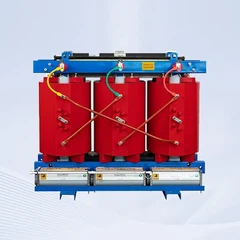
- Amorphous Dry-Type Transformer: Dry-type transformers are suitable for indoor applications where there is a risk of fire or explosion. Our amorphous dry-type transformers offer high energy efficiency and reliability.
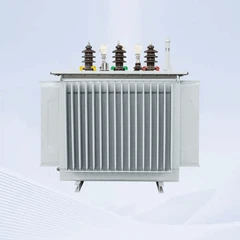
- Amorphous Alloy Oil-immersed Transformer: Oil-immersed transformers are commonly used in outdoor applications. Our amorphous alloy oil-immersed transformers provide excellent cooling performance and long service life.
Contact Us for Procurement
If you are interested in learning more about our Amorphous Metal Transformers or would like to discuss your specific requirements, please feel free to contact us. We are committed to providing high-quality products and excellent customer service. Our team of experts will be happy to assist you in selecting the right transformer for your application and provide you with a competitive quote.
References
- "Amorphous Metal Transformers: Principles, Technologies, and Applications" by X. Gong et al.
- "Energy Efficiency of Power Transformers" by the International Electrotechnical Commission (IEC).
- "Handbook of Transformer Design and Applications" by M. A. Patton.
Send Inquiry