









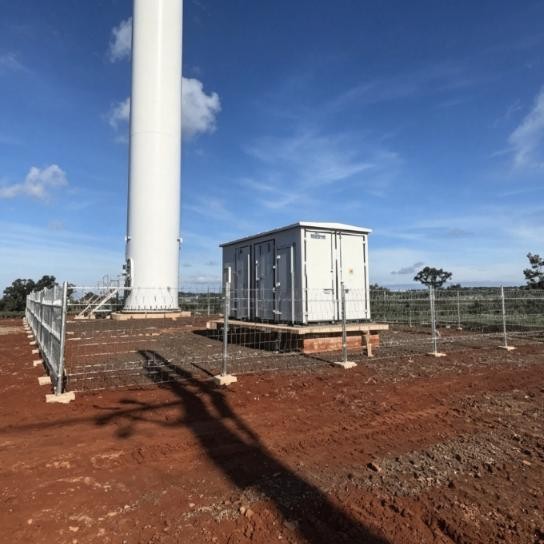

Compact Substation For Wind Farms
Have questions? GNEE sales representatives are available for live chat now
Send E-mail: sales@gneeelectric.com
Tel: +8615824687445
Henan GNEE Electric Co., Ltd. is one of the most reliable manufacturers and suppliers of compact substation for wind farms in China. If you're going to buy customized compact substation for wind farms made in China, welcome to get quotation from our factory. Quality products and reasonable price are available.
Wind power generation delivers low-voltage AC output from turbine generators, which cannot feed directly into utility grids.
A Wind Farm Compact Substation is a factory-integrated, pre-assembled solution built to step up turbine low-voltage power to medium-voltage collection networks for grid interconnection.
Unlike traditional site-built substations, the compact unit completes assembly, wiring, and routine factory acceptance testing before shipment, minimizing site work for wind farm projects across on-shore, high-altitude, and coastal environments.
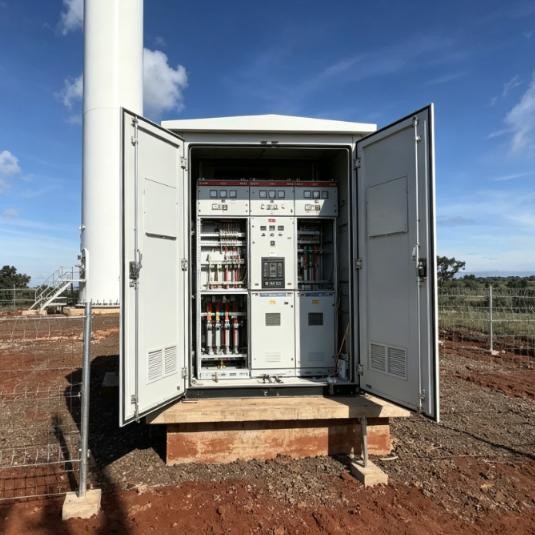
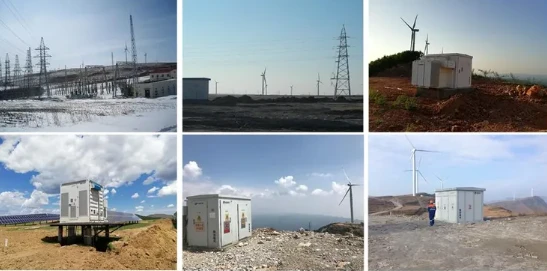
These units are installed at turbine tower bases or nearby concrete pads, for single-turbine deployment or multi-unit parallel configurations within wind farm collector zones.
Custom-enhanced versions serve coastal and near-shore projects with enhanced anti-corrosion treatment.

What Is a Wind Farm Compact Substation?
A wind-dedicated compact prefabricated substation is a self-contained, weather-resistant power unit designed for wind turbine step-up duties. It takes generator output (typically 0.69 kV or 1.14 kV) and elevates voltage to common collection levels - 6 / 10 / 35 kV (GB/T 156, Um 7.2 / 12 / 40.5 kV, China market) or 11 / 22 / 33 kV (IEC 60038, Um 12 / 24 / 36 kV, international market) - for medium-voltage collector cable systems, before power flows to the main wind farm grid-tie substation.

Core Components of Wind Compact Substation
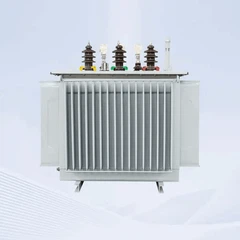
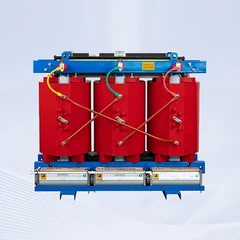
Step-Up Transformer
- Oil-immersed or cast-resin dry-type designs, optimized for wind-specific fluctuating load cycles and harmonic conditions from turbine converters
- Capacity: Dry-type up to 5000 kVA; oil-immersed up to 10 000 kVA per single unit; multi-unit parallel for larger collector nodes
- Primary (LV) side matches wind generator output (0.69 kV / 1.14 kV); secondary (MV) side for 6/10/35 kV (GB) or 11/22/33 kV (IEC) collector network
- Enhanced short-circuit withstand capability per IEC 60076-5 for renewable energy operating profiles
- Harmonic mitigation: Active harmonic filter (AHF) per IEC 61000, K-rated transformer (IEEE C57.110), and busbar derating based on measured THDi from turbine converters
Medium-Voltage (MV) Switchgear
- Vacuum circuit-breaker (VCB) or SF6-free load-break switch-fuse combinations (dry-air / N₂ insulated, compliant with EU F-gas Regulation (EU) 2024/573 for SF6 phase-out)
- Ring Main Unit (RMU) configuration for compact tower-base installation
- Functions: circuit switching, fault isolation, overcurrent and short-circuit protection for medium-voltage collector feeders
- Brand-agnostic standard configuration; premium-brand finished panels (ABB, Schneider) available on request with adjusted pricing and lead time
Low-Voltage (LV) Switchboard
- Molded-case circuit breakers (MCCB) for turbine auxiliary loads: tower lighting, site communication equipment, heating, and control power supplies
- Integrated energy metering, surge-protection devices, and reactive-power compensation (capacitor bank with detuned reactor or SVG) to meet grid-code power-factor requirements
- Outgoing feeders for local distribution
GNEE Electric - Core Advantages & Manufacturing Capability

GNEE Standard Parameters
|
Parameter |
Specification |
|
Transformer type |
Dry-type (cast-resin) or oil-immersed; step-up configuration (LV → MV) |
|
Transformer capacity |
Dry-type: up to 5000 kVA / Oil-immersed: up to 10 000 kVA per single unit; multi-unit parallel available |
|
Primary (LV) voltage |
0.69 kV / 1.14 kV (turbine generator output) |
|
Secondary (MV) voltage |
6 / 10 / 35 kV (GB/T 156, Um 7.2 / 12 / 40.5 kV) or 11 / 22 / 33 kV (IEC 60038, Um 12 / 24 / 36 kV) |
|
MV switchgear |
VCB or SF6-free RMU; brand-agnostic standard; ABB/Schneider on request |
|
LV switchboard |
MCCB, metering, reactive-power compensation, surge protection |
|
Protection grade |
IP54 / IP55 / IP65; IP23 for louver-ventilated (forced cooling required for higher IP) |
|
Anti-corrosion |
ISO 12944 C3 (standard) / C4 / C5-M (coastal & marine) |
|
Enclosure material |
Carbon-steel + hot-dip galvanizing + powder coating (standard); stainless-steel 304/316L (optional) |
|
Cooling |
Oil: ONAN/ONAF; Dry: AN/AF; Patented top-air-deflector wind-baffle cooling (standard) |
|
Energy efficiency |
GB 20052 Grade 2 (mainstream mandatory; Grade 1 on request) / IEC / EU or US DOE Tier 2 |
|
Standards compliance |
IEC 62271-202, IEC 60076/60076-11, IEC 61439, IEC 62271-200 (IAC), ISO 12944; CE per EU LVD 2014/35/EU & EMC 2014/30/EU |
|
Frequency |
50 Hz / 60 Hz |
|
Lead time |
~2 months (brand-agnostic MV switchgear); premium-brand panels on request |
|
Warranty |
3-year standard (domestic) / 1-year standard (overseas); 1/3/5-year options available |
|
Technical support |
Free remote engineer guidance for installation & commissioning; on-site training priced by duration |
Key Operational Benefits for Wind Farm Projects
Compared with conventional site-erected substations, compact prefabricated units deliver tangible project-level value:
- Minimal footprint: Modular, space-saving layout ideal for constrained tower-base locations; reduces land occupation versus built-on-site solutions. GNEE's compact design achieves the smallest footprint and lightest weight among domestic peers at equal capacity.
- Harsh-environment suitability: Sealed anti-corrosion enclosure (ISO 12944 C3–C5-M) resists sand-storms, UV radiation, coastal salt-fog, and wide ambient temperature swings, supporting high-altitude, desert, and coastal wind-farm sites.
- Factory pre-testing and plug-and-play delivery: Most assembly and electrical tests are completed in-factory (FAT). On-site work reduces to foundation placement, cable termination, and commissioning, shortening overall project timelines and lowering site-labor costs.
- Patented cooling technology: GNEE's top-air-deflector wind-baffle cooling optimizes internal air circulation and heat dissipation at no additional cost - resolving heat-build-up challenges in enclosed wind-farm substations subject to fluctuating turbine loads.
- Remote O&M readiness: Built-in monitoring supports automated wind-farm operation, reducing routine site-visit frequency for distributed or remote wind sites.
- Flexible replacement for repowering: Compact dimensions simplify retrofitting for old wind-farm repowering, replacing discrete legacy equipment while minimizing turbine downtime.
Main Application Scenarios of Wind Farm Substations
On-Shore Centralized Wind Farms
Individual Wind Farm Compact Substation installed per turbine at tower base or adjacent concrete foundation. Output feeds 35 kV (GB) or 33 kV (IEC) collector networks, widely used for utility-scale on-shore wind parks.
Distributed Wind Power Projects
Compact substations for scattered wind turbines inside industrial zones, agricultural sites, or remote villages, connecting directly into local 6/10/35 kV (GB) or 11/22/33 kV (IEC) distribution grids.
High-Altitude & Cold-Climate Wind Sites
Special-formulated low-temperature insulating fluids, reinforced sealing, and de-humidification accessories enable reliable operation at altitudes up to 4000 m with IEC 60076 altitude-derating design (external insulation reinforcement, creepage adjustment, forced-air cooling upgrade). Specify exact site altitude for derating calculation. Typical for plateau and northern-region wind farms.
Coastal & Near-Shore Wind Projects
Specified with ISO 12944 C5-M anti-corrosion treatment, stainless-steel enclosure options (304/316L), upgraded sealing, and higher IP rating. Suitable for tidal-flat intertidal zones and onshore collector stations supporting near-shore wind generation fleets.
Wind Farm Repowering
Compact substation as drop-in replacement for ageing discrete substation hardware, accelerating upgrade cycles and improving overall energy yield of legacy wind assets.

FAQ
Q1: What is the difference between a Wind Farm Compact Substation and a conventional wind farm substation?
A compact prefabricated unit is fully factory-assembled and tested, delivered as one transportable unit. Conventional wind-farm substations require extensive on-site erection, separate equipment delivery, and field-wiring. Compact units drastically cut site construction time while maintaining equivalent grid-compliant performance for turbine step-up duties.
Q2: Can one compact substation serve multiple wind turbines?
Most commonly each turbine uses its dedicated unit (matching turbine rating, typically 1.5–6 MW per turbine, requiring 1600–7000 kVA transformer). Multi-turbine parallel connection is technically feasible, subject to transformer capacity rating (dry ≤5000 kVA / oil ≤10 000 kVA per unit), protection-coordination study, and local grid-code requirements.
Q3: Which IP rating should I specify for a wind-farm compact substation?
IP54 is standard for general on-shore wind-farm sites. IP55 / IP65 available for harsher environments. IP23 for louver-ventilated designs. Coastal, salt-spray, or inter-tidal locations need upgraded enclosure protection and ISO 12944 C5-M anti-corrosion grade. Higher IP ratings require forced-air cooling, HVAC, or heat exchanger to manage internal temperature rise.
Q4: Can the same compact substation be used for on-shore and offshore wind farms?
The base functional architecture is similar, but offshore-adapted versions require upgraded anti-corrosion materials (C5-M, stainless-steel 316L), enhanced sealing (IP65), vibration-resistance, and special surface treatment to withstand salt-mist and high-humidity marine environments. It is not a direct drop-in reuse of standard on-shore units.
Q5: What standards apply to wind-dedicated compact substations?
Primary standards: IEC 62271-202 (prefabricated substations), IEC 60076 / 60076-11 (transformers / dry-type), IEC 61439 (LV assemblies), IEC 62271-200 (IAC arc-fault), ISO 12944 (corrosion), complemented by relevant IEEE standards and local utility grid-connection codes. CE-marked per EU LVD 2014/35/EU & EMC 2014/30/EU for European markets.
Q6: What is the maximum transformer capacity available?
GNEE Electric manufactures dry-type transformers up to 5000 kVA and oil-immersed transformers up to 10 000 kVA per single unit. For collector nodes requiring higher capacity, multi-unit parallel configurations are available. Production line capacity: 2400 units/year.
Get Your Wind-Farm Compact Substation Solution
Whether you are developing on-shore centralized wind parks, distributed wind projects, coastal near-shore collector stations, or wind-farm repowering programs, GNEE Electric supplies custom-engineered compact substations compliant with global IEC and CE certification requirements.
Our engineering team supports the full scope:
- Project-tailored technical solution design based on turbine rating, collector voltage, and site environmental conditions
- Complete quotation with bill-of-material, compliance documentation, and delivery timeline (~2 months standard)
- Factory Acceptance Test (FAT) support and free remote engineer guidance for installation and commissioning
- Share your project inputs: on-shore or coastal location, individual turbine rating and generator type, collector system voltage (GB or IEC), site altitude and environment, target market certification requirements.
- Email: sales@gneeelectric.com
- WhatsApp: +86 15824687445
Disclaimer: All technical content is based on widely-accepted international industrial standards and public engineering practice. Final design must align with local grid codes and site-specific project studies.
Hot Tags: compact substation for wind farms, China compact substation for wind farms manufacturers, suppliers, factory
You Might Also Like


Send Inquiry