









Prefabricated Substation For Energy Storage Systems
Have questions? GNEE sales representatives are available for live chat now
Send E-mail: sales@gneeelectric.com
Tel: +8615824687445
Henan GNEE Electric Co., Ltd. is one of the most reliable manufacturers and suppliers of prefabricated substation for energy storage systems in China. If you're going to buy customized prefabricated substation for energy storage systems made in China, welcome to get quotation from our factory. Quality products and reasonable price are available.
What Is a Prefabricated Substation for Energy Storage?
A prefabricated substation for energy storage is an integrated, transportable electrical unit in which the transformer, MV switchgear, LV switchgear, protection and auxiliary systems are fully assembled, wired and factory-tested before shipment. Compared with conventional civil-constructed substations, the ESS substation arrives on site with the Factory Acceptance Test (FAT) completed; site work is limited to foundation preparation, hoisting, cable termination and final grid commissioning.

Common form factors include containerized designs, European-style compact box-type structures and skid-mounted units, allowing flexible adaptation to different site layouts and transport constraints. Whether deployed for utility-scale BESS plants or commercial and industrial (C&I) ESS applications, the unit is engineered for plug-and-play grid connection with minimum on-site labor.
Key Components inside an Energy Storage Substation
1. Step-Up Transformer
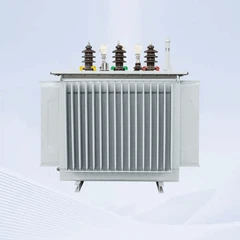
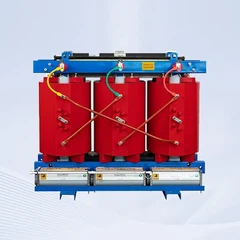
The heart of the ESS substation. It raises the low-voltage AC output of the PCS (typically 0.4–0.69 kV) to the grid voltage - typically 10 kV, 20 kV or 33 kV - and steps it down again while charging. Both dry-type and oil-immersed transformers are available depending on fire-safety requirements and local grid codes.

GNEE Electric manufactures dry-type transformers up to 5,000 kVA and oil-immersed transformers up to 10,000 kVA, covering grid-scale and C&I energy storage projects. Because the transformer is inherently bidirectional, one unit handles both charging and discharging; protection settings are coordinated for reverse power flow.
2. MV and LV Switchgear
MV switchgear provides circuit switching, short-circuit fault isolation and equipment protection on the grid side, incorporating vacuum circuit breakers, isolating disconnectors, surge arresters and earth switches. LV switchgear protects the PCS-side connections. Compartmentalized metal-enclosed switchgear designed to IEC 62271-200 limits fault propagation and improves arc-fault safety during maintenance.

3. Weather-Resistant Enclosure
The enclosure protects all internal apparatus against sandstorms, coastal salt spray, heavy snow, high humidity and extreme temperature swings.
GNEE Electric uses carbon-steel shells with spray coating and galvanizing, achieving IP54, IP55 or IP65 ingress protection, with anti-corrosion treatment per ISO 12944 (C3–C5). Internal compartmentalization separates the transformer, MV and LV zones to contain any fault within its own chamber.
4. Protection, Metering and Monitoring
Modern energy storage substations integrate protection relays, revenue-grade energy meters, local HMI panels and SCADA/EMS-ready communication interfaces (IEC 61850, Modbus), enabling remote monitoring, fault alarming and unattended operation. Auxiliary systems include climate control, lighting and mechanical/electrical interlocks for safe maintenance access.
Core Benefits of an Energy Storage Substation
Fast Deployment and Shorter Project Timeline
Factory assembly and pre-delivery testing dramatically reduce on-site civil work and installation time. For EPC contractors and storage developers, this shortens the path to grid connection and to revenue-generating operation of the BESS plant.
Compact Footprint
Compact modular layouts occupy substantially less land than conventional substations. GNEE Electric's units are among the smallest and lightest at equivalent capacity in the industry - a decisive advantage where project space is constrained, such as C&I rooftops and densely arranged plant layouts.
High Reliability and Lower OPEX
Manufacturing under stable factory conditions delivers consistent assembly quality, and every unit passes comprehensive pre-delivery testing. Compartmentalized architecture minimizes failure chain reactions, lowering long-term maintenance cost over the storage project's operational lifetime.
Enhanced Operational Safety
The fully enclosed, partitioned design restricts exposure to live parts; mechanical and electrical interlocks prevent incorrect access during maintenance; arc-fault containment localizes short-circuit events within limited chambers, protecting personnel and assets.
Efficient Thermal Management
Energy storage applications place sustained thermal stress on the transformer enclosure. GNEE Electric's patented top-blown cooling system with baffle-guided air circulation improves heat dissipation without increasing cost, keeping transformer temperature rise within rated limits (60 K / 65 K per IEC 60076).
Bidirectional-Ready Design
The ESS substation is engineered for continuous bidirectional power transfer during charging and discharging, with protection coordination adapted to reverse power flow. Power-flow direction and magnitude remain the responsibility of the PCS and the plant energy management system (EMS).
Modular Scalability
The modular concept supports phased expansion: as plant capacity grows, additional substation modules can be added instead of full reconstruction, protecting the initial investment.
Typical Application Scenarios
- Utility-scale standalone BESS plants - grid-scale storage for frequency regulation, peak shaving and energy arbitrage, using large-capacity energy storage substations for centralized grid export.
- Renewable-plus-storage hybrids - co-located PV-plus-storage and wind-plus-storage plants sharing a common MV grid connection.
- Commercial and industrial ESS - behind-the-meter storage for factories, commercial buildings and industrial parks, often with containerized or skid-mounted units.
- Microgrids and island grids - storage-based energy balancing with black-start capability.
- Ancillary services - fast-responding storage projects providing frequency regulation and reserve capacity.

Key Considerations When Selecting Your ESS Substation
- Rated power and capacity (MW / MVA) - defines transformer sizing. GNEE Electric covers dry-type up to 5,000 kVA and oil-immersed up to 10,000 kVA per unit; larger plants can be served by multiple units.
- Grid connection voltage - 10 kV / 20 kV / 33 kV for IEC markets; 6 kV / 10 kV for Chinese domestic projects.
- Transformer type - dry-type for fire-sensitive, indoor or densely populated sites; oil-immersed for cost-effective outdoor utility-scale applications.
- Site environment - ambient temperature, altitude (ratings must be derated above 1,000 m per IEC 60076 and IEC 62271-1), coastal salt spray, sand and dust.
- Harmonic environment - PCS-generated harmonics should be evaluated per IEC 61000; specify filter options or a K-rated transformer where required by grid codes.
- Fire protection - battery-side fire suppression is typically provided by the BESS supplier; the substation provides fire-rated compartment separation in accordance with IEC 62271-202.
- Compliance standards - IEC 62271-202 (prefabricated substations), IEC 60076 (transformers), IEC 61439 (LV switchgear), ISO 12944 (corrosion protection), plus CE conformity (LVD 2014/35/EU and EMC 2014/30/EU) for export markets.
If you are developing a BESS plant or upgrading an existing energy storage facility and need a compliant, cost-effective prefabricated substation for energy storage, GNEE Electric's engineering team can prepare tailored drawings, specification sheets and a competitive quotation.
Please share the following project information:
- Plant rated power and capacity (MW / MWh)
- Grid connection target voltage
- Transformer type preference (dry-type / oil-immersed)
- Site environmental profile (altitude, temperature, coastal or desert conditions)
- Applicable certification requirements
- Email: sales@gneeelectric.com
- WhatsApp: +86 15824687445
FAQ
Q: What is the difference between an energy storage substation and a conventional distribution substation?
A: The ESS substation is designed for bidirectional power transfer, for the interface conditions of PCS output (including harmonic content) and for the thermal and fire considerations specific to battery plants. Conventional distribution substations are typically designed for one-way supply to loads.
Q: Does a prefabricated substation for energy storage include the PCS or battery system?
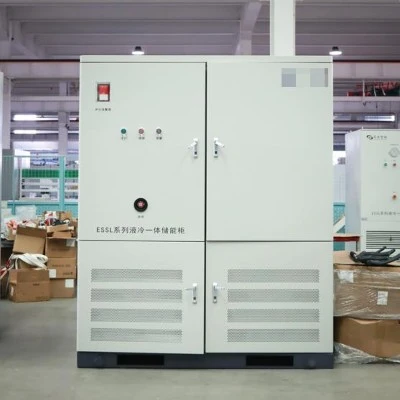
A: No. The PCS (bidirectional AC/DC converter) and battery racks are separate systems. The substation provides the step-up transformer, MV/LV switchgear and protection that connect the PCS output to the grid. For projects requiring a fully integrated solution, GNEE Electric also offers all-in-one energy storage units combining the transformer and PCS in a single container.
Q: Can the same substation handle both charging and discharging?
A: Yes. The transformer is inherently bidirectional, and the substation is designed for continuous two-way power flow with protection coordinated for reverse power. The direction and magnitude of the power flow are controlled by the PCS and the plant EMS.
Q: Dry-type or oil-immersed transformer - which should I choose?
A: Dry-type transformers suit fire-sensitive, indoor or densely populated sites and require no oil containment. Oil-immersed transformers are generally more cost-effective for outdoor utility-scale applications and are available up to 10,000 kVA from GNEE Electric.
Q: How does altitude affect the design?
A: Above 1,000 m, transformer and switchgear ratings must be derated in accordance with IEC 60076 and IEC 62271-1. GNEE Electric configures insulation levels and cooling capacity for high-altitude sites.
Q: How long does on-site installation take?
A: After foundation completion, hoisting, cable termination and commissioning are typically completed within several days, versus many weeks for stick-built substations.
GNEE Electric manufacturing highlights: IEC and CE conformity, transformer production capacity of 2,400 units per year, typical delivery of about two months for standard configurations, one-year export warranty (extendable to 3 or 5 years), and free online technical guidance throughout the project.
Hot Tags: prefabricated substation for energy storage systems, China prefabricated substation for energy storage systems manufacturers, suppliers, factory
You Might Also Like


Send Inquiry