









Why a 150 kVA Dry-Type Transformer Suits Mid-Size Data Centers
Jan 27, 2026
Leave a message
Why Transformer Choice Matters in Data Centres
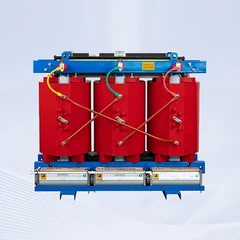
A data centre depends on a continuous, reliable and clean power supply. The transformer that steps down the medium-voltage feed, typically 10 kV or 11 kV, to the low-voltage distribution level of 400 V is a critical link between the utility grid and the IT load. Mid-size data centres, with a connected load in the range of a few hundred kilovolt-amperes, need a transformer that operates at high efficiency around the clock, occupies little floor space, presents no fire risk and requires minimal maintenance. A 150 kVA dry-type transformer, usually a three-phase cast resin unit with a Dyn11 vector group, meets these requirements and is one of the most common choices for this class of facility.
High Efficiency for Continuous Power-Hungry Loads
Data centre equipment runs continuously, so transformer losses translate directly into energy cost. A dry-type transformer with a high-grade grain-oriented silicon steel core keeps the no-load loss low, and the winding design keeps the load loss within the limits of IEC 60076-11. Losses appear as heat inside the transformer, so lower losses also reduce the cooling load of the electrical room. Because the loading of a data centre transformer is often relatively steady, the transformer can be selected so that it operates near its best efficiency point, and the efficiency class of the unit should be verified against the applicable requirements, such as the minimum efficiency levels in IEC 60076-20 or national regulations.
Safety: Fire and Environmental Benefits
Fire Safety
Unlike oil-filled transformers, dry-type units contain no flammable insulating liquid. This eliminates the risk of oil spills and oil-related fires, which is a decisive advantage in a data centre full of electronic equipment and high-value data. The cast resin insulation of the windings is self-extinguishing, and no oil containment pit or fire barrier is required, which simplifies the design of the electrical room.
Environmental Safety
Dry-type transformers pose no risk of soil or water pollution in the event of a fault, because there is no oil to leak. They are also easier to recycle at the end of their service life. These properties align with the environmental and sustainability targets that many data centre operators publish, and they simplify permitting and compliance in buildings with strict fire codes.
Compact Design for Space-Constrained Rooms
Mid-size data centres usually have limited floor space, and every square metre is valuable. A 150 kVA dry-type transformer does not need oil conservators, radiators or containment areas, so it can be installed in a small electrical room or close to the load. Locating the transformer near the load shortens the low-voltage cable runs, which reduces cable cost and the associated distribution losses. The enclosure protection degree, such as IP21, IP23 or IP54, is selected according to the dust and moisture conditions of the installation room.
Low Maintenance and Quiet Operation
No Oil Maintenance
Because there is no oil, the maintenance program excludes oil sampling, oil filtration and oil replacement. Routine work is limited to visual inspections, checking the tightness of connections, cleaning the ventilation openings and monitoring the winding temperature with the built-in temperature sensors and control devices.
Long Service Life
With proper installation and a controlled operating temperature, a dry-type transformer has a design life of 25 to 30 years. The temperature class of the insulation system, typically class F rated 155 °C or class H rated 180 °C, provides a generous margin above the normal operating temperature, and the average winding temperature rise is limited in accordance with IEC 60076-11. The winding temperature monitoring system can be connected to the building management system so that over-temperature conditions trigger alarms before damage occurs.
Quiet Operation
Dry-type transformers produce less noise than oil-filled units of the same rating, because the core is rigidly clamped and there is no oil circulation. This is important when the electrical room is located near offices or other occupied areas, and it helps keep the acoustic level of the facility within comfortable limits.
FAQ
Q: What is the full load current of a 150 kVA transformer at 400 V?
A: Approximately 216 A, calculated as 150 × 1000 divided by the product of √3 and 400 V; the low-voltage switchgear and cables must be rated for this current plus an allowance for overload.
Q: What is the full load current on the 10 kV primary side?
A: Approximately 8.7 A per line, calculated as 150 × 1000 divided by the product of √3 and 10000 V.
Q: What is the difference between AN and AF cooling for a dry-type transformer?
A: AN, air natural, relies on natural convection and is silent and maintenance free; AF, air forced, uses fans that increase the cooling capacity and allow a higher continuous loading, at the cost of fan power and slightly higher noise.
Q: Why are cast resin transformers preferred in data centres?
A: Because the epoxy resin encapsulation provides excellent insulation and mechanical protection, is self-extinguishing in a fire, resists moisture and dust, and eliminates the fire and leakage risks of oil-filled units.
Q: What protection degree should the enclosure have?
A: IP21 is common for clean indoor electrical rooms, while IP23 or IP54 is specified where the transformer is installed in more exposed locations or where water and dust ingress must be prevented.
Q: What routine tests confirm the performance of a 150 kVA dry-type transformer?
A: Turns ratio, winding resistance, insulation resistance, no-load loss and current, load loss and impedance, and dielectric tests are performed per IEC 60076-11 on every unit, with temperature rise and partial discharge tests as type tests.
Send Inquiry