


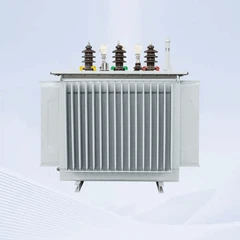
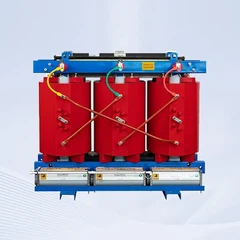





2000kVA Oil-Immersed Transformer for Middle East Desert Environments
May 20, 2026
Leave a message
Extreme heat, frequent sandstorms, and the rapidly growing demands of the solar and oil & gas industries in the Middle East pose severe challenges for transformers. High temperatures accelerate insulation ageing, sand clogs cooling systems leading to overheating, and any downtime can result in significant economic losses.

Our 2000kVA oil-immersed transformer is specifically designed to meet these challenges. It features enhanced cooling fins and sand-proof breather valves, ensuring efficient heat dissipation even at ambient temperatures up to 50°C. The precision-sealed design significantly reduces the risk of oil leakage and contamination, while its high short-circuit withstand capability effectively handles intermittent solar loads and heavy industrial surges.
Choosing our solution gives you a longer service life (25-30+ years), lower energy losses (helping to reduce electricity costs), and minimal maintenance – keeping your project efficient, reliable, and productive over the long term.

1. High Ambient Temperature and Insulation Ageing
Summer ambient temperatures in parts of the Middle East often exceed 50°C.
A standard transformer then operates with reduced cooling margin: oil temperatures rise, insulation ages faster and the risk of forced outage increases, especially during peak solar generation hours.
The engineering response is an optimised external radiator design with enhanced natural oil circulation that keeps the top-oil temperature within its limit even at high ambient.
A service life in the 25–30+ year range is a typical experience figure for well-designed units in such service, not a guarantee; actual life depends on load, oil condition and maintenance.
2. Sandstorms and Cooling/Oil Contamination
Desert sand can enter cooling systems and breathers, reducing heat dissipation and contaminating insulating oil.
Measures include sand-proof breathers (never replace them with standard silica-gel breathers), a fully sealed tank and a filtration system.
This keeps the cooling system clean and reduces maintenance frequency.
3. Oil Leakage and Fire/Environmental Risk
High temperature combined with vibration can cause seal failures; oil leakage pollutes the environment (strictly regulated in the Gulf region) and increases fire risk near oil & gas facilities.
The design response includes pressure-relief valves, a diaphragm-type conservator, a high-strength corrosion-resistant tank and high-quality sealing components.
Environmentally friendly insulating oils with high fire point (natural ester type) can be specified to facilitate project approval.

4. Load Fluctuations and Short-Circuit Effects
Solar power is highly intermittent, and oil & gas equipment generates large inrush currents; voltage fluctuations and short-circuit stresses can damage equipment.
Reinforced winding and core design provides high short-circuit withstand capability, and the transformer typically offers a short-term overload capability (commonly around 150% of rating for a limited period - confirm the exact value against the design data).
Installation Considerations for 2000kVA Transformers in Middle East Desert Environments
Proper installation is critical to ensure reliable operation and long life in harsh desert conditions. Please observe the following recommendations:
- Site selection and foundation: choose a well-drained, elevated location away from low-lying areas where sand or water can accumulate; the concrete foundation must be level and strong enough for the unit weight (roughly 3–4 tonnes for a 2000kVA unit, depending on voltage configuration); leave at least 1 m of clear space around the transformer.
- Orientation and sun shading: orient the radiator bank away from the prevailing afternoon sun; a fixed reflective roof or sunshade can lower the internal temperature rise by several degrees (typically 5–8°C, per field experience).
- Ventilation: keep radiator fins unblocked; maintain clearance of about 1.5× fin depth on the intake side and at least 2 m on the hot-air exhaust side; do not install in a confined enclosure without forced ventilation.
- Sand and dust protection: use the sand-proof breathers as specified; ensure cable glands, gaskets and access covers are sealed; consider low-velocity filtered air pressurisation for long shutdowns.
- Earthing and lightning: in high-resistivity desert soil, install deep-driven earthing (multiple 3 m rods or a chemical earth electrode) to achieve below 1 Ω; fit surge arresters on both primary and secondary sides.
- First oil filling and testing: verify the factory-filled oil meets the specified quality (e.g. IEC 60296 for mineral oil, with appropriate oxidation stability); take an oil sample for DGA and dielectric breakdown testing as a baseline; set the oil level for the expected ambient range (about -10°C to 55°C).
- Commissioning: run at no-load for at least 4 hours monitoring oil temperature, vibration and noise; under full load, perform thermal imaging after 1 hour and again after 24 hours to confirm no localised hotspots exceed the limits.

Ready to Power Your Next Middle East Project?
Our engineers are ready to help you customise a 2000kVA transformer that can withstand the toughest environment. Let's discuss your technical requirements today.
Request a Technical Consultation
FAQ
1. Is this 2000kVA high‑temperature transformer suitable for the hot desert environment of the Middle East?
Yes. It is optimised for extreme climates such as Saudi Arabia and the UAE, where summer ambient temperatures often exceed 50°C. With enhanced external radiators and optimised natural oil circulation, it effectively controls top oil and winding temperature rise even under harsh desert conditions.
2. How does the 2000kVA high‑temperature transformer cope with frequent sandstorms and dust in the Middle East?
Sand is a major challenge in desert projects because it can clog radiators and contaminate the oil. Our design includes reinforced sand‑proof breathers, a fully sealed tank, and precision filtration to effectively prevent fine dust ingress. This maintains cooling efficiency and significantly reduces maintenance frequency compared to standard transformers.
3. What is the oil capacity of the 2000kVA high‑temperature transformer? How is the risk of leakage controlled?
The standard tank oil capacity is approximately 1000 litres (the exact volume depends on the final voltage configuration and cooling design – we provide precise calculations for your project). Leakage risk is minimised through pressure relief valves, a diaphragm‑sealed conservator, high‑quality seals, and a robust fully welded tank.
4. How does the transformer prevent insulation ageing and extend service life in high‑temperature environments?
High temperatures accelerate oil oxidation and insulation degradation. Our advanced heat dissipation design and reinforced radiators ensure stable thermal performance, keeping oil and winding temperatures within safe limits. These safety margins strictly follow IEC 60076 requirements for oil top temperature rise and average winding temperature rise, guaranteeing reliable operation even at full load.
GNEE TRANSFORMER PARAMETER
|
Rated Capacity(kVA) |
Voltage Combination |
Vector group |
No-load Loss(kW) |
Load Loss(kW) |
No-load Current(%) |
Short-Circuit Impedance(%) |
||
|
High Voltage(kV) |
High Voltage Tapping Range(%) |
Low Voltage(LV) |
||||||
|
30 |
20 |
±2×2.5 or ±5 |
0.4 |
Dyn11 or Yan11 or |
0.08 |
0.66/0.63 |
1.7 |
5.5 |
|
50 |
0.1 |
0.96/0.91 |
1.6 |
|||||
|
63 |
0.12 |
1.14/1.09 |
1.5 |
|||||
|
80 |
0.14 |
1.37/1.30 |
1.4 |
|||||
|
100 |
0.16 |
1.64/1.57 |
1.2 |
|||||
|
125 |
0.19 |
1.98/1.88 |
1.2 |
|||||
|
160 |
0.23 |
2.41/2.30 |
1.1 |
|||||
|
200 |
0.27 |
2.85/2.72 |
1 |
|||||
|
250 |
0.32 |
3.34/3.18 |
0.96 |
|||||
|
315 |
0.38 |
4.00/3.81 |
0.88 |
|||||
|
400 |
0.46 |
4.72/4.39 |
0.8 |
|||||
|
500 |
0.54 |
5.64/5.48 |
0.8 |
|||||
|
630 |
0.65 |
6.48 |
0.72 |
|||||
|
800 |
0.78 |
7.84 |
0.64 |
|||||
|
1000 |
0.92 |
10.7 |
0.56 |
6 |
||||
|
1250 |
1.1 |
12.5 |
0.56 |
|||||
|
1600 |
1.33 |
15.1 |
0.48 |
|||||
|
2000 |
1.56 |
19.1 |
0.48 |
|||||
|
2500 |
1.87 |
22.2 |
0.4 |
|||||
Send Inquiry