







200kVA Dry Type Transformer Price
May 19, 2026
Leave a message
In the rapidly evolving landscape of electrical infrastructure, the 200kVA dry type transformer has emerged as the industry standard for safe, efficient, and indoor-compatible power distribution. Whether you are upgrading a commercial office complex, powering a sensitive data center, or expanding an industrial workshop, the primary question remains: What is a fair 200kVA dry type transformer price in today's market?

Navigating the discrepancy between a $3,500 budget unit and an $8,500 high-performance model can be challenging for procurement managers and electrical engineers alike. The price tag is rarely just a number; it is a reflection of the unit's winding material, thermal insulation class, and long-term energy efficiency. Choosing a "cheap" unit today often leads to exorbitant operational costs and premature failure tomorrow.
Current Market Price Benchmarks (2026 Reference)
Based on winding material, insulation class, and enclosure type, typical price ranges for a 200kVA dry-type transformer are as follows:
| Configuration | Price Range (USD) | Typical Application |
|---|---|---|
| Aluminum winding / Class F / IP00 | 3,200 – 4,100 | Budget-sensitive industrial projects |
| Copper winding / Class F / IP20 | 4,800 – 6,200 | Standard commercial distribution |
| Copper winding / Class H / IP23 | 6,500 – 8,000 | High-temperature or heavy industrial environments |
| Amorphous core / High efficiency | 8,500 – 10,500 | Data centers, green-certified buildings |
The "Big Five" Factors Influencing Price
Winding Material – Copper vs. Aluminum
- Copper windings: Higher conductivity, smaller footprint, better short-circuit withstand capability – more expensive.
- Aluminum windings: Lower initial cost, but require larger cross-section to match conductivity, leading to larger core and overall size.

Insulation Class (Temperature Endurance)
- Class F (155°C) – Standard industrial choice.
- Class H (180°C) – Uses advanced materials like NOMEX, roughly 15% price premium, suitable for overload or high-ambient-temperature environments.
Core Steel Quality
- High-permeability Cold-Rolled Grain-Oriented (CRGO) silicon steel reduces no‑load losses. Lower-grade steel lowers upfront cost but increases long‑term energy consumption.
Brand and Origin
- Top-tier global brands (ABB, Siemens) typically carry a 30–50% premium. High-quality OEM manufacturers (e.g., in China, meeting IEC/IEEE standards) offer competitive prices through integrated supply chains.
Customization (K-Factor, Harmonics)
- When feeding non-linear loads (LED lighting, UPS, etc.), a K-factor rating (e.g., K‑4, K‑13) is required. This involves reinforced neutral conductors and special winding techniques, adding 10–25% to the base price.
Deep Dive: Winding Materials and Core Engineering
- A copper-wound 200kVA transformer typically weighs 850–1,000 kg.
- An aluminum-wound unit, to match conductivity, requires a larger core and overall construction, often exceeding 1,100 kg.
Pro Tip: Always ask for total weight and loss data (no‑load and load losses). If a quote seems suspiciously cheap and light, the manufacturer may have compromised conductor cross‑section area.

Cast Resin vs. VPI – Performance vs. Price
| Manufacturing Process | Characteristics | Price | Suitable Environment |
|---|---|---|---|
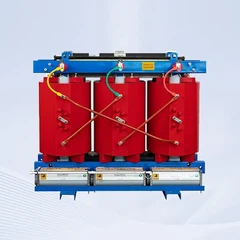
| Cast Resin (CRT) | Windings fully encapsulated in epoxy resin – moisture, salt spray, and dust resistant, virtually maintenance‑free | Higher | Harsh industrial environments |
| Vacuum Pressure Impregnation (VPI) | Windings coated with polyester varnish – open coils allow better cooling but are susceptible to moisture over time | Lower | Clean, dry indoor locations |
Efficiency Standards and Long-Term ROI (Total Cost of Ownership)
- TCO = Purchase price + (No‑load loss × A) + (Load loss × B)
(where A and B represent capitalised energy costs over the transformer's life)
A high-efficiency 200kVA unit may cost 1,500moreupfrontbutsave1,500moreupfrontbutsave400 annually in wasted energy. The premium pays for itself in less than 4 years.
Enclosures and IP Ratings
- IP00 – No enclosure; used inside switchgear.
- IP20/IP21 – Protects against finger contact and vertical dripping water; standard for indoor rooms.
- IP23 – Louvre design protects against water spray at an angle; required for certain industrial zones. Adding an IP23 enclosure typically adds $600–900 to the price.
Hidden Costs – Logistics and Compliance
- Testing – Routine tests are usually included. Type tests (temperature rise, lightning impulse) cost extra.
- Logistics – Weight ~1 ton, sea freight is typical. Wooden crate packaging prevents core displacement during transit.
- Accessories – Temperature controllers (e.g., BWDK series with RS485 for SCADA) are often billed separately ($250–450).
Real-World Case Study – Commercial Complex
- Project: 15‑storey office building in Manila, Philippines.
- Requirement: 200kVA, 13.8kV/400V, copper winding, IP21.
- Option A (local stock) – $7,500, immediate delivery.
- Option B (imported OEM) – $5,200, 6‑week lead time.
- Outcome: The client chose Option B, saving 2,300. Byinvesting2,300. Byinvesting 400 of those savings into a high‑grade temperature monitoring system, they extended the expected transformer lifespan by 5 years.
The price of a 200kVA dry‑type transformer is an investment in your facility's uptime. By focusing on high‑quality copper windings, superior insulation, and energy efficiency, you can achieve a service life of 25+ years and a strong return on investment.
Q: Why is the 200kVA dry type transformer more expensive than the oil-type?
A: Dry type units require more expensive insulation materials (Nomex/Resin) and larger clearances for air cooling compared to the high dielectric strength of transformer oil. However, they save money on fire-vault construction and insurance premiums.
Q: Can I run a 200kVA transformer at 110% capacity?
A: Only if it is equipped with cooling fans (AF – Air Forced). With fans, a 200kVA unit can typically handle 266kVA (a 33% increase) for short periods, but this increases internal heat and aging.
Q: How often does a dry type transformer need maintenance?
A: Very rarely. Every 12 months, you should perform a visual inspection and vacuum the dust off the coils to ensure proper heat dissipation.
Send Inquiry