








What a Battery Energy storage system 215kwh cabinet can do?
Oct 15, 2026
Leave a message
What Is a 215kWh Commercial Energy Storage Cabinet?
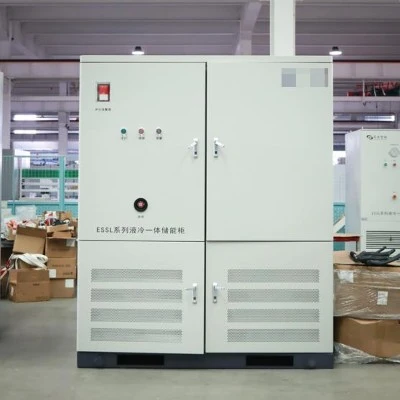
A 215kWh commercial energy storage cabinet (also written as a 215 kWh C&I BESS cabinet, 215 kWh battery energy storage system, or 215 kWh ESS cabinet) is a factory pre-integrated, turnkey energy storage asset. Every subsystem - LFP battery modules, bi-directional PCS, BMS, EMS, liquid-cooling loop, fire suppression and AC/DC distribution - ships inside one weatherproof enclosure, pre-wired and pre-commissioned.
The distinction matters: a traditional BESS project is built on site from separate containers, inverters and fire panels. A cabinet arrives as one lift-and-place unit. GNEE Electric's OES-100/215L liquid cooled all-in-one BESS cabinet, for example, occupies ~1.4 m² and is typically energised within a day of setting it on its concrete pad - installation effort is cut by up to 70% versus a built-up system.
Key takeaways
- Capacity / power: 215 kWh, 100 kW rated (0.5P-class C-rate), 400 V 3-phase 4-wire, 50/60 Hz.
- Chemistry: LiFePO4 (LFP), 314 Ah prismatic cells, 6,000+ cycles at 90% DoD, 25 °C, end-of-life 70% SOH.
- Efficiency: >90% round-trip, THD <3%, power factor >0.99 charging / >0.95 discharging.
- Thermal: liquid cooling + forced air, cell temperature differential <3 °C, operating −25 °C to 55 °C.
- Enclosure: IP55, C4/C5 anti-corrosion, ~1.4 m² footprint (1,200 × 1,000 × 1,900 mm), ~3,500 kg, outdoor floor-mounted.
- Scaling: 10+ cabinets in parallel for MWh-scale; no redesign required.
- Typical payback: 2.5–4.5 years where a peak-valley spread ≥$0.10/kWh meets a demand charge ≥$8/kW-month (see the ROI model below).
What's inside a 215kWh ESS cabinet?

Not sure whether 215 kWh is the right size for your site?
Send us 12 months of load data plus your electricity tariff structure. Our engineers return a sized configuration, single-line diagram and payback model - free, within 24 hours.

215kWh Commercial Energy Storage Cabinet Specifications (OES-100/215L)
Full published parameters for the GNEE Electric liquid cooled all-in-one cabinet. Custom power/capacity ratios, voltage levels and cooling options are available on request.
| Category | Parameter | Specification |
|---|---|---|
| System | Model | OES-100/215L |
| System | Type | Liquid cooled all-in-one BESS cabinet |
| Electrical | Rated power | 100 kW (configurable) |
| Electrical | Energy capacity | 215 kWh |
| Electrical | AC voltage | 400 V, 3-phase 4-wire |
| Electrical | AC frequency | 50 / 60 Hz |
| Electrical | Power factor | >0.99 (charging) / >0.95 (discharging) |
| Electrical | Round-trip efficiency | >90% |
| Electrical | THD | <3% |
| Battery | Chemistry | Lithium Iron Phosphate (LFP / LiFePO4) |
| Battery | Cell | 314 Ah prismatic cell |
| Battery | Nominal voltage | 672 V DC (system level) |
| Battery | Cycle life | 6,000+ cycles (90% DoD, 25 °C, EOL = 70%) |
| Battery | Depth of discharge | 90% |
| Thermal | Cooling | Liquid cooling + forced air (hybrid) |
| Thermal | Temperature differential | <3 °C across all cells |
| Thermal | Operating temperature | −25 °C to 55 °C |
| Thermal | Coolant | Water-glycol mixture (dielectric fluid option) |
| Protection | Ingress rating | IP55 |
| Protection | Anti-corrosion | C4 / C5 coating |
| Protection | Fire suppression | Aerosol automatic fire suppression system |
| Protection | Certification | IEC 62619, UN38.3, UL 1973, CE |
| Physical | Dimensions (W × D × H) | 1,200 × 1,000 × 1,900 mm (approx.) |
| Physical | Footprint | ~1.4 m² |
| Physical | Weight | ~3,500 kg |
| Physical | Installation | Outdoor, floor-mounted (no shelter required) |
| Communication | Protocols | Modbus TCP/RTU, CAN, Ethernet, RS485 |
| Communication | Monitoring | Cloud EMS platform (web + mobile app) |
| Communication | Parallel expansion | Up to 10+ cabinets (MW-scale) |
How Much Usable Energy Does 215 kWh Actually Deliver?
Nameplate capacity is not what reaches your loads. Three factors reduce it: depth of discharge, round-trip efficiency, and ambient temperature.
- Usable DC energy per cycle: 215 kWh × 90% DoD = 193.5 kWh
- Usable AC energy per cycle: ≈193.5 kWh × ~0.95 PCS efficiency ≈ 184 kWh
215kWh cabinet runtime at different loads
Assumes 184 kWh usable AC energy at 25 °C, from a single full charge, no PV input during discharge.
| Average site load | Approx. runtime on one full charge |
|---|---|
| 25 kW | ≈ 7.4 hours |
| 50 kW | ≈ 3.7 hours |
| 75 kW | ≈ 2.5 hours |
| 100 kW (rated) | ≈ 1.8 hours |
This is why the 215 kWh size pairs so well with 100 kW of power: it is a ~2-hour system at rated output, which is exactly the discharge duration most utilities and tariff structures reward for peak shaving.
Cycle-life reality check: 6,000 cycles at two full cycles per day is reached in about 8.2 years; at one cycle per day, about 16.4 years - longer than a typical 15-year calendar life. If your strategy is two cycles a day, model augmentation (partial module replacement) or a derated capacity in year 9–10.
How a 215kWh BESS Cabinet Works: Four Operating Modes
All four modes below are configured in the cloud EMS. No hardware change and no site visit is required to switch strategy.
- Peak shaving / demand-charge management. The EMS watches the site meter. When demand crosses your contracted threshold, the cabinet discharges at up to 100 kW so the meter never sees the peak. This is what removes the demand-charge component of a commercial electricity bill - often 30–50% of the total.
- Time-of-use (TOU) arbitrage. Charge from the grid during the valley window, discharge during the peak window, and pocket the spread. Two charge/discharge cycles per day is the standard C&I pattern where the tariff offers two peak windows.
- PV self-consumption and solar smoothing. Store midday PV surplus instead of exporting it at a low feed-in tariff, then discharge in the evening. The PCS also smooths cloud-transient ramps so your PV plant looks stable to the grid operator.
- Backup power and islanding. On grid failure the cabinet isolates the site and re-establishes the bus (transfer time ), keeping critical loads - cold chain, data rooms, hospital circuits, telecom rectifiers, production lines - running without a UPS dropout. Paired with a genset, the battery carries the night load and cuts diesel runtime by 60–80%.
215kWh Energy Storage Cabinet Applications by Industry
| Industry / site type | What the 215 kWh cabinet does | Primary KPI improved |
|---|---|---|
| Manufacturing plants (food, textile, carton, machining) | Shaves the morning and evening demand peaks of a single-shift plant; covers short grid dips | Demand charge ↓, downtime ↓ |
| Commercial buildings, malls, offices | Shifts HVAC and lighting load from peak to valley; evening discharge | Electricity bill ↓ 15–35% |
| EV fast-charging hubs | Buffers 100–350 kW charger pulses so a constrained grid connection can host more chargers | Grid upgrade CAPEX avoided |
| Solar + storage (rooftop PV 100–250 kWp) | Raises self-consumption ratio from ~40% to 70–85% | LCOE ↓, grid import ↓ |
| Data centres and telecom | Ride-through backup and UPS support; peak shaving on the IT load | Availability ↑, diesel OPEX ↓ |
| Microgrids, islands, remote sites | Grid-forming source alongside PV and diesel; black-start capable | Fuel ↓ 60–80%, reliability ↑ |
| Hospitals, cold chain, water treatment | Seamless backup for critical circuits | Outage losses avoided |
Looking for a hybrid unit with integrated MPPT and automatic transfer switching, or a higher-voltage 241 kWh option? See the 225kWh PV energy storage system cabinet and the 241kWh outdoor battery energy storage cabinet.

215kWh vs 225kWh vs 241kWh Battery Cabinet: Which Capacity Do You Need?
| Model | Capacity | Power | Nominal DC voltage | Cell | Best fit |
|---|---|---|---|---|---|
| OES-100/215L liquid cooled all-in-one | 215 kWh | 100 kW | 672 V | LFP 314 Ah | Space-constrained urban and industrial sites; liquid cooling, ~1.4 m² footprint |
| 225kWh PV energy storage cabinet | 225 kWh | 100 kW hybrid PCS + MPPT | - | LFP 314 Ah | Sites that want PV, storage and backup in one enclosure with ATS |
| 241kWh outdoor battery cabinet | 241 kWh | 125 kW (60–120 kW options) | 768 V, 1P240S | LFP 314 Ah | Higher discharge power, larger demand spikes, air- or liquid-cooled |
| 232kWh hybrid / on-grid cabinet | 232 kWh | 100 kW | 832 V | LFP 280 Ah | Hybrid on/off-grid with 2 MPPT PV input |
Decision rule of thumb
- Peak demand 150–400 kW and daily consumption 1,500–4,000 kWh → start at 215 kWh.
- You need more than 100 kW of discharge, or peaks last longer than 2 hours → step up to 241 kWh / 125 kW.
- You want PV strings wired straight into the cabinet with automatic transfer → choose the 225 kWh hybrid.
- Multi-MW or phased rollout → parallel 10+ cabinets; see the full energy storage cabinet range.
how to Size a 215kWh Commercial ESS in Five Steps
- Pull 12 months of 15-minute interval load data. Peak shaving is decided by the shape of your load curve, not by monthly kWh totals.
- Identify your top 20 peak-demand days. The 100 kW rating should cover the gap between your contracted demand and your typical peak.
- Read your tariff structure. Separate the energy charge (kWh), the demand charge (kW-month) and the TOU windows. The demand charge usually carries 30–50% of the savings.
- Choose the duty cycle. One cycle/day maximises calendar life; two cycles/day doubles arbitrage revenue but reaches 6,000 cycles in ~8 years.
- Reserve capacity for backup. If outage ride-through is required, hold a configurable SOC floor so peak shaving never empties the battery.
Send us these six items and we will return a priced configuration:
- Site location and grid voltage/frequency (400 V 50 Hz, 480 V 60 Hz, etc.)
- 12 months of interval load data (or a recent bill plus peak demand)
- Contracted demand and demand-charge rate
- Required backup duration and critical-load list
- Existing or planned PV capacity (kWp)
- Site photos, ambient temperature range and available footprint
Have your load data ready?
Send the six items above and our engineering team returns a priced 215kWh configuration with single-line diagram, layout drawing and payback model - typically within 24 hours.

fAQ
How much usable energy does a 215kWh battery cabinet provide?
About 193.5 kWh DC at 90% depth of discharge, which is roughly 184 kWh AC after conversion losses. That equals 1.8 hours at the full 100 kW rating, or 7.4 hours at 25 kW.
What size facility is a 215kWh commercial energy storage cabinet suitable for?
Typically sites with 150–400 kW contracted demand and 1,500–4,000 kWh daily consumption - a single-shift factory, a mid-size mall or office building, an EV charging hub, or a data-centre module. Final sizing must be based on the actual load profile, not monthly consumption alone.
Can a 215kWh ESS cabinet do peak shaving and backup power at the same time?
Yes. The EMS runs peak shaving during normal operation while holding a configurable SOC reserve for outages. On grid failure the cabinet isolates the site and re-establishes the bus automatically.
How long does a 215kWh LiFePO4 cabinet last?
6,000+ cycles at 90% DoD and 25 °C to 70% state of health. That is ~16 years at one cycle per day, or ~8 years at two cycles per day, against a roughly 15-year calendar life.
What is the round-trip efficiency of a 215kWh cabinet?
>90% for the liquid-cooled OES-100/215L. Air-cooled equivalents are usually 2–4 points lower, and lose more in hot climates because the fans run continuously.
Send Inquiry