







3-Phase 100 kVA Transformer: Specifications and Testing Guide
Nov 13, 2025
Leave a message
What Is a 3-Phase 100 kVA Transformer?
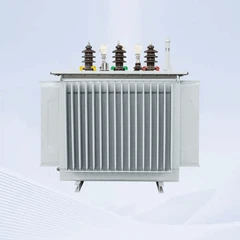
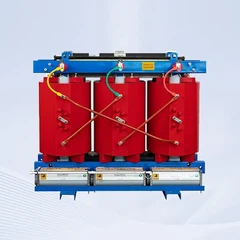
A 100 kVA three-phase transformer is a compact distribution unit that steps a medium-voltage supply, commonly 10 kV or 11 kV, down to a low-voltage three-phase supply of 400 V or 415 V. It can be supplied as an oil-immersed unit for outdoor and pole mounting or as a dry-type unit for indoor and fire-sensitive locations. The 100 kVA rating places it at the lower end of the three-phase distribution range, making it a frequent choice for small workshops, agricultural facilities, commercial premises, and rural networks where the connected load is too large for a single-phase supply. Both the oil-immersed and the dry-type versions are manufactured and tested in accordance with IEC 60076, with the dry-type version covered specifically by IEC 60076-11.
Typical Technical Specifications
The table below lists representative parameters for a 100 kVA three-phase transformer. The exact values depend on the voltage ratio, the vector group, the winding material, and the efficiency class selected for the project.
| Parameter | Typical Value |
|---|---|
| Rated power | 100 kVA |
| Primary voltage | 10 kV, 11 kV, or 20 kV, other ratios available |
| Secondary voltage | 400 V or 415 V three-phase, 230 V or 240 V phase to neutral |
| Frequency | 50 Hz or 60 Hz |
| Vector group | Dyn11, Yyn0, or Dyn5 |
| Winding material | Copper or aluminium |
| Impedance voltage | Typically 4% for distribution duty |
| Cooling | ONAN for oil-immersed; AN or AF for dry-type |
| Efficiency class | Per the applicable local regulation, for example GB 20052 |
Factory Testing: What Is Verified Before Shipment
Every transformer is tested at the factory before delivery, and the purchaser should request the routine test report together with the nameplate data. The core routine tests follow the applicable standard, normally IEC 60076-1 for oil-immersed units and IEEE C57.12.91 for dry-type units in North America. They include the measurement of winding resistance, the turns-ratio test on all tap positions, the no-load loss and no-load current measurement, the load loss and impedance voltage measurement, the applied and induced voltage dielectric tests, the insulation resistance test, and the temperature-rise test where required. For dry-type units a partial discharge measurement is part of the type testing. The purpose of these tests is to confirm that the transformer meets the declared ratings and that the insulation system is sound before the unit leaves the works.
Understanding the Key Test Measurements
Winding resistance is measured on each phase and corrected to a reference temperature so that the values can be compared with the design and with previous measurements; a deviation above 5% between phases or from the design value is a warning that the connections or the winding itself need investigation. The turns-ratio test verifies that the number of turns on each tap position matches the nameplate and the vector group. The no-load test measures the core loss and the magnetising current at rated voltage and frequency, and the load test measures the copper loss and the impedance voltage at rated current. The dielectric tests apply voltages above the rated value to prove that the insulation can withstand both the operating stress and the transient overvoltages specified by the insulation level. Together these measurements give confidence that the unit will operate reliably under the conditions stated on the nameplate.
Installation and Application Notes
For an oil-immersed 100 kVA unit, the transformer is installed on a plinth or pole with adequate clearance for the bushings, and the oil level, breather, and protective devices are checked during commissioning. For a dry-type unit, the enclosure must allow the cooling air to flow freely, and the unit should be protected from dust, moisture, and direct sunlight. In both cases the low-voltage side should be connected through a suitable distribution board with the protection settings coordinated with the transformer impedance and the fault level at the site. A spare-parts set, including gaskets, fuses, and a breather, is normally recommended so that minor repairs do not interrupt the supply.
FAQ
Q: What load can a 100 kVA three-phase transformer supply?
A: The apparent power limit is 100 kVA. The real power depends on the power factor of the load: at a power factor of 0.8 the transformer can supply 80 kW continuously without exceeding its rating, provided the current stays at or below the rated value.
Q: What is the difference between a dry-type and an oil-immersed 100 kVA transformer?
A: The oil-immersed unit uses mineral oil for insulation and cooling, has a lower first cost, and suits outdoor installation. The dry-type unit uses air or epoxy resin, is fire-safe and virtually maintenance-free, and suits indoor and safety-critical locations. The ratings and testing differ slightly because they follow IEC 60076-11 for the dry-type version.
Q: Why is the impedance voltage specified at 4%?
A: A 4% impedance is a typical value for small distribution transformers because it balances voltage regulation against fault current. The exact value is chosen in the specification and verified by the load-loss test during the factory routine tests.
Q: What does the turns-ratio test verify?
A: The turns-ratio test confirms that the actual ratio of primary to secondary turns on every tap position matches the design value for the declared voltage ratio and vector group. It is one of the routine tests required by IEC 60076 and IEEE C57.12.91.
Q: What is the insulation resistance test and why is it done?
A: The insulation resistance test measures the resistance between the windings and between the windings and earth using a high-voltage DC source. A very high reading, typically hundreds of megohms or more for a new unit, confirms that the insulation is dry and sound before the dielectric tests and energisation.
Q: Can a 100 kVA transformer be used for a 60 Hz system?
A: Yes, if the unit is designed and tested for 60 Hz. A 50 Hz design should not be energised on a 60 Hz system without verifying the voltage rating and the performance with the manufacturer, because the core flux and the no-load behaviour change with frequency.
Send Inquiry