


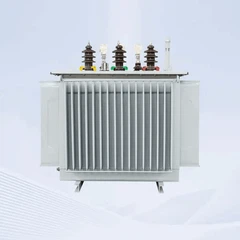







30 kVA Three-Phase Oil-Immersed Transformer: Key Parameters to Check
Jan 29, 2026
Leave a message
Why a 30 kVA Transformer
A 30 kVA three-phase oil-immersed power transformer is a compact yet powerful workhorse for small industrial workshops and machine shops, agricultural irrigation and pumping stations, commercial complexes and small offices, and rural electrification and isolated community power supply. It serves as the critical link between the medium-voltage distribution grid and 400 V low-voltage equipment. A poor specification choice leads to excessive energy losses, overheating, and premature failure.
Core Parameter 1: Voltage Ratings and Vector Group
Confirm that the primary high voltage and secondary low voltage match the supply and load requirements, for example 11 kV / 0.433 kV, since an incorrect voltage rating is a fundamental and costly mismatch. The vector group symbol indicates the winding connection and phase displacement: Dyn11 is most common for distribution transformers, providing a neutral on the LV side for grounding and handling unbalanced loads, and it must match the system design.
Core Parameter 2: Losses and Efficiency
For a 30 kVA transformer running continuously, energy losses directly impact the electricity bill for years. No-load loss is the constant power loss when the transformer is energized but not supplying load, and lower is better; load loss varies with the square of the load current and is measured at a reference temperature of usually 75 degrees C. A transformer with slightly higher initial cost but significantly lower losses often pays for itself within a few years through energy savings.
Core Parameter 3: Impedance Voltage
The impedance voltage affects voltage regulation and short-circuit protection. For a 30 kVA distribution transformer, the typical range is 4 to 4.5 percent. A lower value gives better voltage regulation under load but higher short-circuit currents requiring more robust protection; a higher value limits fault current but can cause larger voltage drops. Verify that the specified value suits the network fault level and load sensitivity.
Core Parameter 4: Insulation Level and Dielectric Tests
The basic insulation level indicates the ability to survive lightning strikes or switching surges, with values such as 95 kV for an 11 kV HV side. The power frequency withstand voltage is the AC test voltage applied during factory testing, and the insulation class is typically Class A for oil-immersed units with temperature rise limits of 55 K or 65 K.
Pre-Purchase Checklist
| Parameter | Typical value for 30 kVA |
|---|---|
| Rated power | 30 kVA, three-phase |
| Voltage ratio | e.g., 11000 / 433 V |
| Vector group | Dyn11 |
| No-load loss | About 150 W or less for high-efficiency series |
| Load loss at 75 degrees C | About 650 W |
| Impedance voltage | 4 - 4.5 percent |
| BIL | 95 kV HV for 11 kV, per system level |
| Cooling | ONAN |
| Oil quantity | About 150 - 200 liters |
| Standards | IEC 60076, GB 1094 |
Frequently Asked Questions
Q: What is the most common vector group?
A: Dyn11, which provides an LV neutral for grounding and handles unbalanced loads.
Q: What is the typical impedance of a 30 kVA transformer?
A: 4 to 4.5 percent.
Q: Why compare no-load loss?
A> No-load loss runs continuously whenever the transformer is energized and directly affects the annual electricity bill.
Q: What BIL is required for 11 kV?
A: 95 kV lightning impulse withstand voltage on the HV side.
Q: Which winding material is preferred?
A: Copper, for better conductivity, thermal performance, and long-term reliability.
Q: What should the factory test report verify?
A: Losses, ratio, and impedance values matching the datasheet, plus all routine tests.
For a 30 kVA three-phase oil-immersed transformer quotation with test reports, contact our sales team.
Send Inquiry