









Dry-Type Transformers: Construction, Windings, and Applications
Mar 18, 2026
Leave a message
What Is a Dry-Type Transformer
A dry-type transformer is a power transformer in which the windings are insulated with solid materials such as epoxy resin instead of insulating liquid. Because there is no oil, the unit does not leak, does not require oil containment, and presents a much lower fire risk, which makes it the preferred choice for indoor installations such as commercial buildings, hospitals, schools, and underground substations. The design is governed by IEC 60076-11, which defines insulation classes and temperature rise limits for dry-type units.
Construction and Insulation
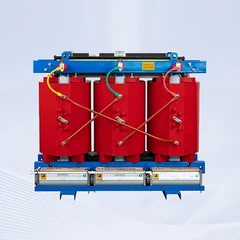
The magnetic core is built from high-grade grain-oriented laminated silicon steel to minimize no-load loss and noise. The windings are wound with copper conductors and are either cast in epoxy resin under vacuum or encapsulated with resin-impregnated insulation. Vacuum casting removes air pockets so that the resin penetrates fully between turns, creating a void-free insulation layer that resists moisture, dust, and corrosive environments. The insulation class, commonly B, F, or H in accordance with IEC 60076-11, defines the maximum allowable winding temperature.
Winding Designs
Different winding styles suit different voltage classes. Disc windings are common in core-form transformers rated 25 kV and above, and are also used in some 5 kV and 15 kV designs. Primary windings are typically round coils of insulated round copper wire, while secondary windings are sheet-wound copper with resin insulation, which gives high short-circuit strength. The basic insulation level of a modern dry-type transformer is designed to be equivalent to that of liquid-filled transformers of the same voltage class, so the unit withstands the same lightning impulse levels.
Applications of Dry-Type Transformers
Dry-type transformers are used wherever fire safety, environmental cleanliness, or space constraints rule out oil-filled units. Typical applications include hospitals and medical centers, universities, commercial offices, correctional facilities, data centers, and continuous-process industries. They are also used in areas with seismic activity because the encapsulated windings resist vibration. Outdoor installation is possible but requires a weatherproof enclosure rated for the environment, since the exposed insulation is sensitive to rain and humidity.
Advantages and Service Life
Because they contain no liquids, dry-type transformers offer pollution-free operation, no leakage risk, and simplified disposal at end of life. The absence of combustible oil reduces fire risk in hazardous areas such as chemical plants. Maintenance is limited to periodic cleaning of the ventilation system, checking connections, and measuring insulation resistance. With proper care, a dry-type unit can provide 20 to 30 years of service, and modern encapsulated designs deliver very low failure rates when operated within their rating.
Typical Ratings
| Parameter | Typical Range |
|---|---|
| Rated capacity | 50 kVA to 2500 kVA |
| Primary voltage | 0.4 kV to 35 kV |
| Insulation class | B, F, or H per IEC 60076-11 |
| Cooling method | AN natural air, AF forced air |
| Winding material | Copper, aluminium optional |
| Applicable standards | IEC 60076-11, GB/T 10228 |
FAQ
Q: Can dry-type transformers be installed outdoors?
A: Yes, if they are placed in a weatherproof enclosure that protects them from rain, snow, and extreme humidity, and if the ambient conditions remain within the design limits.
Q: How long does a dry-type transformer last?
A: A well-maintained dry-type distribution transformer typically lasts 20 to 30 years.
Q: How often should a dry-type transformer be maintained?
A: At least once a year: clean the vents, check connections, and measure insulation resistance. Increase the frequency in dusty or harsh environments.
Q: Are dry-type transformers quieter than oil-immersed units?
A: Generally yes, with noise levels typically ranging from about 45 to 65 decibels depending on size and load.
Q: What does the insulation class letter mean?
A: The class letter indicates the maximum winding temperature: class B 130 degrees, class F 155 degrees, class H 180 degrees Celsius, per IEC 60076-11.
Q: Is a dry-type transformer more expensive than an oil-immersed one?
A: The first cost is usually higher, but lower maintenance and simpler installation can reduce the total ownership cost, especially for indoor projects.
Send Inquiry