









How to Install a 50 kVA Oil-Immersed Transformer Safely
Jan 30, 2026
Leave a message
Why Correct Installation Matters
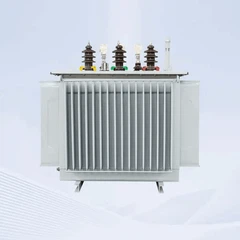
Correct installation of a 50 kVA oil-immersed transformer is the foundation of electrical safety, stable power distribution, and long-term reliability. A poorly installed unit can develop oil leakage, overheating, insulation failure, or even cause grid instability. The installation should be planned against the manufacturer drawings, the local electrical code, and the general requirements of IEC 60076-1, and all work must be performed by qualified electrical personnel.
Pre-Installation Preparation
Before any work begins, verify the transformer nameplate data against the order: rated capacity, primary and secondary voltages, vector group, frequency, and cooling class. Inspect the unit for transportation damage, oil leakage, and dents on the tank. Confirm that the oil level is within the marked range and that the sealing gaskets are intact. Prepare the foundation drawings, the grounding system, and the tools and test instruments needed during commissioning.
Foundation and Positioning
The transformer should be placed on a level reinforced concrete foundation that can carry its weight, typically around 500 kg for a 50 kVA unit including oil. Anti-vibration pads or channels reduce noise and vibration transmitted to the building. Leave adequate clearance around the unit for ventilation and maintenance access. For outdoor installation, provide drainage and weather protection, and keep the enclosure vents unobstructed. For indoor installation, ensure the room is ventilated and fire-rated according to local requirements.
Electrical Connections
Confirm the primary and secondary voltage ratings before connecting cables. Maintain the correct phase sequence and vector group, for example Dyn11, so that parallel operation and motor rotation are correct. Tighten all terminals to the torque specified by the manufacturer, install surge arresters on the primary side, and fit the protective devices required by the scheme. Incorrect wiring can cause short circuits, voltage imbalance, or equipment damage, so every connection should be checked against the connection diagram before energizing.
Grounding and Safety Measures
Reliable grounding is mandatory. Connect the tank, the neutral point, and the enclosure to the earthing system, and measure the earth resistance to confirm it meets the local standard. Provide an oil containment bund or drip tray where required to prevent soil and water pollution. Install fire prevention measures and warning signs, and maintain adequate clearance from buildings and public areas. Where the unit is accessible to the public, use fencing or a locked enclosure.
Commissioning Tests and Typical Specifications
After installation, perform commissioning tests before energizing: insulation resistance measurement, turns ratio and polarity verification, and no-load voltage check. When specified, test the oil quality, including dielectric strength and moisture content. Verify that the tap changer is set for the actual supply voltage. Only after all tests pass should the transformer be energized, first at no load, then under load, while monitoring temperature and sound.
| Parameter | Typical Value |
|---|---|
| Rated capacity | 50 kVA |
| Cooling method | ONAN |
| Primary voltage | 6 kV, 10 kV, or 11 kV |
| Secondary voltage | 0.4 kV |
| Frequency | 50 Hz or 60 Hz |
| Vector group | Dyn11 or Yyn0 |
| Applicable standards | IEC 60076-1, GB 1094 |
FAQ
Q: What foundation is required for a 50 kVA oil-immersed transformer?
A: A level reinforced concrete foundation capable of supporting the unit weight, with anti-vibration pads and adequate clearance for ventilation and maintenance.
Q: Why is the vector group important during installation?
A: The vector group determines the phase relationship between primary and secondary, which is critical for correct parallel operation, motor rotation, and neutral grounding.
Q: What is the earth resistance requirement?
A: The earth resistance must meet the local electrical code, typically below a few ohms depending on the system, and should be verified with an earth tester before energizing.
Q: Can a 50 kVA oil-immersed transformer be installed indoors?
A: Yes, provided the room is ventilated, fire-rated as required, and equipped with an oil containment measure such as a drip tray.
Q: What tests are needed before energizing?
A: Insulation resistance, turns ratio, polarity, no-load voltage, and oil quality tests, followed by a no-load energization before applying load.
Q: How much clearance is needed around the transformer?
A: Maintain the clearance specified by the manufacturer and local codes, generally at least 0.5 m on the ventilated sides and more at the front for switchgear access.
Send Inquiry