


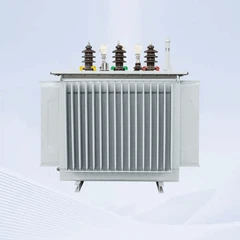





50kVA Oil Immersed Transformer: Key Parameters Buyers Must Check Before Purchase
Jan 29, 2026
Leave a message
Are you in the market for a 50kVA transformer but feeling overwhelmed by technical datasheets? Making an informed purchase decision requires more than just comparing prices.
As a manufacturer committed to transparency, GNEE empowers buyers by highlighting the critical specifications that define transformer quality, efficiency, and long-term value.
This guide outlines the key parameters buyers must check before finalizing a purchase for a 50kVA oil immersed transformer, ensuring you invest in reliability, not just hardware.
Why Due Diligence on Parameters Matters
A 50kVA oil immersed transformer is a long-term asset with a typical lifespan of 25+ years. Selecting a unit based on incomplete or suboptimal specifications can lead to:
- Chronic Energy Waste: High no-load losses silently inflate your electricity bill for decades.
- Operational Issues: Incorrect voltage or impedance can cause motor starting problems, excessive voltage drops, and protection coordination failures.
- Premature Failure: Inferior materials and construction lead to overheating, insulation breakdown, and costly unplanned downtime.
Verifying these parameters upfront is your best defense against future operational and financial headaches.
Fundamental Electrical Parameters: The Non-Negotiables
These are the first specs to confirm on any datasheet or nameplate.
- Rated Power & Phase: Must clearly state 50 kVA, 3-Phase. Confirm the frequency (50Hz or 60Hz) matches your grid.
- Voltage Ratio (HV/LV): This is critical. A standard ratio is 11,000/433 V or 22,000/433 V. You must match this exactly to your incoming supply voltage and required output voltage. A mismatch is a fatal error.
- Vector Group: For distribution transformers, Dyn11 is the most common and recommended. It provides a neutral point on the LV side for grounding and handles unbalanced loads well. Confirm this symbol matches your system design.
Efficiency & Cost-of-Ownership Parameters
These values determine your transformer's "fuel consumption" over its entire life. They are where quality manufacturers differentiate themselves.
- No-Load Loss (P0 / Core Loss): The power consumed when the transformer is energized but not supplying any load. It runs 24/7/365. A lower value means higher efficiency and lower operating cost. For a 50kVA unit, compare values like 150W vs. 200W – the 50W difference represents significant long-term savings.
- Load Loss (Pk / Copper Loss): The loss that occurs when current flows through the windings, varying with the square of the load. It is measured at a reference temperature (usually 75°C). Ensure you are comparing values at the same reference temperature.
- Efficiency Class: Look for designations like SBH15 or SBH17 (per Indian standards) or reference to IEC 60076-20. These classify transformers into efficiency tiers.
Tip: Always request the test report to see the measured loss values, not just the guaranteed maximums.
Performance & Protection Parameters
These specs ensure the transformer operates safely and integrates well with your electrical system.
- Impedance Voltage (Uk%): Typically 4% for a 50kVA distribution transformer. This value affects voltage regulation and short-circuit current. A deviation may be required for special applications but should be justified.
- Insulation Level: Check the Lightning Impulse Withstand Voltage (BIL). For an 11kV transformer, the HV side should be at least 95 kV. This indicates its ability to withstand voltage surges.
- Temperature Rise: The maximum allowed temperature increase over ambient for oil and windings. Standard is 55K for oil, 60K for windings (by resistance). Lower rises indicate a more conservative and durable design.
Construction & Material Quality Indicators
The datasheet should also speak to build quality.
- Core Material: Should specify Cold Rolled Grain-Oriented (CRGO) silicon steel. This is essential for low core losses.
- Winding Material: Copper windings are superior to aluminum for conductivity, thermal performance, and resistance to loosening under thermal cycling.
- Standard Fittings: The unit should include a pressure relief device, oil level gauge, thermometer (with contacts for alarm/trip), and a silica gel breather.
Essential Pre-Purchase Checklist & Comparison Table
Use this table to evaluate and compare offers from different suppliers.
| Parameter Category | Key Parameter to Check | What to Look For (for a 50kVA, 11/0.433kV Transformer) |
|---|---|---|
| Basic Identity | Rated Power & Phase | 50 kVA, 3-Phase |
| Voltage Ratio (HV/LV) | 11,000 / 433 V (or your exact requirement) | |
| Vector Group | Dyn11 (most common) | |
| Efficiency (Losses) | No-Load Loss (P0) | A specific, low value (e.g., ≤170W). Compare between bids. |
| Load Loss (Pk @75°C) | A specific value (e.g., ≤870W). Confirm reference temp. | |
| Performance | Impedance (Uk%) | ~4% (confirm it suits your system fault level) |
| Insulation Level (BIL) | HV: LI 95 kV, AC 35 kV | |
| Construction | Core Material | CRGO Silicon Steel |
| Winding Material | Copper | |
| Standard Test Report | Availability of Routine Test Report |
The GNEE Promise: Transparency & Certified Performance
When you evaluate a GNEE 50kVA oil immersed transformer, you get:
- Clear, Detailed Datasheets: All key parameters are explicitly stated.
- Material Certificates: Documentation for core steel and copper.
- Routine Test Report (RTR): A factory-issued document proving your specific unit meets or exceeds all promised performance parameters.
Conclusion: Purchase with Confidence by Verifying Key Specs
Investing in a 50kVA oil immersed transformer is a significant decision. By meticulously checking the key parameters outlined above-focusing on electrical compatibility, efficiency losses, and build quality-you move from being a price-shopper to a value-driven buyer. The right transformer is an asset; the wrong one is a liability.
Ready to buy with confidence? Use this checklist to assess your options.
Send Inquiry