


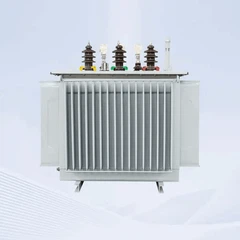
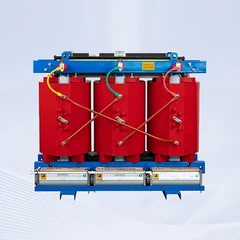







Standard 750 kVA Oil-Immersed Transformer: Accessory Configuration Guide
Mar 25, 2026
Leave a message
The Role of Accessories in Transformer Reliability
The performance of a power distribution system depends not only on the transformer itself but also on the secondary components that protect and monitor the primary unit. A 750 kVA oil-immersed transformer carries a defined set of accessories that detect abnormal conditions, protect the tank and windings, and give the operator the information needed for proactive maintenance. Selecting the correct accessory configuration is essential for preventing downtime and extending equipment life. The accessory scope is agreed between the buyer and manufacturer on the basis of the project specification, the operating environment, and the requirements of IEC 60076-1, which defines the nameplate and the general conditions of supply.
Oil Level and Pressure Monitoring
The oil level is critical for both insulation and cooling of a 750 kVA oil-immersed transformer. A standard configuration typically includes the following:
Magnetic oil level gauge mounted on the tank or conservator, which gives a clear external indication of the oil level and can be fitted with low-level alarm contacts.
Pressure relief device that vents excessive internal pressure caused by internal faults or severe overloads, preventing tank deformation or rupture.
Buchholz relay for units with a conservator, installed in the pipe between the conservator and the main tank, which detects gas accumulation and rapid oil surge.
Drain and sampling valve at the tank bottom for oil sampling and controlled drainage during maintenance.
These devices form the first line of defense against the most dangerous failure modes of an oil-filled unit.
Temperature Monitoring
Temperature is the most direct indicator of the loading state of a transformer. A standard 750 kVA unit is equipped with the following temperature monitoring:
Oil temperature indicator with a dial and alarm contacts, which reads the top-oil temperature.
Winding temperature indicator where specified, which estimates the winding hot-spot temperature from the load current and the oil temperature.
Alarm contacts that can be wired to trigger the cooling fans in an ONAF configuration and to send an alarm to the control room.
Maximum temperature pointer so that the peak temperature reached during operation can be read after the event.
Temperature records collected over time help identify developing problems such as blocked cooling fins or degraded oil before they cause failure.
Protection, Control and Service Accessories
Beyond monitoring, the standard accessory configuration includes the devices needed for control, adjustment, and service:
Off-circuit tap changer, typically plus or minus 2 by 2.5 percent, operated when the transformer is de-energized to adjust the voltage ratio to the network conditions.
Conservator with a silica gel dehydrating breather that keeps moisture out of the air entering the tank as the oil level changes.
High-voltage and low-voltage bushings sized for the current and insulation level of the unit.
Grounding terminals for the tank and the core, and lifting lugs for handling the unit.
Rating and connection diagram nameplate per IEC 60076-1, giving the operator the full technical data of the unit.
Rollers or skid base where the unit must be moved within the substation.
The combination of these accessories determines how easily the transformer can be operated, maintained, and moved over its service life.
Configuring Accessories for Your Project
The standard configuration is a starting point, and the final accessory scope should be tuned to the project:
Define the alarm and trip philosophy of the substation, including which contacts must be wired to the control system.
Consider the ambient environment: high-temperature regions may require larger radiators and fan cooling, while dusty or corrosive environments may require sealed terminal boxes.
Specify the protection degree of the terminal box and accessories per IEC 60529 to match the site.
Confirm whether the unit has a conservator, because the accessory package differs between conservator and non-conservator designs.
Request the accessory list in the technical specification and check it against the delivered unit during acceptance.
A clear, written accessory specification prevents disputes at delivery and ensures the transformer is ready for safe operation from day one.
FAQ
Q: Which accessories are standard on a 750 kVA oil-immersed transformer?
A: The standard package includes an oil level gauge, pressure relief device, oil temperature indicator, drain and sampling valve, off-circuit tap changer, bushings, grounding terminals, lifting lugs, and the rating nameplate. A Buchholz relay and conservator are fitted on conservator-type designs.
Q: Why is a Buchholz relay important?
A: It detects gas accumulation and rapid oil flow caused by internal faults in the transformer, giving early warning of developing problems before they escalate into major failures.
Q: What does the oil temperature indicator tell the operator?
A: It shows the top-oil temperature in real time, with alarm contacts that can start cooling fans or send an alarm. Combined with a winding temperature indicator, it allows the operator to manage loading and detect cooling problems.
Q: Can the tap changer be operated while the transformer is energized?
A: The off-circuit tap changer must only be operated when the transformer is de-energized. Where voltage adjustment under load is required, an on-load tap changer must be specified instead.
Q: How do I choose the right accessory scope for my project?
A: Define the alarm and trip philosophy, the environment, the protection degree of terminal boxes, and whether a conservator is required. Write the accessory list into the technical specification and verify it during acceptance.
Q: What standards cover transformer accessories?
A: The general conditions of supply and the nameplate are defined in IEC 60076-1, the protection degrees of enclosures follow IEC 60529, and the accessory arrangement is agreed in the project specification between buyer and manufacturer.
Send Inquiry