









Selecting a 75 kVA Oil-Immersed Transformer: A 5-Step Methodology
Jan 30, 2026
Leave a message
Step 1: Match the Rated Capacity
Correct capacity matching is the foundation of grid stability. A 75 kVA oil-immersed transformer is typically suitable for small industrial workshops, rural power distribution, commercial buildings, and auxiliary loads in substations. The actual load should be 60 to 80 percent of rated capacity, with margin for future expansion, and long-term overload operation must be avoided. Oversizing increases cost and no-load losses, while undersizing causes overheating and reduced insulation life.
Step 2: Select the Correct Voltage Ratio
The voltage configuration must align with local grid standards and load requirements. Common voltage combinations are 10 kV / 0.4 kV, 11 kV / 0.4 kV, 6.6 kV / 0.4 kV, and 13.8 kV / 0.48 kV. Improper voltage selection may result in unstable output, equipment damage, or grid compliance issues.
Step 3: Choose the Cooling and Insulation System
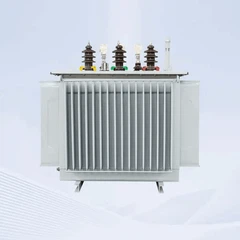
A 75 kVA unit typically uses ONAN cooling, providing excellent heat dissipation and insulation performance. The oil-immersed design offers superior thermal stability, strong short-circuit resistance, longer service life than dry-type in harsh environments, and suitability for outdoor and high-load conditions. High-quality transformer oil also improves dielectric strength and reduces internal aging.
Step 4: Confirm Standards and Loss Levels
The transformer must meet recognized international or regional standards such as IEC 60076, ANSI or IEEE, and GB or DL standards. No-load loss affects long-term operating cost, load loss impacts efficiency during peak demand, and low-loss designs reduce energy consumption and operating expense over the transformer's lifecycle.
Step 5: Match the Installation Environment and Protection Level
The final step adapts the transformer to the installation environment: outdoor or indoor installation, ambient temperature, humidity and dust level, and altitude. Optional features such as conservators, pressure relief devices, and surge arresters further enhance grid stability and operational safety.
Typical Parameters of a 75 kVA Oil-Immersed Transformer
| Parameter | Specification |
|---|---|
| Rated capacity | 75 kVA |
| Cooling method | ONAN |
| Primary voltage | 6 / 10 / 11 / 13.8 kV optional |
| Secondary voltage | 0.4 / 0.48 kV |
| Frequency | 50 / 60 Hz |
| Phase | Three-phase |
| Vector group | Dyn11 optional |
| Standards | IEC / ANSI / GB |
Frequently Asked Questions
Q: What load level is ideal for a 75 kVA transformer?
A: The actual load should be 60 to 80 percent of rated capacity, with margin for future expansion.
Q: What voltage combinations are common?
A: 10 kV, 11 kV, 6.6 kV, and 13.8 kV primaries with 0.4 kV or 0.48 kV secondaries.
Q: Why is oil-immersed preferred outdoors?
A: Superior thermal stability, short-circuit resistance, and longer service life in harsh environments.
Q: What standards apply?
A: IEC 60076, ANSI or IEEE, and GB or DL standards depending on the region.
Q: Why does no-load loss matter?
A> No-load loss runs continuously whenever the transformer is energized, directly affecting long-term operating cost.
Q: What protection accessories are available?
A: Conservators, pressure relief devices, and surge arresters for grid stability and safety.
For 75 kVA oil-immersed transformer quotations with selection support, contact our engineering team.
Send Inquiry