







The difference between amorphous alloy transformers and traditional transformers
Aug 07, 2025
Leave a message
The difference between amorphous alloy transformers and traditional transformers
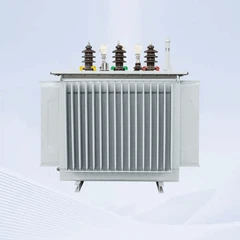
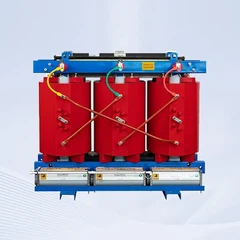
The core difference between amorphous alloy transformers and traditional transformers lies in the different core materials, resulting in significant differences in performance, efficiency, and applicable scenarios between the two.

Differences in Iron Core Materials
Amorphous alloy transformers use amorphous metals (such as iron-based alloys) as the iron core, and their atomic arrangement has no long-range ordered structure; Ordinary transformers use silicon steel sheets (crystalline materials) with ordered atomic arrangement.
Comparison of Loss Characteristics
No load loss: Amorphous alloy transformers have a 70% -80% reduction in no-load loss compared to ordinary transformers. For example, a 100kVA amorphous transformer has a no-load loss of about 20W, while a silicon steel transformer of the same capacity has a loss of about 100W
Load loss: Amorphous alloy is slightly higher (about 5% -10% higher), and it is necessary to increase the cross-sectional area of the iron core to compensate for magnetic density.
Energy saving and applicable scenarios
Amorphous alloy transformers have significant comprehensive energy efficiency advantages in low load scenarios (such as residential areas and commercial buildings), saving 30% -50% of electricity annually. Ordinary transformers are more suitable for high load scenarios (such as industrial electricity).
Other features:
Noise and vibration: Amorphous alloy transformers operate more quietly.
Thermal stability: Amorphous alloy materials exhibit more stable performance at high temperatures.
Send Inquiry