


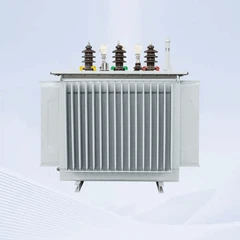
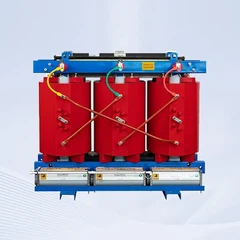





50 kVA Dry-Type Transformers: Cast Resin vs VPI Construction
Jan 28, 2026
Leave a message
Cast Resin Construction
A cast resin transformer features windings completely encapsulated in solid epoxy resin under vacuum, creating a monolithic, seamless block that fully seals the electrical components. The primary advantages stem from this complete encapsulation: superior environmental protection with exceptional resistance to moisture, dust, chemicals, and corrosive atmospheres; high mechanical strength with exceptional short-circuit force resistance; and low maintenance because the windings are virtually impervious to environmental ingress. Cast resin units are the preferred choice for harsh environments such as coastal areas, wastewater treatment plants, and industrial facilities with high contamination levels.
VPI Construction
A vacuum pressure impregnated transformer, also called an open-wound type, uses a different process: the windings are constructed, placed in a vacuum chamber, and impregnated with insulating varnish under pressure before curing, producing a hardened protective coating rather than a solid block. The varnish coating is thinner than solid resin, allowing slightly better heat dissipation from the windings to the cooling air and contributing to compact design. The VPI process is less material- and labor-intensive, making these units more economical for standard environments, and damaged VPI windings are easier to repair because the varnish can be locally removed and reapplied.
Head-to-Head Comparison
| Factor | Cast Resin | VPI |
|---|---|---|
| Environmental resistance | Excellent | Good, requires IP20 or better enclosure |
| Moisture and chemical proof | Superior, complete encapsulation | Good, not for highly corrosive atmospheres |
| Heat dissipation | Good | Very good, thin varnish cools efficiently |
| Short-circuit strength | Exceptional | High, meets all standards |
| Initial cost | Higher | More economical |
| Ideal application | Outdoor, marine, mining, chemical, tropical | Indoor electrical rooms, commercial buildings, data centers |
Application-Based Decision
For a 50 kVA dry-type transformer, the application dictates the technology. In a clean, temperature-controlled room, a VPI unit offers outstanding value. For a water treatment facility, offshore platform, or coastal installation, a cast resin unit is the prudent long-term investment. Both technologies meet the same international standards and offer Class F or Class H insulation with air natural or air forced cooling.
Frequently Asked Questions
Q: What is the main difference between cast resin and VPI?
A: Cast resin fully encapsulates windings in epoxy; VPI impregnates them with varnish, giving a thinner protective coating.
Q: Which type resists harsh environments better?
A> Cast resin, with complete encapsulation against moisture, dust, and chemicals.
Q: Which type cools better?
A: VPI, because the thinner varnish layer conducts heat to the cooling air more effectively.
Q: Which is cheaper?
A: VPI, with a less material- and labor-intensive process.
Q: Can VPI windings be repaired?
A: Yes, more easily than cast units, since the varnish can be locally removed and reapplied.
Q: What insulation classes are available?
A: Class F at 155 degrees C or Class H at 180 degrees C for both types.
For a 50 kVA dry-type transformer quotation in cast resin or VPI construction, contact our sales team.
Send Inquiry