









Class 130 and Class 155 Polyester Enameled Aluminum Round Wire: Properties and Applications
Oct 21, 2025
Leave a message
What Is Polyester Enameled Aluminum Round Wire?
Polyester enameled aluminum round wire is a winding conductor made of high-purity aluminum drawn to a round cross-section and coated with a continuous film of polyester insulating varnish. It is mainly used for the coil windings of transformers, motors and other electromagnetic devices where the lower density and lower cost of aluminum are advantageous. The polyester enamel provides electrical insulation between turns, good resistance to moisture and solvents, and sufficient mechanical strength for automated winding processes.
Properties and Specifications
The table below summarizes the typical parameters of polyester enameled aluminum round wire supplied for winding applications.
| Parameter | Specification |
|---|---|
| Conductor material | High-purity aluminum |
| Diameter range | 2.65 to 6.00 mm |
| Thermal class | Class 130 and class 155 |
| Insulation | Polyester enamel |
| Product standard | IEC 60317-0-1 for round winding wire |
| Quality management | ISO 9001 and IATF 16949 systems |
| Characteristics | Good electrical conductivity, heat resistance, lightweight |
Thermal class 130 corresponds to class B and class 155 to class F in the IEC 60085 classification. Class 130 wire suits standard motor and transformer windings with moderate temperature rise, while class 155 wire provides a higher thermal margin for applications with elevated operating temperatures or higher load density.
Applications
Transformers and Power Equipment
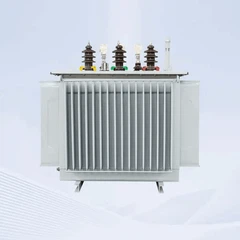
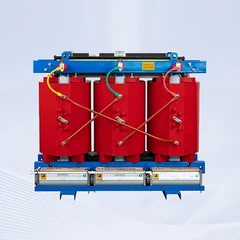
Enameled aluminum round wire is used as winding wire in low, medium and high voltage power transmission and distribution equipment, including power transformers, distribution transformers and reactors. The large conductor diameters in the 2.65 to 6.00 mm range are well suited to the layer windings of distribution transformers, where the lightweight conductor simplifies handling and reduces the total weight of the unit.
Motors and Industrial Equipment
Enameled aluminum round wire is widely used in electric motors of all sizes, including industrial motors, household appliance motors and automotive motors. It provides good electrical conductivity and heat dissipation in the coil winding, and the lighter conductor reduces the weight of rotating equipment.
Renewable Energy Systems
In solar and wind power systems, aluminum enameled wire is used in the windings of motors, generators and auxiliary equipment for converting and transmitting electrical energy, where weight reduction and cost control are important project drivers.
Automotive and Electric Vehicles
In the automotive industry, enameled aluminum wire appears in motor windings for electric vehicles, generators and auxiliary equipment such as drive motors and battery management system components, balancing thermal class, weight and cost.
Selection Considerations
The choice of conductor diameter and insulation class depends on the current density, the winding space factor and the hottest-spot temperature of the finished coil. Larger diameters reduce resistance and load losses but increase the winding size, and the thermal class must be matched to the expected operating temperature with an adequate margin. Aluminum has a lower conductivity than copper, so for the same current the aluminum conductor must have a larger cross-section; this must be considered when the winding space is limited. The wire should be specified according to the IEC 60317 series, and the insulation thickness grade is selected to match the voltage stress of the application.
Standards and Quality
Enameled aluminum round wire is manufactured and tested in accordance with the IEC 60317 series for round winding wire, which defines conductor dimensions, insulation thickness, thermal endurance, and mechanical and electrical test methods. Production facilities commonly operate quality management systems certified to ISO 9001, and automotive supply chains require IATF 16949. Acceptance testing includes conductor diameter, resistance, insulation breakdown voltage, thermal class verification and adhesion of the enamel film.
FAQ
Q: What is the difference between class 130 and class 155 enameled aluminum wire?
A: The thermal class defines the maximum continuous operating temperature of the insulation system: class 130, class B, is rated 130 °C and class 155, class F, is rated 155 °C; class 155 provides a larger thermal margin for high-load designs.
Q: Why choose aluminum instead of copper for windings?
A: Aluminum is lighter and usually less expensive than copper, which reduces the transformer or motor weight and material cost; the trade-off is a larger conductor cross-section for the same current.
Q: Which standard applies to polyester enameled aluminum round wire?
A: The IEC 60317 series, in particular IEC 60317-0-1 for general requirements of round winding wire and the specific part for polyester enamel, together with the thermal class definitions of IEC 60085.
Q: Can aluminum enameled wire be used in electric vehicle motors?
A: Yes, it is used in EV drive motors and auxiliary equipment where weight and cost targets justify the lower conductivity, with the winding design adjusted to achieve the required performance.
Q: How is the insulation quality of the enamel film verified?
A: By dielectric breakdown voltage tests, thermal class evaluation, flexibility and adhesion tests, and abrasion resistance tests performed according to the IEC 60317 series on representative samples.
Q: What diameter range is commonly available?
A: For power transformer and large motor windings, diameters from about 2.65 mm up to 6.00 mm are typical, while smaller diameters down to fractions of a millimetre are available for fine-wire applications.
Send Inquiry