


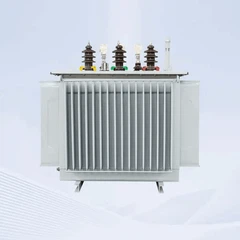
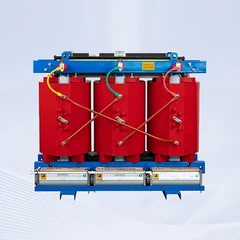







How 3 Phase Transformers Work- why we need them
Nov 17, 2025
Leave a message
What is a three-phase distribution?
Three phase power can be defined as the common method of alternating current power generation, transmission, and distribution. It is a type of polyphase system and is the most common method used by electric grids worldwide to transfer power.
Is a distribution transformer single-phase or three-phase?
A three-phase transformer is used to hold electrical energy from the main distribution circuit to the auxiliary distribution circuit. It transmits current to the secondary distribution circuit and at the same time reduces the voltage of the primary distribution circuit.
Understanding the Basics
A transformer is a static device that transfers electrical energy from one circuit to another through electromagnetic induction. It can step up (increase) or step down (decrease) voltage levels without any moving parts or direct electrical connection between the primary and secondary windings.
Single-Phase vs. Three-Phase Transformers
Single-phase transformers are common in residential areas because homes typically don't need the high power capacity of three-phase systems. They connect to one phase and neutral from the grid, providing 120V and 240V for household use.
Three-phase transformers are used in commercial and industrial settings where heavy machinery, large lighting systems, and high-power equipment are present. They provide a more stable and efficient power supply.
Delta (Δ) Primary and Wye (Y) Secondary Configuration
Delta (Δ) Primary: The primary winding is connected in a triangular (delta) configuration. This is often used in high-voltage transmission because it can handle unbalanced loads well.
Wye (Y) Secondary: The secondary winding is connected in a star (wye) configuration, which provides a neutral point. This is useful for distributing power at different voltage levels (e.g., 120V, 208V, 240V, 480V).
How a 200 kVA Three-Phase Transformer Works
A 200 kVA transformer is rated to handle 200,000 volt-amperes of power (a measure of apparent power).
The Delta primary connects to the high-voltage grid (e.g., 4,160V or 13.8kV).
The Wye secondary provides multiple voltage outputs (e.g., 208Y/120V or 480Y/277V), which is common in commercial buildings.
The three-phase power from the grid is split into three separate but synchronized sine waves, each 120 degrees apart, ensuring a smooth and constant power delivery.
Why Three-Phase Power is Used
Efficiency: Three-phase power provides a more constant and balanced power output compared to single-phase.
Higher Power Capacity: It can handle much larger loads, making it ideal for industrial and commercial applications.
Better Motor Performance: Three-phase motors run more smoothly and efficiently than single-phase motors.
Power Distribution Journey
Generation: Power plants generate three-phase AC electricity.
Step-Up Transmission: Transformers increase the voltage to reduce energy loss over long distances (e.g., 345kV or 500kV).
Step-Down to Distribution: Substations reduce the voltage for local distribution (e.g., 4.16kV or 13.8kV).
Final Step-Down: Distribution transformers (like the 200 kVA unit) reduce voltage to usable levels for businesses (e.g., 208V or 480V).
Now if you need to buy a Transformer keep HENAN GNEE ELECTRIC CO., LTD. in mind,they're basically like a Transformer Superstore they have
Transformers of all sizes in stock and ready to ship all across the world from 15 KVA up to 2500KVA.
Technical Specification
1.S13-35kV Technical parameters of non-excitation voltage regulating transformer
| Rated Capacity (kVA) |
High voltage (kV) |
Tapping range |
Low voltage (kV) |
Vector Group | Impedance Voltage (%) |
No-load Loss (W) |
Load Loss (W) |
No-Ioad current (%) |
| 50 | 35 38.5 |
±2x2.5% ±5% |
0.4 |
Dyn11 Yyn0 |
6.5 | 160 |
1200/1140 |
1.3 |
| 100 | 230 |
2010/1910 |
1.1 | |||||
| 125 | 270 |
2370/2260 |
1.1 | |||||
| 160 | 280 |
2820/2680 |
1.0 | |||||
| 200 | 310 |
3320/3160 |
1.0 | |||||
| 250 | 400 |
3950/3760 |
0.95 | |||||
| 315 | 480 |
4750/4530 |
0.95 | |||||
| 400 | 580 |
5740/5470 |
0.85 | |||||
| 500 | 680 |
6910/6580 |
0.85 | |||||
| 630 | 830 |
7860 |
0.65 | |||||
| 800 | 980 |
9400 |
0.65 | |||||
| 1000 | 1150 |
11500 |
0.65 | |||||
| 1250 | 1400 |
13900 |
0.6 | |||||
| 1600 | 1690 |
16600 |
0.6 | |||||
| 2000 | 1990 |
19700 |
0.55 | |||||
| 2500 | 2360 |
23200 |
0.55 |
2.S13-35kV Technical parameters of non-excitation voltage regulating transformer
| Rated Capacity (kVA) | High voltage (kV) | Tapping range | Low voltage (kV) | Vector Group | Impedance Voltage (%) |
No-load Loss (W) |
Load Loss (W) |
No-Ioad current (%) |
| 630 | 35 |
±2×2.5% ±5% |
3.15 6.3 10.5 |
Yd11 |
6.5 | 830 | 7860 | 0.65 |
| 800 | 980 | 9400 | 0.65 | |||||
| 1000 | 1150 | 11500 | 0.65 | |||||
| 1250 | 1400 | 13900 | 0.55 | |||||
| 1600 | 1690 | 16600 | 0.45 | |||||
| 2000 | 2170 | 18300 | 0.45 | |||||
| 2500 | 2560 | 19600 | 0.45 | |||||
| 3150 | 35~38.5 |
±2×2.5% ±5% |
3.15 6.3 10.5 |
7.0 | 3040 | 23000 | 0.45 | |
| 4000 | 3610 | 27300 | 0.45 | |||||
| 5000 | 4320 | 31300 | 0.45 | |||||
| 6300 | 8.0 | 5240 | 35000 | 0.45 | ||||
| 8000 | 35~38.5 |
±2×2.5% |
3.15 3.3 6.3 6.6 10.5 |
YNd11 |
7200 | 38100 | 0.35 | |
| 10000 | 8700 | 45300 | 0.35 | |||||
| 12500 | 10000 | 53800 | 0.3 | |||||
| 16000 | 12100 | 65800 | 0.3 | |||||
| 20000 | 14400 | 79500 | 0.3 | |||||
| 25000 | 10.0 | 17000 | 94000 | 0.25 | ||||
| 31500 | 20200 | 112000 | 0.25 |
3.S13-35kV Technical parameters of on load tap changer
| Rated Capacity (kVA) | High voltage (kV) | Tapping range | Low voltage (kV) | Vector Group | Impedance Voltage (%) |
No-load Loss (W) |
Load Loss (W) |
No-Ioad current (%) |
| 2000 | 35 |
±3×2.5% |
6.3 10.5 |
Yd11 |
6.5 | 2300 |
19200 |
0.5 |
| 2500 | 2720 |
20600 |
0.5 | |||||
| 3150 |
35~38.5 |
6.3 10.5 |
7.0 | 3230 |
24700 |
0.5 | ||
| 4000 | 3870 |
29100 |
0.5 | |||||
| 5000 | 4640 |
34200 |
0.5 | |||||
| 6300 | 8.0 | 5630 |
36700 |
0.5 | ||||
| 8000 |
35~38.5 |
6.3 6.6 10.5 |
YNd11 |
7870 |
40600 |
0.4 | ||
| 10000 | 9280 |
48000 |
0.4 | |||||
| 12500 | 1090 |
56800 |
0.35 | |||||
| 16000 | 1310 |
70300 |
0.35 | |||||
| 20000 | 1550 |
82100 |
0.35 | |||||
| 25000 | 10.0 | 1830 |
97800 |
0.3 | ||||
| 31500 |
2180 |
116000 |
0.3 |
Send Inquiry