


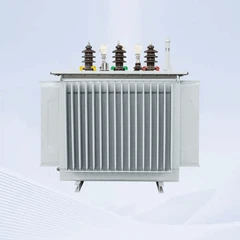






How Many Amps Is A 3 Phase 50 KVA Dry Type Transformer?
Jan 12, 2026
Leave a message
As a professional dry type transformer manufacturer and supplier, GNEE provides reliable transformer solutions for global customers. In this article, we explain how to calculate the current of a 3 phase 50 kVA dry type transformer, provide real-world examples at different voltages, and share key considerations that help buyers make the right decision.

Understanding kVA, Voltage, and Current in 3 Phase Systems
A transformer's 50 kVA rating refers to its apparent power capacity.
In a three-phase system, the current depends mainly on:
- Transformer kVA rating
- Line voltage
- Phase configuration
Standard 3 Phase Current Formula
For a three-phase transformer, current is calculated as:
Current (A) = kVA × 1000 ÷ (√3 × Line Voltage)
This formula applies to both the primary and secondary sides-only the voltage changes.
How Many Amps Does a 3 Phase 50 kVA Transformer Draw?
Below are the most common voltage scenarios used worldwide and their corresponding current values.
3 Phase 50 kVA at 400V
This is a typical industrial voltage in many countries.
Current = 50,000 ÷ (1.732 × 400)
≈ 72 amps
3 Phase 50 kVA at 415V
Often used in UK and Commonwealth regions.
Current = 50,000 ÷ (1.732 × 415)
≈ 70 amps
3 Phase 50 kVA at 480V
Common in North America.
Current = 50,000 ÷ (1.732 × 480)
≈ 60 amps
3 Phase 50 kVA at 380V
Widely used in Asia and some industrial facilities.
Current = 50,000 ÷ (1.732 × 380)
≈ 76 amps
Quick Reference Table
| Line Voltage (3 Phase) | Full Load Current (A) |
|---|---|
| 380 V | ~76 A |
| 400 V | ~72 A |
| 415 V | ~70 A |
| 480 V | ~60 A |
Primary Side vs Secondary Side Current
It's important to distinguish between:
- Primary current (high-voltage side)
- Secondary current (low-voltage side)
The transformer kVA remains constant, but:
- Higher voltage = lower current
- Lower voltage = higher current
For example, if the primary voltage is 11 kV and the secondary is 400 V:
- Primary current ≈ 2.6 A
- Secondary current ≈ 72 A
This directly affects cable size, protection devices, and installation cost.
Does Power Factor Affect Transformer Current?
No-transformer current is calculated using kVA, not kW.
Power factor affects the real power (kW) used by the load, but the transformer must be sized for apparent power (kVA).
However, low power factor loads often generate more heat and harmonics, which can impact long-term transformer performance.
Can a 3 Phase 50 kVA Dry Type Transformer Handle Overcurrent?
Dry type transformers typically allow:
- 100% rated current for continuous operation
- Up to 110% current for short durations, depending on insulation class and cooling
Continuous overloading is not recommended, as it accelerates insulation aging and shortens service life.
Typical Applications of a 3 Phase 50 kVA Dry Type Transformer
A 50 kVA 3 phase dry type transformer is commonly used in:
- Commercial buildings
- HVAC systems
- Small manufacturing plants
- Elevators and pumps
- Data rooms and control panels
Its compact size, indoor safety, and low maintenance make it ideal for many applications.
Why Choose GNEE Dry Type Transformers?
GNEE is an experienced global supplier of dry type transformers, offering:
- Custom voltage and phase configurations
- High-quality copper or aluminum windings
- Advanced insulation and cooling designs
- Strict quality control and testing
Our transformers are engineered for safety, efficiency, and durability across diverse industries.
Conclusion
So, how many amps is a 3 phase 50 kVA dry type transformer?
Depending on the voltage, it typically ranges from 60 to 76 amps at full load.
For accurate sizing, technical consultation, and competitive pricing, contact GNEE today. Our experts will help you select the right 3 phase 50 kVA dry type transformer tailored to your project requirements.
Send Inquiry