

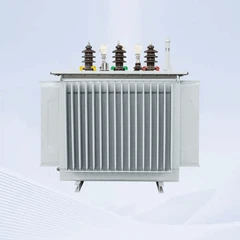





Pole Mounted Transformers
Have questions? GNEE sales representatives are available for live chat now
Send E-mail: sales@gneeelectric.com
Tel: +8615824687445
What is Pole Mounted Transformers
Pole-mounted transformers are electric utility distribution transformers fixed on a wooden or concrete electrical service pole at the level of the overhead wires. They are the standard breadbox transformers that convert distribution voltage to the 120/240-volt electricity utilized in households and low-volume business installations in rural areas.
Benefits of Pole Mounted Transformers
Reduced injury risks
Residents are less likely to be injured by pole-mounted transformers. Pole-mounted transformers are kept out of reach from children and are isolated from many potential igniting sources.
Increased supply
Pole-mounted transformer offer increased power supply, as they achieve easier distribution through the installation of necessary power lines.
Space saving
Pole-mounted transformers are small and do not take up valuable ground space.

Pole-mounted distribution transformers are mounted above ground on poles. These transformers are manufactured to standard designs, primarily for power distribution companies. These transformers typically service urban and rural residential and commercial loads.

Single Phase Pole Mounted Transformer
Pole-mounted transformers are electric utility distribution transformers fixed on a wooden or concrete electrical service pole at the level of the overhead wires. They are the standard breadbox transformers that convert distribution voltage to the 120/240-volt electricity utilized in households and low-volume business installations in rural areas.

Three Phase Pole Mounted Transformer
Pole-mounted transformers are electric utility distribution transformers fixed on a wooden or concrete electrical service pole at the level of the overhead wires. They are the standard breadbox transformers that convert distribution voltage to the 120/240-volt electricity utilized in households and low-volume business installations in rural areas.

Pole Mounted Current Transformer
Pole Mounted Transformers are a type of breadbox distribution transformers having mounted on an electric service pole of wood or concrete. They are held usually at the level of the upper wires.

Pole-mounted transformers are power distribution transformers that are mounted on a power pole (wood or concrete) and usually horizontal to overhead cables.
Why Choose Us
Professional Competence
GNEE are professional one-stop solution for steel products of China. Self-designed Corten steel design and rust technology have reached the world average technical level.
Comprehensive Quality Service
Which continuously satisfy different needs of customer around the world in the steel supply chain area. Professional sales team, providing customers with first-class services; strict purchasing and quality inspection team, carefully selecting high-quality raw materials; advanced scientific and technical team to improve production and reduce costs for customers; excellent design and processing team, carefully crafted and refined; intimate shipping logistics team protecting product transportation.
Excellent Service Team
GNEE with Professional team, Quickly response, Short delivery time, Best competitive price, Best service.
Competitive Pricing
We strive to maintain competitive pricing, offering customers audio and video accessories that deliver high value for their investment.
Understanding the distinctions between pole-mounted and pad-mounted transformers
|
Aspect |
Pole-Mounted Transformers |
Pad-Mounted Transformers |
|
Installation Location |
Utility Poles |
Concrete Pads or Enclosures |
|
Accessibility |
Easier to access for maintenance |
Ground-level installation, may require less maintenance effort |
|
Cost |
Generally, more cost-effective |
Slightly higher installation and unit cost |
|
Space Efficiency |
Require more space |
Compact and space-efficient |
|
Noise Production |
May produce more noise |
Produces less noise |
|
Visual Impact |
Because of the utility poles required, they are more of an eye sore if the other utilities are buried |
May blend better in certain areas |

The purpose of the transformer is to step the utility distribution voltage (2.4–7.2kV line-ground) down to the utilization voltage (120/240V) used by the residential and smaller commercial customers in the most economical way possible. Distribution transformers can be installed either overhead or underground, depending on how the surrounding distribution system is installed, which depends on the availability of aboveground and belowground space for the construction/installation of the associated utilities, Distribution transformers are often pole-mounted when the surrounding distribution system is overhead (note 4A & 5A). They are typically mounted at ground level (i.e., pad mounted) when the surrounding distribution system is underground (notes 4B & 5B).
Pole mounted transformers are utilized where the surrounding distribution system (5A) is located overhead, as this is the most economical method of installing/routing the associated primary and secondary conductors.
Where the surrounding distribution system is installed underground, pad-mount transformers (5B) are utilized. The primary and secondary distribution conductors are installed below grade, using a system of underground manholes, conduits and junction/tap boxes.
Pole mounted transformers are on concrete poles so that the electricity they generate is equally transmitted perpendicular to the electrical lines.
To make the high power more manageable, these transformers step it down to 400V.
In most cases, engineers favor these pole mounted transformers due to their lightweight and minimal aesthetics.
Larger units require two poles, smaller ones that are less than 5 meters in height may be generally fixed securely on buildings that only require a single pole.
Both humans and animals are generally protected from harm, and acts of damage are less likely to take place.

Pole Mounted Transformer Market Size
The Pole Mounted Transformer Market is a specialized segment within the electrical equipment industry, focusing on transformers installed on utility poles to facilitate the efficient distribution of electrical power. Pole-mounted transformers play a critical role in stepping down high-voltage electricity from power lines to lower voltage levels suitable for residential, commercial, and industrial use. These transformers are essential components in electricity distribution networks, ensuring the safe and reliable delivery of power to end-users. The market is defined by its commitment to providing efficient and compact transformer solutions for overhead power distribution systems.
Several key drivers contribute to the growth of the Pole Mounted Transformer Market.the increasing demand for reliable electricity supply in both urban and rural areas drives the adoption of pole-mounted transformers as they facilitate the effective distribution of power over long distances. The growing emphasis on renewable energy sources and smart grid technologies also contributes to market expansion, as pole-mounted transformers play a crucial role in integrating distributed energy resources into existing power grids. The need for cost-effective and space-efficient solutions in power distribution networks, especially in areas with limited space for traditional substation installations, propels the demand for pole-mounted transformers. Market segmentation in this industry typically involves categorizations based on the transformer type, including single-phase and three-phase transformers, considering the specific voltage requirements and distribution needs of different regions and applications.segmentation may occur based on the end-user sectors, such as residential, commercial, and industrial, ensuring that pole-mounted transformer solutions are tailored to meet the diverse requirements of various segments within the electricity distribution landscape.

Transformers are placed on electric poles or on the ground based on a variety of factors, including the specific needs of the electrical system and the environment in which they are installed.
Transformers on electric poles are often used in areas where space is limited or where it is more efficient to distribute electricity from an elevated position. This can also help protect the transformer from potential damage from flooding or other environmental factors.
Transformers placed on the ground are commonly used in areas where there is more space available and where it is easier to install and maintain them at ground level.ground-mounted transformers may be preferred in certain urban or suburban areas where underground distribution systems are more common.
The decision to place a transformer on a pole or on the ground is typically made by electrical engineers and utility companies, taking into account factors such as safety, accessibility, and the specific requirements of the electrical grid in that location.
What are the requirements of installing the pole-mounted transformer
Construction preparation
Conduct on-site surveys, determine construction plans, and write construction standard work cards.
Conduct electrical tests on electrical equipment to ensure that the equipment is qualified.
Check whether the construction tools and equipment are sufficient and intact, and whether the mental state of the personnel is suitable for the construction operation.
Check whether the double-pole assembly is upright, whether the buried depth meets the specification requirements, the double-pole root opening error should not exceed ±30mm, and the double-pole height difference should not exceed ±20mm.
Check whether the grounding production meets the specifications and whether the grounding resistance meets the design requirements.
Installation of the cross arm
The cross arm should be made of galvanized angle steel and channel steel, and the cross arm should be installed in the order from top to bottom.
For the double-pole cross-arm, the height difference between the cross-arm and the pole should not be greater than 5/1000 of the connection distance, and the left and right skew should not be greater than 1/100 of the length of the cross-arm.
The distance between the cross arm of the drop fuse and the transformer channel steel should not be less than 2.5m, to ensure that the fuse tube of the drop fuse can maintain a sufficient distance from the distribution transformer when it falls off.
Bolt passing through: three-dimensional structure: the horizontal direction is from the inside to the outside, and the vertical direction is from the bottom to the top.
Planar structure: along the line direction, the double-sided components are from the inside to the outside, the single-sided components are penetrated from the power transmission side or in the same direction;
in the horizontal line direction, the two sides are from the inside to the outside, and the middle is from left to right (facing the power receiving side) or Press uniform direction; vertical direction, from bottom to top.
When the screw must be gasketed, each end should not exceed 2 gaskets. The bolts should be perpendicular to the plane of the member and should not have gaps.
The common accessories of Pole Mounted Transformer
Lightning arresters: These are devices that protect the transformer from lightning strikes. They discharge the high voltage current caused by lightning strikes to the ground, ensuring that the transformer and surrounding electrical equipment are not damaged.
Voltage regulators: These devices regulate the voltage level of the electrical current flowing into the transformer. They ensure that the voltage level at the output terminals of the transformer remains within an acceptable range, even if the input voltage fluctuates.
Insulators: These are materials that do not conduct electricity and are used to support the transformers and power lines. They ensure that there is no electrical current flowing to the ground through the pole.
Oil level indicators: These devices are used to measure the level of oil in the transformer. They help to ensure that the transformer is properly lubricated and performing efficiently.
Pressure relief devices: These devices are designed to release pressure from the transformer in case of an overpressure situation. This ensures that the transformer remains safe and efficient.
Terminal connectors: These are connectors used to connect the transformer to the power lines. They ensure that the electrical current flows properly from the power lines to the transformer.
Our Factory
The products have passed SGS, intertek, CCC, CE and other international certifications. Noise, easy installation, energy saving and emission reduction, long service life, etc. The product production cycle is short, easy to install, and fast delivery. At present, the company has more factories.Our team is composed of very professional engineers. We strive to deliver you on time within the budget Power equipment, and provide excellent product quality. Provide you with the ultimate experience.

Certificate

FAQ
Hot Tags: pole mounted transformers, China pole mounted transformers manufacturers, suppliers, factory, Residential Pad Mounted Transformer, Dry Type Transformers, Dry Type Transformer Unitized Substation, Pole Mounted Current Transformer, Single Phase Dry Type Transformer, Three Phase Electrical Oil Immersed Transformer
You Might Also Like


Send Inquiry