







How does a large power transformer handle overload?
Jul 21, 2026
Leave a message
Hey there! I'm a supplier of large power transformers. You know, power transformers are like the heart of the electrical grid. They play a crucial role in stepping up or stepping down voltage to ensure efficient power transmission and distribution. But what happens when these big guys face an overload? That's what we're gonna talk about today.


First off, let me tell you what an overload is. An overload occurs when the power demand on a transformer exceeds its rated capacity. This can happen for a variety of reasons. Maybe there's a sudden surge in power consumption due to a heatwave and everyone cranks up their air - conditioners at once. Or perhaps there's a fault in the power system that causes an abnormal increase in load.
So, how do large power transformers handle these overload situations? Well, they've got a few tricks up their sleeves.
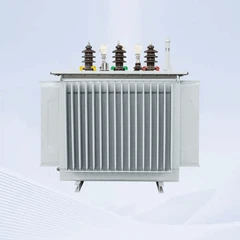
One of the primary ways is through their thermal capacity. Large power transformers are designed with a certain amount of thermal inertia. This means they can withstand a short - term overload without getting damaged immediately. The windings and core of the transformer can absorb the extra heat generated during the overload period. For example, our 25 MVA Three - phase Oil - filled Power Transformer is built with high - quality materials that can handle a certain degree of overheating for a short time.
The oil in oil - filled transformers is also a key player in this process. The oil acts as a coolant and an insulator. When the transformer is overloaded and the temperature starts to rise, the oil circulates around the windings and core, absorbing the heat. It then transfers this heat to the radiator or cooling fins on the outside of the transformer. The radiator helps to dissipate the heat into the surrounding air. This continuous cooling process helps the transformer to keep its cool, even under heavy load.
Another way is through protection relays. These are like the guardians of the transformer. Protection relays are constantly monitoring the electrical parameters of the transformer, such as current, voltage, and temperature. When they detect an overload, they can take action. They can either trip the circuit breaker to isolate the transformer from the power system, preventing further damage. Or they can send out an alarm to alert the operators. For instance, in our Step Down Power Transformer, the protection relays are set up to respond quickly to any signs of overload.

Effective protection and monitoring systems can prevent transformer damage caused by sustained overloading.True
Thermal relays, temperature sensors, and intelligent monitoring systems detect overload conditions early and initiate alarms or protective actions.
Now, let's talk about long - term overload. While large power transformers can handle short - term overloads, long - term overload is a different story. If a transformer is constantly overloaded, it can cause accelerated aging of the insulation materials. The heat generated during the overload can break down the insulation, which can lead to short circuits and ultimately, transformer failure.

Controlled short-term overloading can be acceptable, while sustained overloading is a leading cause of premature transformer failure.True
Short-term overloads may not exceed thermal limits, but long-term overload accelerates insulation aging and increases failure risk.
To deal with long - term overload, we might need to upgrade the transformer or add additional transformers to the system. For example, if a particular area is experiencing a continuous increase in power demand, adding a 50kVA Three Phase Oil Type Electrical Power Distribution Transformer can help to distribute the load more evenly.
In some cases, we can also implement load management strategies. This might involve shifting some of the non - essential loads to off - peak hours. For example, industrial customers can schedule their heavy - duty equipment to run during the night when the overall power demand is lower.
How Do Insulation and Aging Respond to Overload Conditions?

Transformer insulation is designed to operate within strict thermal limits, and overloading directly challenges those limits. While a transformer may continue functioning electrically under overload conditions, the insulation system silently absorbs the damage. The way insulation responds to overloading ultimately determines transformer aging rate, reliability, and remaining service life.
Under overload conditions, transformer insulation experiences accelerated thermal aging, loss of mechanical strength, increased moisture generation, and reduced dielectric performance, leading to a rapid decline in transformer lifespan.
Transformer insulation aging accelerates exponentially when overload conditions raise operating temperature beyond design limits.True
Elevated hot-spot temperature caused by overload increases chemical degradation of insulation materials, shortening service life.
Thermal Stress as the Primary Aging Mechanism
Insulation aging is primarily temperature-driven.
Under overload conditions:
- Winding hot-spot temperature rises sharply
- Chemical bonds in cellulose insulation break down faster
- Aging rate increases exponentially rather than linearly
Even moderate overloads can cause disproportionate aging if sustained.
Response of Solid Insulation to Overloading
Paper and pressboard insulation are highly temperature-sensitive.
Overload effects include:
- Loss of tensile strength in cellulose fibers
- Increased brittleness and cracking
- Reduced ability to withstand mechanical and electrical stress
- Once mechanical strength is lost, insulation cannot recover.
Oil Degradation and Its Interaction with Insulation Aging
Overloading accelerates oil deterioration.
Key impacts:
- Faster oxidation and acid formation
- Increased sludge that blocks cooling paths
- Higher moisture content released from aging paper
Degraded oil further reduces cooling and insulation effectiveness, creating a feedback loop.
Moisture Generation and Dielectric Weakening
Thermal aging produces water as a byproduct.
Consequences include:
- Moisture migration into solid insulation
- Lower dielectric strength
- Higher risk of partial discharge and breakdown
- Moisture dramatically worsens insulation performance under electrical stress.
Hot-Spot Aging vs. Average Temperature
Insulation aging is governed by hot-spot temperature, not average values.
Overload conditions cause:
- Localized overheating in winding regions
- Uneven aging across insulation system
- Early failure triggered by the weakest area
- A transformer may appear normal while critical hot-spots deteriorate.
Cumulative and Irreversible Nature of Aging
Overload-induced aging cannot be undone.
Characteristics:
- Damage accumulates over time
- Cooling or load reduction slows but does not reverse aging
- Remaining life is permanently reduced
- This makes early overload management critical.
Effect on Electrical and Mechanical Reliability
Aged insulation compromises system performance.
Risks include:
Increased partial discharge activity
- Reduced impulse and short-circuit withstand capability
- Higher likelihood of catastrophic internal faults
- Aging insulation is the dominant failure mode in transformers.
Role of Monitoring in Managing Insulation Aging
Modern monitoring helps detect overload damage.
Key tools include:
- Winding hot-spot temperature sensors
- Dissolved gas analysis (DGA)
- Moisture-in-oil monitoring
- Thermal modeling and load profiling
- Early detection allows corrective action before severe damage occurs.
As a large power transformer supplier, we also offer customized solutions. For example, our GNEE EC 3000KVA Power Transformer Supplier can be tailored to meet specific requirements, including better overload handling capabilities. We use advanced design techniques and high - quality components to ensure that our transformers can handle tough situations.
Then there's the 110kv66kv Power Transformer. These high - voltage transformers are often used in large - scale power transmission. They are designed with extra safety features and better heat dissipation systems to handle the high - power loads and potential overloads that come with long - distance power transmission.
If you're in the market for a large power transformer, whether it's for a small - scale distribution network or a large - scale power plant, we've got you covered. Our transformers are built to last and can handle a wide range of operating conditions, including overloads.
We understand that every project is unique, and that's why we offer personalized service. Our team of experts can work with you to determine the best transformer solution for your needs. We'll take into account factors like your power demand, the environment where the transformer will be installed, and your budget.
If you're interested in learning more about our products or have any questions about how our transformers handle overloads, don't hesitate to reach out. We're always here to help you find the perfect power transformer for your project. Whether you're a utility company, an industrial facility, or a commercial building owner, we can provide you with the reliable power transformers you need.
So, if you're ready to take the next step in your power infrastructure project, let's have a chat. We're eager to discuss how we can meet your power transformer requirements and ensure a smooth and efficient power supply.


FAQ
Q1: What does transformer overloading mean?
Transformer overloading occurs when a transformer carries current above its rated capacity for a certain period. This may happen due to peak demand, system contingencies, temporary faults, or unexpected load growth.
Overloading does not cause immediate failure in most cases, but it increases thermal stress, accelerates insulation aging, and raises the risk of long-term damage if not properly controlled.
Q2: How does a transformer physically respond to overloading?
When overloaded, a transformer responds primarily through increased temperature rise:
Winding current increases → higher copper (I²R) losses
Additional heat raises winding and oil temperatures
Insulation experiences greater thermal stress
Because transformers have thermal mass, temperature rise is not instantaneous. This thermal inertia allows short-duration overloads without immediate damage, provided temperature limits are not exceeded.
Q3: Can transformers safely operate under overload conditions?
Yes, transformers are designed to tolerate short-term overloads under controlled conditions. Industry standards such as IEC and IEEE define permissible overload limits based on:
Ambient temperature
Cooling method
Initial load level
Insulation thermal class
For example, a transformer may operate at 120–150% of rated load for limited periods if cooling is adequate and temperatures remain within allowable limits.
Q4: What are the long-term effects of repeated overloading?
Repeated or prolonged overloading significantly accelerates transformer aging. The most critical impact is on insulation life, which roughly halves for every 6–8°C increase in hotspot temperature.
Long-term effects include:
Reduced insulation strength
Increased risk of internal faults
Higher maintenance requirements
Shortened service life
While the transformer may continue operating, its remaining life expectancy is reduced.
Q5: How do cooling systems affect overload capability?
Cooling systems play a major role in overload response:
Transformers with forced cooling (ONAF, OFAF, AF) can handle higher overloads
Additional fans or pumps help limit temperature rise
Multi-stage cooling allows temporary capacity increases
If cooling systems fail or are insufficient, overload tolerance drops sharply, increasing the risk of damage.
Q6: How is transformer overloading monitored and controlled?
Modern transformers use monitoring systems to manage overload conditions, including:
Top-oil and winding hotspot temperature sensors
Load current monitoring
Thermal models and alarms
Automatic cooling control
Protective relays may issue warnings, initiate load shedding, or trip the transformer if thermal limits are exceeded.
Q7: What standards govern transformer overload behavior?
Transformer overloading is guided by international standards, including:
IEC 60076-7 – Loading guide for oil-immersed transformers
IEEE C57.91 – Guide for loading mineral-oil-immersed transformers
These standards define thermal limits, permissible overload durations, and calculation methods to balance reliability and asset life.
Q8: What are best practices for managing transformer overloads?
Best practices include:
Designing transformers with realistic load forecasts
Maintaining cooling systems in optimal condition
Using real-time temperature and load monitoring
Limiting overload duration and frequency
Planning timely capacity upgrades or parallel operation
Proper overload management ensures reliability while maximizing transformer utilization.
References
- Electric Power Systems: Analysis and Control by Claudio A. Cañizares
- Power System Protection and Switchgear by J. C. Das
Send Inquiry