







How does the load affect the performance of an oil - immersed transformer?
Jun 13, 2025
Leave a message
As a seasoned supplier of oil-immersed transformers, I've witnessed firsthand the intricate relationship between load and the performance of these crucial electrical devices. In this blog, I'll delve into how the load impacts the performance of oil-immersed transformers, offering insights based on years of industry experience.


Understanding Oil-Immersed Transformers
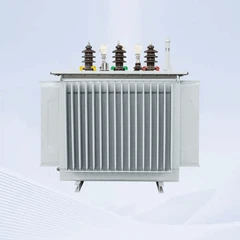
Before we explore the effects of load, let's briefly understand what oil-immersed transformers are. These transformers use oil as a coolant and insulator. The oil helps in dissipating heat generated during the operation of the transformer, ensuring its stable performance. They are widely used in power distribution networks due to their high efficiency and reliability.
Impact of Load on Temperature Rise
One of the most significant ways load affects the performance of an oil-immersed transformer is through temperature rise. As the load on the transformer increases, the current flowing through its windings also increases. According to Joule's law (P = I²R), the power dissipated as heat in the windings is proportional to the square of the current. So, a small increase in load can lead to a significant increase in heat generation.
Excessive temperature rise can have several detrimental effects on the transformer. It can accelerate the aging of the insulation material, reducing its dielectric strength. Over time, this can lead to insulation breakdown, which is a major cause of transformer failure. Additionally, high temperatures can cause the oil to degrade, forming sludge and gases that can further impair the transformer's performance.
To mitigate the effects of temperature rise, proper cooling systems are essential. Oil-immersed transformers are typically equipped with radiators or cooling fans to dissipate heat. However, as the load approaches or exceeds the transformer's rated capacity, these cooling systems may struggle to keep the temperature within safe limits.
Effect on Efficiency
The load also has a direct impact on the efficiency of an oil-immersed transformer. Efficiency is defined as the ratio of output power to input power. At no-load or very light loads, the transformer still consumes a certain amount of power to maintain the magnetic field in its core. This is known as the no-load loss, which includes core losses such as hysteresis and eddy current losses.
As the load increases, the output power increases while the no-load loss remains relatively constant. So, the efficiency of the transformer initially increases with the load. However, as the load continues to increase, the copper losses (I²R losses in the windings) start to dominate. These losses increase with the square of the load current. At some point, the increase in copper losses outweighs the increase in output power, causing the efficiency to start decreasing.
The maximum efficiency of a transformer typically occurs at a load that is a fraction of its rated capacity, usually around 50% - 60% for most oil-immersed transformers. Understanding this relationship is crucial for optimizing the operation of transformers in power systems. By operating transformers close to their maximum efficiency point, energy losses can be minimized, leading to cost savings and reduced environmental impact.
Impact on Voltage Regulation
Voltage regulation is another important aspect of transformer performance that is affected by the load. Voltage regulation is defined as the change in secondary voltage from no-load to full-load, expressed as a percentage of the no-load voltage.
When a load is connected to the transformer, the current flowing through the windings causes a voltage drop due to the resistance and reactance of the windings. As the load increases, the voltage drop also increases, resulting in a decrease in the secondary voltage. This can be a problem in power distribution systems, as many electrical devices require a stable voltage to operate properly.
Good voltage regulation is essential for maintaining the quality of power supplied to consumers. Transformers with better voltage regulation characteristics can compensate for the voltage drop caused by the load, ensuring that the secondary voltage remains within acceptable limits. This is particularly important in applications where sensitive equipment is used, such as in industrial plants and data centers.
Overloading and Its Consequences
Overloading an oil-immersed transformer occurs when the load exceeds its rated capacity. While transformers are designed to handle short-term overloads to some extent, prolonged overloading can have serious consequences.
As mentioned earlier, overloading leads to excessive temperature rise, which can damage the insulation and reduce the transformer's lifespan. It can also cause mechanical stress on the windings and other components, increasing the risk of physical damage. In extreme cases, overloading can lead to a catastrophic failure of the transformer, resulting in power outages and costly repairs.
It's important to note that overloading can also affect the overall stability of the power system. When a transformer fails due to overloading, it can cause disruptions in the power flow, potentially leading to voltage fluctuations and instability in other parts of the network.
Selecting the Right Transformer for the Load
As a supplier of oil-immersed transformers, I often emphasize the importance of selecting the right transformer for the specific load requirements. This involves accurately estimating the load demand, taking into account factors such as peak loads, load growth, and future expansion plans.
For applications with variable loads, it may be beneficial to choose a transformer with a higher rated capacity to provide some margin for overloads. However, this needs to be balanced against the cost of the transformer, as larger transformers are generally more expensive.
When considering a transformer purchase, you might be interested in some of our high-quality products. We are proud to offer a range of oil-immersed transformers, including the China 5mva Oil Immersed Distribution Transformer Manufacturer, the Fully Sealed Oil-Immersed Distribution Transformer, and the 1250KVA/35KV Oil Immersed Fluid Filled Power Transformer. These transformers are designed to meet various load requirements and offer excellent performance and reliability.
Conclusion
In conclusion, the load has a profound impact on the performance of oil-immersed transformers. From temperature rise and efficiency to voltage regulation and the risk of overloading, every aspect of transformer operation is influenced by the load. As a supplier, I understand the importance of providing customers with the right transformers for their specific load needs and ensuring that they are operated within safe limits.
If you are in the market for an oil-immersed transformer or have any questions about how load affects transformer performance, I encourage you to reach out to us for more information. Our team of experts is ready to assist you in making the right choice for your power distribution needs.
References
- Grover, P. K. (2007). Electric Power Generation, Transmission, and Distribution. Wiley-IEEE Press.
- McPherson, G., & Laramore, R. D. (2008). An Introduction to Electrical Machines and Transformers. Wiley.
- Westinghouse Electric Corporation. (1982). Electrical Transmission and Distribution Reference Book. Westinghouse Electric Corporation.
Send Inquiry