





How does the power factor affect the energy consumption of an Amorphous Metal Transformer?
Jul 04, 2025
Leave a message
As a supplier of Amorphous Metal Transformers, I've witnessed firsthand the pivotal role that power factor plays in the energy consumption of these advanced electrical devices. In this blog, I'll delve into the intricacies of how power factor affects the energy consumption of Amorphous Metal Transformers, providing valuable insights for both industry professionals and consumers.
Understanding Amorphous Metal Transformers
Before we explore the impact of power factor, let's briefly understand what Amorphous Metal Transformers are. These transformers are a revolutionary advancement in electrical technology, utilizing amorphous metal alloys in their cores. Unlike traditional silicon steel cores, amorphous metal cores have extremely low core losses due to their unique atomic structure. This results in significantly higher energy efficiency, making Amorphous Metal Transformers an ideal choice for various applications, from residential areas to industrial complexes.
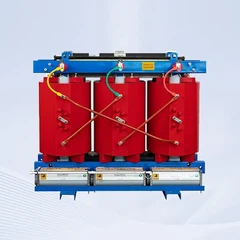
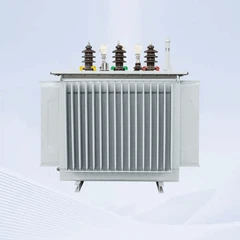
Our company offers a range of high - quality Amorphous Metal Transformers, including the S(B)H15 - M Series Amorphous Alloy Transformers, SC(B)H15 Amorphous Alloy Dry Type Transformer, and Amorphous Alloy Core Transformer. These products are designed to meet the diverse needs of our customers, providing reliable and energy - efficient power distribution solutions.
The Concept of Power Factor
Power factor is a crucial parameter in electrical systems. It is defined as the ratio of real power (P) to apparent power (S) in an AC circuit, expressed as PF = P/S. Real power is the power that actually does useful work, such as heating, lighting, or mechanical work. Apparent power, on the other hand, is the product of the voltage and current in the circuit.
A power factor of 1 (or 100%) indicates that all the electrical power supplied to the circuit is being used for useful work, with no reactive power. Reactive power is the power that oscillates between the source and the load, and it does not perform any useful work but still causes additional current to flow in the circuit. In practical electrical systems, the power factor is often less than 1 due to the presence of inductive or capacitive loads.
How Power Factor Affects Energy Consumption in Amorphous Metal Transformers
Increased Current Flow
When the power factor is low, the apparent power in the circuit is higher than the real power. According to Ohm's law (I = S/V, where I is current, S is apparent power, and V is voltage), a higher apparent power means a higher current flowing through the transformer. In Amorphous Metal Transformers, this increased current leads to higher copper losses. Copper losses are proportional to the square of the current (P_loss = I²R, where R is the resistance of the transformer windings). As the current increases due to a low power factor, the copper losses in the transformer increase significantly, resulting in higher energy consumption.
For example, consider a scenario where a transformer is supplying power to a load with a power factor of 0.8. If the real power required by the load is 100 kW, the apparent power will be S = P/PF = 100/0.8 = 125 kVA. Compared to a situation where the power factor is 1 and the apparent power is equal to the real power (100 kVA), the current flowing through the transformer will be 25% higher in the case of a 0.8 power factor. This increased current will cause higher copper losses in the transformer, leading to additional energy consumption over time.


Reduced Transformer Capacity Utilization
A low power factor also reduces the effective capacity utilization of the Amorphous Metal Transformer. The rated capacity of a transformer is usually specified in kVA (apparent power). When the power factor is low, a larger portion of the transformer's capacity is occupied by reactive power, leaving less capacity available for real power. This means that the transformer may need to be oversized to meet the real power requirements of the load.
For instance, if a load requires 100 kW of real power and the power factor is 0.7, the apparent power is S = 100/0.7 ≈ 143 kVA. A transformer with a rated capacity of 143 kVA or higher will be needed to supply this load. However, if the power factor could be improved to 0.9, the apparent power would be S = 100/0.9 ≈ 111 kVA, and a smaller - capacity transformer could be used. Oversizing the transformer not only increases the initial investment cost but also leads to higher no - load losses and overall energy consumption.
Impact on System Efficiency
In addition to the direct impact on the transformer itself, a low power factor can also affect the efficiency of the entire electrical system. In a power distribution network, low - power - factor loads can cause voltage drops and increased losses in the transmission and distribution lines. These losses further contribute to the overall energy consumption of the system. Amorphous Metal Transformers are often used in distribution networks to improve energy efficiency, but a low power factor can undermine their effectiveness by increasing the losses in the associated electrical infrastructure.
Improving Power Factor in Amorphous Metal Transformer Applications
Power Factor Correction
One of the most effective ways to improve the power factor and reduce energy consumption in Amorphous Metal Transformers is through power factor correction. Power factor correction involves adding capacitive or inductive elements to the electrical circuit to counteract the reactive power. For inductive loads, which are the most common cause of low power factors in electrical systems, capacitors are typically used.
When capacitors are connected in parallel with the load, they generate reactive power that is opposite in phase to the reactive power of the inductive load. This cancels out the reactive power, reducing the apparent power in the circuit and improving the power factor. As the power factor improves, the current flowing through the transformer decreases, leading to lower copper losses and reduced energy consumption.
Load Management
Another approach to improving the power factor is through load management. By carefully selecting and controlling the types of loads connected to the Amorphous Metal Transformer, the overall power factor of the system can be improved. For example, replacing old and inefficient inductive motors with high - efficiency motors that have a better power factor can have a significant impact on the power factor of the system. Additionally, avoiding the simultaneous operation of multiple high - reactive - power loads can help maintain a higher power factor.
Benefits of Maintaining a High Power Factor in Amorphous Metal Transformers
Energy Savings
Improving the power factor in Amorphous Metal Transformers can result in substantial energy savings. By reducing copper losses and improving the overall efficiency of the transformer and the electrical system, less energy is wasted. Over time, these energy savings can translate into significant cost savings for the end - user.
Extended Transformer Lifespan
A high power factor also helps to extend the lifespan of the Amorphous Metal Transformer. Lower copper losses due to a high power factor mean less heat generation in the transformer windings. Excessive heat can degrade the insulation materials in the transformer, leading to premature failure. By reducing the heat generated, a high power factor helps to maintain the integrity of the transformer's insulation and other components, prolonging its service life.
Reduced Environmental Impact
Energy - efficient operation of Amorphous Metal Transformers with a high power factor also has a positive environmental impact. By consuming less energy, the demand for electricity generation from fossil fuels is reduced, resulting in lower greenhouse gas emissions. This aligns with the global efforts towards sustainable energy use and environmental protection.
Conclusion
In conclusion, the power factor has a significant impact on the energy consumption of Amorphous Metal Transformers. A low power factor leads to increased current flow, reduced transformer capacity utilization, and lower system efficiency, all of which contribute to higher energy consumption. By improving the power factor through power factor correction and load management, significant energy savings can be achieved, along with extended transformer lifespan and reduced environmental impact.
As a supplier of Amorphous Metal Transformers, we are committed to providing our customers with high - quality products and solutions to optimize their power systems. If you are interested in learning more about our S(B)H15 - M Series Amorphous Alloy Transformers, SC(B)H15 Amorphous Alloy Dry Type Transformer, or Amorphous Alloy Core Transformer, or if you have any questions about power factor optimization in your electrical systems, please feel free to contact us for further discussion and procurement.
References
- Chapman, S. J. (2012). Electric Machinery Fundamentals. McGraw - Hill Education.
- Grover, F. W. (1962). Inductance Calculations: Working Formulas and Tables. Dover Publications.
- IEEE Standard 112 - 2004. Standard Test Procedures for Polyphase Induction Motors and Generators.
Send Inquiry