


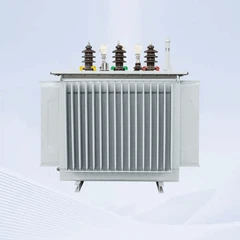




How to calculate the capacity of a unit substation transformer?
May 16, 2025
Leave a message
Calculating the capacity of a unit substation transformer is a crucial process that requires a comprehensive understanding of various factors. As a seasoned supplier of Unit Substation Transformers, I've witnessed firsthand the importance of accurate capacity calculations in ensuring the efficient and reliable operation of electrical systems. In this blog post, I'll share some insights on how to calculate the capacity of a unit substation transformer.

Understanding the Basics of Transformer Capacity
Before delving into the calculation methods, it's essential to understand what transformer capacity means. The capacity of a transformer is typically measured in kilovolt - amperes (kVA). It represents the maximum amount of electrical power that the transformer can handle without overheating or experiencing excessive losses.
The power in an electrical circuit is given by the formula (P = VI\cos\theta), where (P) is the real power in watts, (V) is the voltage in volts, (I) is the current in amperes, and (\cos\theta) is the power factor. In the context of transformers, the apparent power (S = VI) is used, and it is expressed in kVA.
Factors Affecting Transformer Capacity Calculation
Load Requirements
The first and most important factor is the load that the transformer will serve. You need to determine the total power demand of all the electrical equipment connected to the transformer. This includes motors, lighting, heating, and other electrical devices.
To calculate the total load, list all the electrical loads and their power ratings. For example, if you have a motor with a power rating of 100 kW and several lighting fixtures with a combined power rating of 20 kW, the total real power demand is (P_{total}=100 + 20=120) kW.
However, you also need to consider the power factor of the loads. Most industrial loads have a power factor less than 1. If the average power factor of the loads is (\cos\theta = 0.8), then the apparent power (S=\frac{P}{\cos\theta}). In our example, (S=\frac{120}{0.8}=150) kVA.
Future Expansion
It's important to plan for future growth when calculating the transformer capacity. If you anticipate adding more electrical equipment in the future, you should factor in the additional load. A common practice is to add a certain percentage (e.g., 20 - 30%) to the current load calculation to account for future expansion.
Diversity Factor
The diversity factor takes into account the fact that not all electrical loads will operate at their maximum capacity simultaneously. For example, in an office building, not all the computers, printers, and lighting will be on at full power at the same time. The diversity factor is a number less than 1, and it is used to reduce the calculated load.
If the calculated total load is (S_{total}) and the diversity factor is (D), then the adjusted load (S_{adjusted}=S_{total}\times D).
Calculation Methods
Load Summation Method
This is the most straightforward method. As described above, you list all the electrical loads, calculate their individual power requirements, and then sum them up to get the total real power. After that, you divide the total real power by the power factor to obtain the apparent power.
Let's say you have the following loads in a small industrial facility:
- Three motors: Each motor has a power rating of 20 kW and a power factor of 0.8.
- Lighting system: With a power rating of 10 kW and a power factor of 0.9.
The total real power of the motors is (P_{motors}=3\times20 = 60) kW. The apparent power of the motors is (S_{motors}=\frac{60}{0.8}=75) kVA.
The apparent power of the lighting system is (S_{lighting}=\frac{10}{0.9}\approx11.11) kVA.
The total apparent power without considering the diversity factor is (S = S_{motors}+S_{lighting}=75 + 11.11 = 86.11) kVA.
If we assume a diversity factor of 0.8, the adjusted apparent power is (S_{adjusted}=86.11\times0.8 = 68.89) kVA.
Demand Factor Method
The demand factor method is often used when dealing with large electrical systems. The demand factor is the ratio of the maximum demand of a system to the total connected load.
For example, if the total connected load of a building is 500 kVA, but the maximum demand measured over a period of time is 300 kVA, the demand factor (DF=\frac{300}{500}=0.6).
To calculate the transformer capacity using the demand factor method, you multiply the total connected load by the demand factor.
Selecting the Right Transformer Capacity
Once you have calculated the required capacity, you need to select a transformer with a capacity that is equal to or slightly larger than the calculated value. It's important not to choose a transformer that is too large, as this can lead to increased costs and lower efficiency at light loads.
For example, if your calculated capacity is 70 kVA, you might choose a transformer with a capacity of 75 kVA or 100 kVA, depending on the availability and cost - effectiveness.
Importance of Accurate Capacity Calculation
Accurate capacity calculation is vital for several reasons. Firstly, an undersized transformer can lead to overheating, which can damage the transformer and cause power outages. Secondly, it can reduce the lifespan of the transformer and increase maintenance costs.
On the other hand, an oversized transformer is inefficient and can waste energy. It also requires a larger initial investment, which can be a significant drawback for many customers.
Our Offerings
As a supplier of Unit Substation Transformers, we offer a wide range of products to meet different capacity requirements. Our Substation Transformers are designed with the latest technology to ensure high efficiency and reliability.
For larger projects, our 4300KVA Prefabricated Substation is a great option. It is pre - assembled and tested, which reduces installation time and costs.
We also provide Power Substation solutions that are customized to meet the specific needs of our customers. Whether you are a small business or a large industrial facility, we have the expertise and products to help you select the right transformer capacity.

Contact Us for Procurement
If you are in the process of calculating the capacity of a unit substation transformer for your project and need professional advice, or if you are ready to make a purchase, we are here to assist you. Our team of experts can guide you through the entire process, from capacity calculation to installation and maintenance. Contact us today to start the procurement process and ensure the smooth operation of your electrical system.
References
- "Electrical Power Systems Quality" by Roger C. Dugan, Mark F. McGranaghan, and Surya Santoso.
- "Transformer Engineering: Design, Technology, and Diagnostics" by George Karady and Tapas K. Saha.
Send Inquiry