





How to test the frequency response of dry type transformers?
Sep 12, 2025
Leave a message
Hey there! As a supplier of dry type transformers, I've been getting a lot of questions lately about how to test the frequency response of these bad boys. So, I thought I'd sit down and write a little something to share my knowledge on this topic.
First off, why is testing the frequency response of dry type transformers so important? Well, the frequency response gives us a clear picture of how the transformer behaves across different frequencies. This is crucial because transformers are often used in systems where the frequency of the electrical signal can vary. Knowing the frequency response helps us ensure that the transformer can handle these variations effectively, providing stable and reliable power.
Tools and Equipment Needed
Before we dive into the testing process, let's talk about the tools and equipment you'll need. You're going to need a signal generator, which is used to produce electrical signals at different frequencies. A spectrum analyzer is also essential. This device will help you analyze the output of the transformer and measure its response at various frequencies. Additionally, you'll need some basic test leads and connectors to hook everything up properly.
Pre - testing Preparations
Once you've got all your tools ready, it's time to make some preparations. First, make sure the transformer is in a safe and stable environment. Check for any visible damage or signs of wear and tear. It's also a good idea to clean the terminals to ensure good electrical contact.


Next, disconnect the transformer from the power source. Safety first, folks! You don't want to get zapped while you're doing your tests. After that, connect the signal generator to the primary side of the transformer using the test leads. Then, connect the spectrum analyzer to the secondary side. Double - check all the connections to make sure they're secure.
The Testing Process
Now, let's get into the actual testing. Start by setting the signal generator to a low - frequency signal, say 50 Hz. This is a common frequency used in many electrical systems. Send the signal through the primary side of the transformer.
On the spectrum analyzer, you'll start to see the output signal from the secondary side. Take note of the amplitude and phase of the signal at this frequency. This gives you an initial baseline of how the transformer responds at 50 Hz.
Then, gradually increase the frequency of the signal generator. You can do this in small increments, like 10 Hz at a time. At each new frequency, record the amplitude and phase of the output signal on the spectrum analyzer. Keep doing this until you reach a high - frequency limit that's relevant to your application. For most dry type transformers, you might want to test up to a few thousand Hz.
Analyzing the Results
Once you've completed the testing at all the frequencies, it's time to analyze the results. Plot the amplitude and phase data on a graph with frequency on the x - axis. You'll likely see a curve that shows how the transformer's response changes with frequency.
A well - designed dry type transformer should have a relatively flat amplitude response across the frequencies of interest. This means that it can handle different frequencies without significant loss or distortion. The phase response should also be stable, with minimal phase shift.
If you notice any significant dips or peaks in the amplitude response, or large phase shifts, it could indicate a problem with the transformer. Maybe there's a short - circuit in the windings, or some other internal issue. In such cases, you might need to do further troubleshooting or even consider replacing the transformer.
Special Considerations for Different Types of Dry Type Transformers
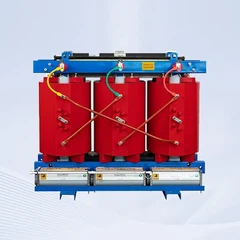
We offer a variety of dry type transformers, each with its own unique characteristics. For example, our SCB Three - dimensional Core Transformer has a three - dimensional core design that provides better performance in terms of energy efficiency and noise reduction. When testing this type of transformer, you might notice some differences in the frequency response compared to a traditional transformer.
Our Double High - Voltage Dry - Type Transformer is designed to handle high - voltage applications. Testing this transformer requires extra caution, as the high voltages involved can be dangerous. Make sure you follow all the safety protocols and use appropriate high - voltage test equipment.
Another popular product is our 160kVA Mv Hv Dry Type Transformer. This transformer is commonly used in medium - and high - voltage distribution systems. Its frequency response testing should be done with an eye towards the specific requirements of these systems.
Tips for Accurate Testing
To get the most accurate results from your frequency response testing, here are a few tips. First, make sure the test environment is free from electromagnetic interference. This can distort the signals and give you inaccurate readings. You might want to use shielding or perform the tests in a shielded room if possible.
Second, take multiple readings at each frequency. This helps to reduce the effects of random noise and measurement errors. Calculate the average of these readings for a more reliable result.
Finally, keep detailed records of all your tests. This includes the frequencies tested, the amplitude and phase data, and any observations you made during the testing process. These records can be very useful for future reference and for comparing the performance of different transformers.
Conclusion
Testing the frequency response of dry type transformers is an important part of ensuring their proper operation. By following the steps outlined above, you can get a clear understanding of how your transformer behaves across different frequencies. And if you're in the market for a high - quality dry type transformer, we've got you covered with a range of great products.
If you're interested in learning more about our dry type transformers or have any questions about frequency response testing, don't hesitate to reach out. We're always here to help you make the right choice for your electrical needs. Whether you're a small business owner or part of a large industrial operation, we can provide the perfect transformer solution for you. Let's start a conversation and see how we can work together to meet your power requirements.
References
- Electrical Engineering Handbook, Third Edition.
- Transformer Testing and Maintenance Guide, Published by a leading electrical industry association.
Send Inquiry