





What are the cooling methods for pole mounted transformers?
Jun 04, 2025
Leave a message
As a seasoned supplier of pole mounted transformers, I've witnessed firsthand the critical role these transformers play in electrical distribution systems. One of the most important aspects of ensuring their efficient and reliable operation is proper cooling. In this blog, I'll explore the various cooling methods for pole mounted transformers, providing insights into how each method works and its advantages.
Importance of Cooling in Pole Mounted Transformers
Pole mounted transformers are constantly in operation, converting voltage levels to meet the needs of different electrical loads. During this process, they generate heat due to the resistance in the windings and the core losses. If this heat is not dissipated effectively, it can lead to a rise in temperature, which can cause several problems.
Excessive heat can degrade the insulation materials used in the transformer, reducing its lifespan and increasing the risk of electrical breakdown. It can also cause the transformer to operate less efficiently, leading to higher energy losses and increased costs. Therefore, choosing the right cooling method is essential for maintaining the performance and longevity of pole mounted transformers.
Natural Air Cooling (AN)
Natural air cooling, also known as AN cooling, is one of the simplest and most common cooling methods for pole mounted transformers. In this method, the heat generated by the transformer is dissipated into the surrounding air through natural convection.

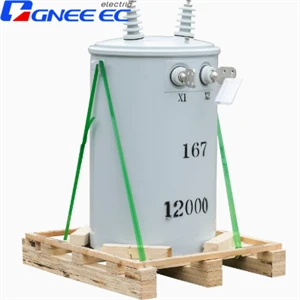
The transformer is designed with fins or radiators on its outer surface to increase the surface area available for heat transfer. As the hot air around the transformer rises, cooler air from the surroundings moves in to replace it, creating a natural airflow that helps to carry away the heat.
One of the main advantages of natural air cooling is its simplicity. It requires no additional equipment or power source, which makes it a cost - effective solution. It is also reliable, as there are no moving parts that can fail. However, the cooling capacity of natural air cooling is limited, and it may not be suitable for large - capacity transformers or transformers operating in high - temperature environments.
Forced Air Cooling (AF)
Forced air cooling, or AF cooling, is an enhanced version of natural air cooling. In this method, fans are used to increase the airflow around the transformer, thereby improving the heat transfer rate.
The fans are typically mounted on the sides or top of the transformer and are powered by an external power source. When the fans are turned on, they blow air over the fins or radiators of the transformer, increasing the rate at which heat is dissipated.
Forced air cooling offers a higher cooling capacity compared to natural air cooling. It can effectively cool larger transformers or transformers operating under heavy loads. However, it requires additional power to run the fans, which increases the operating costs. Also, the fans are mechanical components that can fail over time, requiring regular maintenance.
Oil Immersed Cooling
Oil immersed cooling is another widely used cooling method for pole mounted transformers. In this method, the transformer's core and windings are immersed in a special insulating oil, which serves both as an insulator and a coolant.
The oil absorbs the heat generated by the core and windings and transfers it to the transformer tank. The tank is usually designed with fins or radiators on its outer surface to enhance heat dissipation to the surrounding air.
There are two main types of oil immersed cooling:
Oil Natural Air Natural (ONAN)
In ONAN cooling, the oil circulates naturally within the transformer due to the difference in density between the hot and cold oil. As the oil near the core and windings gets heated, it rises to the top of the tank, while the cooler oil at the bottom moves in to replace it. The heat is then transferred from the tank to the surrounding air through natural convection.
ONAN cooling is a reliable and cost - effective method, suitable for medium - sized transformers. It has no moving parts, which reduces the maintenance requirements. However, like natural air cooling, its cooling capacity is limited.
Oil Natural Air Forced (ONAF)
ONAF cooling is an improvement over ONAN cooling. In addition to the natural oil circulation, fans are used to blow air over the transformer tank to increase the heat transfer rate.
The fans enhance the cooling capacity of the transformer, allowing it to handle larger loads. However, similar to forced air cooling, it requires additional power to run the fans and the fans need regular maintenance.
Comparison of Cooling Methods
Each cooling method has its own advantages and disadvantages, and the choice of cooling method depends on several factors, such as the transformer's capacity, the operating environment, and the budget.
Natural air cooling is the simplest and most cost - effective option for small - capacity transformers operating in normal temperature environments. Forced air cooling can provide higher cooling capacity for larger transformers or those under heavy loads, but it comes with higher operating costs and maintenance requirements.
Oil immersed cooling, whether ONAN or ONAF, is suitable for medium - to large - capacity transformers. ONAN is a reliable and low - maintenance option, while ONAF offers increased cooling capacity at the cost of additional power consumption and maintenance.
Choosing the Right Cooling Method for Your Needs
When selecting a pole mounted transformer, it's crucial to consider the cooling method carefully. If you're looking for a 3 Phase Pole Mounted Transformer, you need to assess the power requirements and the operating conditions. For smaller loads, a 50 KVA Single - Phase Pole - Mounted Transformer or a 50 KVA Pole Mounted Transformer with natural air cooling may be sufficient. However, if the transformer will be operating in a hot climate or under heavy loads, forced air cooling or oil immersed cooling may be a better choice.
As a supplier, I can offer expert advice on choosing the right transformer and cooling method for your specific application. Our team of experienced engineers can help you evaluate your requirements, taking into account factors such as load profile, environmental conditions, and budget.
Conclusion
Proper cooling is essential for the efficient and reliable operation of pole mounted transformers. Whether you choose natural air cooling, forced air cooling, or oil immersed cooling, each method has its own unique characteristics and benefits. By understanding the different cooling methods and their applications, you can make an informed decision when purchasing a pole mounted transformer.
If you're in the market for a pole mounted transformer and need assistance with choosing the right cooling method, don't hesitate to contact us. Our team is ready to help you find the perfect solution for your electrical distribution needs. Let's work together to ensure your power system operates smoothly and efficiently.
References
- Electric Power Substation Engineering, Third Edition by Turan Gonen
- Power System Analysis and Design, Fifth Edition by J. Duncan Glover, Mulukutla S. Sarma, and Thomas J. Overbye
- Transformer Engineering: Design, Technology, and Diagnostics by G. Sarma
Send Inquiry