


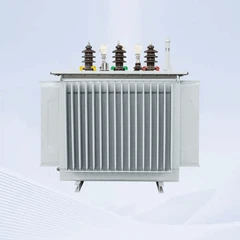
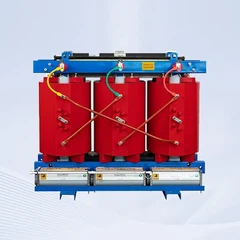





What is the efficiency of a unit substation transformer?
Jun 04, 2025
Leave a message
Yo, what's up everyone! I'm here as a supplier of Unit Substation Transformers, and today we're gonna dig deep into the efficiency of these bad boys.


First off, let's talk about what efficiency even means in the context of a unit substation transformer. Efficiency is basically a measure of how well a transformer can convert electrical power from one voltage level to another without losing too much energy along the way. It's super important 'cause the less energy a transformer loses, the more cost - effective and environmentally friendly it is.
You see, when a transformer is working, there are two main types of losses that can occur: core losses and copper losses. Core losses happen in the magnetic core of the transformer. The core is usually made of a special type of steel that can carry magnetic fields. But when the magnetic field in the core changes (which happens all the time when the transformer is operating), it causes some energy to be lost in the form of heat. This is called hysteresis loss. There's also another type of core loss called eddy - current loss. Eddy currents are small electrical currents that are induced in the core material, and they also result in heat loss.
Copper losses, on the other hand, occur in the windings of the transformer. The windings are made of copper wires, and as electricity flows through these wires, there's a certain amount of resistance. According to Ohm's law, when current passes through a resistor (in this case, the copper wire), some electrical energy is converted into heat. The amount of copper loss depends on the square of the current flowing through the windings and the resistance of the wires.
So, how do we calculate the efficiency of a unit substation transformer? Well, the formula for efficiency (η) is pretty straightforward. It's the ratio of the output power (Pout) to the input power (Pin), and we usually express it as a percentage. Mathematically, it's η = (Pout / Pin) × 100%. Now, since Pin is equal to Pout plus the total losses (Ploss), we can also rewrite the formula as η = [Pout / (Pout + Ploss)] × 100%.
Let's take an example to make this clearer. Suppose we have a unit substation transformer that has an output power of 1400 kW and total losses of 100 kW. Using the formula, the input power is 1400 + 100 = 1500 kW. Then the efficiency is (1400 / 1500) × 100% ≈ 93.33%. This means that about 93.33% of the input power is successfully transferred to the output, and the remaining 6.67% is lost as heat.
Now, why is high efficiency so crucial for unit substation transformers? For one thing, it saves money. When a transformer is more efficient, it consumes less electrical energy to achieve the same output power. This translates into lower electricity bills for the end - users. In large industrial or commercial settings where transformers are used extensively, these savings can really add up over time.
Another reason is environmental impact. In today's world, we're all trying to be more eco - friendly. A high - efficiency transformer reduces the amount of wasted energy, which in turn means less demand on power generation sources. This can lead to a decrease in greenhouse gas emissions, especially if the power generation is from fossil - fuel - based sources.
As a supplier of Unit Substation Transformers, we always strive to offer products with high efficiency. We use advanced materials and manufacturing techniques to minimize both core and copper losses. For example, we use high - grade electrical steel for the core to reduce hysteresis and eddy - current losses. And for the windings, we use high - conductivity copper to lower the resistance and thus reduce copper losses.
If you're in the market for a unit substation transformer, you might be interested in some of our products. Check out our 1500 KVA Substation Transformer. It's designed with high - efficiency in mind and can meet the power needs of many medium - sized industrial and commercial facilities. Also, if you're looking for a complete Electrical Substation, we've got you covered. Our electrical substations are built to be reliable and energy - efficient. And for larger projects, our 4300KVA Prefabricated Substation is a great option. It's pre - assembled and can be quickly installed on - site, saving you time and money.
When it comes to choosing a unit substation transformer, efficiency shouldn't be the only factor you consider. You also need to think about the rated power, voltage levels, and the specific requirements of your application. But efficiency is definitely a key aspect that can have a big impact on your long - term operating costs and environmental footprint.
If you have any questions about our unit substation transformers or want to discuss your specific needs, don't hesitate to reach out. We're here to help you find the perfect solution for your power distribution requirements. Whether you're a small business or a large industrial complex, we've got the expertise and the products to meet your needs.
In conclusion, the efficiency of a unit substation transformer is a critical parameter that affects both the economic and environmental aspects of power distribution. As a supplier, we're committed to providing high - efficiency transformers that can help our customers save money and reduce their environmental impact. So, if you're in the market for a transformer, give us a shout, and let's start a conversation about your power needs.
References
- "Electric Power Systems: A Conceptual Introduction" by Duncan G. Fink
- "Transformer Engineering: Design, Technology, and Diagnostics" by T. A. Lipo
Send Inquiry