

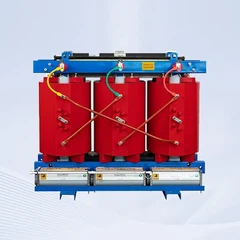
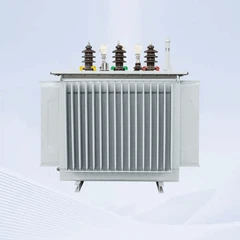




What are the differences between a Pad Mounted Transformer and a Substation Transformer?
Jul 03, 2025
Leave a message
Hey there! As a supplier of pad-mounted transformers, I've often gotten questions about the differences between pad-mounted transformers and substation transformers. Today, I'm gonna break it down for you in a way that's easy to understand.
Physical Structure and Installation
First off, let's talk about how they look and where they're installed. A pad-mounted transformer is, well, mounted on a pad. It's usually a compact unit that sits at ground level. These transformers are designed to be installed outdoors in residential areas, commercial complexes, and industrial parks. They're pretty much like a little power - changing box right on the ground. You can often see them in neighborhoods, tucked away near utility poles or in small lots.
On the other hand, substation transformers are part of a larger substation infrastructure. They're usually much bigger and are housed in large, dedicated buildings or enclosures. Substations are like the central hubs of the power grid. They're often located in more industrial or less populated areas because of their size and the high - voltage equipment they contain.
Size and Capacity
When it comes to size, pad - mounted transformers are relatively small. They're built to serve a specific local area, like a few homes or a small business. Their capacity typically ranges from a few hundred kilovolt - amperes (kVA) to a couple of megavolt - amperes (MVA). For example, we offer a 2 MVA Pad Mounted Transformer that's suitable for medium - sized commercial areas.
Substation transformers, however, are giants in comparison. They need to handle much larger amounts of power to distribute across a wider area. Their capacity can be tens or even hundreds of MVA. They're the workhorses that step up or step down the voltage for entire neighborhoods, industrial zones, or even cities.


Safety and Enclosure
Safety is a big deal when it comes to transformers. Pad - mounted transformers are designed with safety in mind for their environment. They're enclosed in a weather - resistant and tamper - resistant cabinet. The enclosure protects the internal components from the elements and also prevents unauthorized access. This is especially important since they're often located in areas where people and animals might come close.
Substation transformers, due to their high - voltage nature, have even more strict safety measures. The substations are usually surrounded by fences and warning signs. The enclosures are built to handle the high - energy electrical arcs and heat that can be generated. They also have sophisticated grounding and protection systems to prevent electrical faults from causing widespread damage.
Voltage Levels
Pad - mounted transformers typically deal with lower voltage levels. They're used to step down the medium - voltage power from the distribution lines to the low - voltage power that's used in homes and small businesses. For example, they might take a 13.8 kV input and step it down to 120/240 V for residential use.
Substation transformers work with much higher voltage levels. They're responsible for stepping up the voltage from power plants for long - distance transmission (like from a few kilovolts to hundreds of kilovolts) and then stepping it down again for local distribution.
Cooling Systems
The cooling requirements for these two types of transformers are different too. Pad - mounted transformers usually use natural air cooling or oil - filled self - cooling systems. The natural air cooling is simple and effective for the relatively low - power operation of pad - mounted units. Oil - filled self - cooling systems use oil to transfer heat away from the transformer windings and dissipate it into the surrounding air.
Substation transformers, because of their high power and heat generation, often require more advanced cooling systems. They might use forced - air cooling, where fans blow air over the transformer to increase the cooling rate. Some large substation transformers also use water - cooled systems, which are very efficient at removing heat.
Cost and Maintenance
Cost is always a consideration. Pad - mounted transformers are generally more affordable in terms of upfront cost. They're smaller, have simpler designs, and are easier to install. Maintenance is also relatively straightforward. Regular inspections of the enclosure, oil levels (if oil - filled), and electrical connections are usually all that's needed.
Substation transformers, on the other hand, are much more expensive. The high - voltage equipment, large size, and complex safety systems all contribute to the high cost. Maintenance is also more complex and expensive. It often requires specialized technicians and equipment to perform tasks like testing the insulation, checking the protection systems, and replacing components.
Application and Use Cases
Pad - mounted transformers are perfect for local power distribution. They're commonly used in residential areas to supply power to individual homes or small groups of homes. They're also used in commercial areas like shopping centers, office buildings, and small factories. For example, a 2500 KVA Pad Mounted Transformer can be a great fit for a medium - sized commercial complex.
Substation transformers are the backbone of the power grid. They're used at power plants to step up the voltage for long - distance transmission and at distribution substations to step it down for local use. They play a crucial role in ensuring that power is efficiently and safely delivered across large areas.
Three - Phase Considerations
In many cases, both pad - mounted and substation transformers are three - phase units. A 3 Phase Pad Mounted Transformer is commonly used in industrial and commercial applications where three - phase power is required. Three - phase power provides a more balanced and efficient power supply compared to single - phase power.
Substation transformers also often use three - phase systems. They're designed to handle the high - power three - phase loads that are characteristic of large industrial operations and the power grid as a whole.
Flexibility and Expandability
Pad - mounted transformers offer a lot of flexibility. They can be easily installed in different locations as needed. If the power demand in an area increases slightly, a new pad - mounted transformer can be added relatively quickly. They're also modular in design, which means that different components can be replaced or upgraded easily.
Substation transformers are less flexible in terms of installation and expansion. Once a substation is built, it's a major project to expand or modify it. The high - voltage infrastructure, land requirements, and regulatory approvals all make it a more complex process.
Sound Levels
Sound is another factor to consider. Pad - mounted transformers are designed to operate quietly. They use materials and designs that minimize the noise generated during operation. This is important since they're often located in residential or commercial areas where noise can be a nuisance.
Substation transformers can be noisier. The high - voltage equipment and the large amount of power flowing through them can generate more audible noise. Special noise - reducing enclosures and sound barriers are often used to mitigate the noise impact on the surrounding area.
Conclusion
In conclusion, while both pad - mounted transformers and substation transformers are essential for the power grid, they have distinct differences in terms of physical structure, size, capacity, safety, voltage levels, cooling systems, cost, maintenance, application, and more. Understanding these differences can help you choose the right transformer for your specific needs.
If you're in the market for a pad - mounted transformer, whether it's a 2 MVA Pad Mounted Transformer, a 2500 KVA Pad Mounted Transformer, or a 3 Phase Pad Mounted Transformer, we're here to help. Contact us for more information and let's start a conversation about your power needs.
References
- Electric Power Systems by J. C. Das
- Transformer Engineering: Design, Technology, and Diagnostics by G. S. Sidhu
Send Inquiry