





What is the working principle of a large power transformer?
Oct 13, 2025
Leave a message
Hey there! As a supplier of large power transformers, I often get asked about how these beasts actually work. So, I thought I'd take a few minutes to break it down for you in a way that's easy to understand.
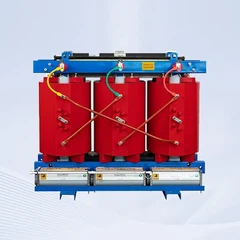
Let's start with the basics. A large power transformer is a crucial piece of equipment in the electrical power grid. It's used to transfer electrical energy between different voltage levels, which is essential for efficient power transmission and distribution.
The Core of the Matter: Magnetic Induction
At the heart of every large power transformer is the principle of magnetic induction. This was discovered by Michael Faraday way back in the 19th century. The basic idea is that when you have a changing magnetic field, it can induce an electric current in a nearby conductor.
In a transformer, we have two coils of wire, called the primary and secondary coils, wound around a common iron core. The iron core is made of laminated sheets of iron, which helps to reduce energy losses due to eddy currents.
When an alternating current (AC) flows through the primary coil, it creates a changing magnetic field in the iron core. This changing magnetic field then passes through the secondary coil, inducing an electric current in it. The ratio of the number of turns in the primary and secondary coils determines the voltage transformation ratio of the transformer.
For example, if the primary coil has 100 turns and the secondary coil has 200 turns, the voltage in the secondary coil will be twice that of the primary coil. This is known as a step-up transformer. Conversely, if the secondary coil has fewer turns than the primary coil, it's a step-down transformer.
The Role of Insulation
Another important aspect of a large power transformer is insulation. Since the transformer operates at high voltages, it's crucial to prevent electrical breakdown and short circuits. That's where insulation comes in.
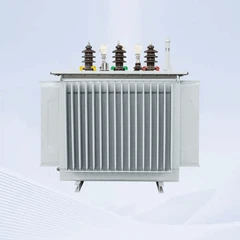
The coils of the transformer are typically insulated with materials like paper, oil, or a combination of both. The oil also serves as a coolant, helping to dissipate the heat generated by the transformer during operation.
In addition to the insulation of the coils, the transformer also has a tank that holds the oil and provides additional protection. The tank is usually made of steel and is designed to be leak-proof.
Cooling Systems
Large power transformers generate a significant amount of heat during operation, so they need an effective cooling system to prevent overheating. There are several types of cooling systems used in transformers, including:
- Oil-immersed cooling: This is the most common type of cooling system for large power transformers. The transformer is filled with oil, which absorbs the heat generated by the coils and transfers it to the tank walls. The tank is then cooled by air or water.
- Forced-air cooling: In this system, fans are used to blow air over the transformer tank to increase the cooling efficiency.
- Water-cooled cooling: This system uses water to cool the transformer oil. The water is circulated through a heat exchanger, which transfers the heat from the oil to the water.
Types of Large Power Transformers
There are several types of large power transformers available, each designed for specific applications. Some of the most common types include:
- Power transformers: These are used to transfer electrical energy between the high-voltage transmission network and the low-voltage distribution network. They are typically rated in megavolt-amperes (MVA) and can have a capacity of several hundred MVA.
- Distribution transformers: These are used to step down the voltage from the distribution network to the level required by the end-users. They are typically rated in kilovolt-amperes (kVA) and are commonly found on utility poles or in substations.
- Specialty transformers: These are designed for specific applications, such as arc furnace transformers, rectifier transformers, and traction transformers.
Our Product Range
As a supplier of large power transformers, we offer a wide range of products to meet the needs of our customers. Some of our popular products include:


- 50kVA Three Phase Oil Type Electrical Power Distribution Transformer: This transformer is designed for use in distribution networks and provides reliable power supply to residential and commercial customers.
- 63kv 66kv 69kv three-phase oil immersed power transformer: This transformer is suitable for high-voltage transmission and distribution applications and offers excellent performance and reliability.
- 2500kVA/35kV Full Sealed Oil Immersed Electric Power Transformer: This transformer is designed for use in industrial and commercial applications and provides efficient power transfer with minimal losses.
Why Choose Us?
There are several reasons why you should choose us as your supplier of large power transformers:
- Quality: We use only the highest quality materials and manufacturing processes to ensure that our transformers meet the highest standards of performance and reliability.
- Experience: With years of experience in the industry, we have the expertise and knowledge to design and manufacture transformers that meet the specific needs of our customers.
- Customer service: We are committed to providing excellent customer service and support. Our team of experts is available to answer your questions and help you choose the right transformer for your application.
- Competitive pricing: We offer competitive pricing on all our products, without compromising on quality.
Contact Us for Purchase and Negotiation
If you're in the market for a large power transformer, we'd love to hear from you. Whether you need a standard transformer or a custom-designed solution, we have the products and expertise to meet your needs.
Feel free to reach out to us to discuss your requirements and get a quote. We're here to help you find the best transformer for your application and ensure a smooth purchasing process.
References
- Grover, P. K. (2014). Electrical Power Systems. Pearson India.
- Stevenson, W. D. (1982). Elements of Power System Analysis. McGraw-Hill.
- Chapman, S. J. (2012). Electric Machinery Fundamentals. McGraw-Hill.
Send Inquiry