


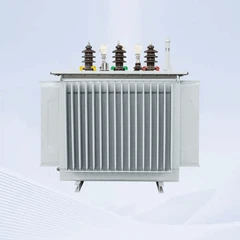
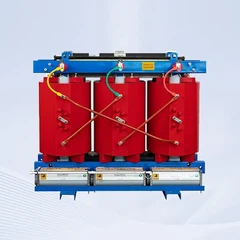





Dry-Type DistributionTransformers
Have questions? GNEE sales representatives are available for live chat now
Send E-mail: sales@gneeelectric.com
Tel: +8615824687445
Henan GNEE Electric Co., Ltd. is one of the most reliable manufacturers and suppliers of dry-type distributiontransformers in China. If you're going to buy customized dry-type distributiontransformers made in China, welcome to get quotation from our factory. Quality products and reasonable price are available.
Transformers are invaluable devices that facilitate the efficient utilization of electricity by converting high voltage power from electric pylons into lower voltage levels suitable for safe use. Without transformers, attempting to directly power small appliances from electric pylons would result in dangerous overloads or even explosions. These devices play a vital role in transmitting electricity from power stations to industrial, commercial, and residential establishments, enabling them to operate safely and effectively.
A dry-type transformer is insulated and cooled by air or an air and gas combination. It is held in a ventilated case, and the air inside the case circulates to cool the transformer's coils.
Dry transformers also feature varnished aluminum or copper windings.
Key Characteristics and Construction Of Dry-Type DistributionTransformer
Instead of oil, dry-type transformers rely on:
1.Air Cooling:
- Natural Air Cooling (AN - Air Natural): The windings are exposed to the ambient air, and heat is dissipated through natural convection and radiation.
- Forced Air Cooling (AF - Air Forced): Fans are used to blow air over the windings and coils, significantly increasing the cooling capacity. This allows for higher power ratings in a smaller footprint or enables the transformer to handle temporary overloads.
2.Solid and Gaseous Insulation:
- Epoxy Resin (Cast Resin or Cast Coil): A common type where the windings are entirely encapsulated in a solid epoxy resin under vacuum. This provides excellent mechanical strength, moisture protection, and high dielectric strength. Cast resin transformers are very robust and resistant to harsh environments.
- VPI (Vacuum Pressure Impregnated): In this type, the windings are impregnated with high-temperature varnish or resin under vacuum and pressure. This process fills all voids, enhancing insulation and preventing moisture ingress. The coils are then often enclosed in a robust, ventilated casing.
- Pre-preg or Resin-Glass Composites: Used for coil insulation and structural support.
- High-Temperature Insulating Materials: Materials like Nomex, Kapton, and various ceramics are used for winding insulation and spacers to withstand operating temperatures.
3.Core: Similar to oil-filled transformers, they use a laminated silicon steel core to provide the magnetic path.
4.Enclosure/Ventilation: The core and coil assembly are typically housed within a protective metal enclosure, often with louvers or vents to allow for airflow for cooling.
Types of Dry-Type Transformers
Cast Resin Dry-Type Transformers (CRT):
Windings (both high voltage and low voltage) are encapsulated completely in epoxy resin, forming a solid block.
Offers superior resistance to moisture, dust, and corrosive atmospheres.
Very low flammability and self-extinguishing.
High mechanical strength and short-circuit withstand capability.
Higher manufacturing cost compared to VPI.
Vacuum Pressure Impregnated (VPI) Dry-Type Transformers:
Windings are made with pre-impregnated insulation materials or are impregnated with varnish/resin under vacuum and pressure after winding.
Offers good moisture resistance and insulation properties.
Generally lighter and less expensive than cast resin types for similar ratings.
Still provides excellent fire safety characteristics.
Often has exposed coils within a ventilated enclosure.
- Insulation Material: Dry-type transformers use solid insulation materials such as epoxy resin or cast resin.
- Cooling Method: Dry-type transformers rely on natural air circulation or forced air cooling to dissipate heat generated during operation.
- Fire Safety: Dry-type transformers are considered more fire-resistant compared to oil-immersed transformers, as they do not contain flammable liquids. This makes them suitable for installations where fire safety is a concern, such as buildings, hospitals, or densely populated areas.
- Maintenance: Dry-type transformers generally require less maintenance compared to oil-immersed transformers. They do not require regular oil sampling, testing, or oil filtration, making them more convenient in terms of upkeep.
- Environment: Dry-type transformers are more environmentally friendly as they do not involve the use of oil, eliminating the risk of oil leakage or contamination. They are often preferred in locations where spill containment may be a concern, such as near water sources or environmentally sensitive areas.
Dry Type Transformers Features & Benefits
- Long service life (minimal yearly maintenance)
- No moving parts
- Zero oil usage (ideal for critical LV MV HV power applications)
- Dry transformers are suitable for outdoor and indoor applications
- Low flammability
- Industry Standards: (UK) EN60076, (US & Canada) UL506 & 1561, or any customer required standard
- Dry transformers from 1kVA through 10,000kVA
- Typical primary voltages: 3.3kV, 6.6kV, 11kV, 11-6.6kV DUAL, 33kV
- Typical secondary voltages: 280V, 315V, 400V, 415V, 433V, 480V, 690V
Dry-Type DistributionTransformers Common Applications
Dry-type transformers are widely used in situations where safety and environmental concerns outweigh the higher initial cost:
- Commercial and Residential Buildings: High-rise buildings, hospitals, schools, shopping malls, data centers.
- Industrial Plants: Chemical plants, food processing facilities, manufacturing plants, where fire risk is high.
- Underground Substations: Where space is limited and fire safety is critical.
- Renewable Energy Sites: Solar and wind farms (often for local step-up).
- Offshore Platforms and Marine Vessels: Where fire safety and weight are crucial.
- Dusty/Polluted Environments: Cast resin types are particularly well-suited.
Hot Tags: dry-type distributiontransformers, China dry-type distributiontransformers manufacturers, suppliers, factory, production line of distribution transformer, packaging of distribution transformer, residential distribution transformer, zigbee enabled distribution transformer, predictive maintenance of distribution transformer, backup power of distribution transformer
You Might Also Like


Send Inquiry