


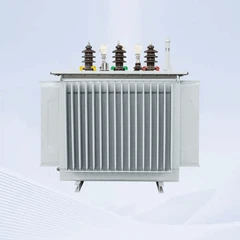






1000kVA oil-immersed transformer: Do temperature rise and cooling methods need to change when switching from mineral oil to non-mineral oil?
As a leading oil-immersed transformer manufacturer with over a decade of expertise in designing and supplying high-performance distribution and power transformers worldwide, GNEE understands that modern energy systems demand flexibility.
One question we frequently receive from engineers and procurement specialists is: when switching a 1000kVA oil-immersed transformer from mineral insulating oil to a non-mineral alternative-such as natural esters (FR3), synthetic esters, or silicone oil-do the temperature rise parameters and cooling methods require adjustment?
The short answer is yes.
This comprehensive guide explains why, how to navigate IEC and GB regulatory requirements, and how GNEE delivers turnkey solutions that guarantee safe, compliant, and optimal transformer performance regardless of the insulating fluid you choose.
Temperature Rise and Cooling in a 1000kVA Oil-Immersed Transformer
What Temperature Rise Means for a 1000kVA Liquid-Filled Unit
Temperature rise refers to the temperature difference between a transformer's internal components (winding, top oil, iron core) and the ambient air when operating at rated load. This metric is critical evaluating thermal stress on insulation materials.
For a 1000kVA oil-immersed transformer, temperature rise directly impacts:
- Insulation lifespan-every 8–10°C above rated rise cuts insulation life in half
- Load capacity-higher temperature rise means lower overload margin
- Safety compliance-all IEC 60076 and GB 1094.2 requirements must be met
Why Switching from Mineral Oil to Non-Mineral Oil Matters
Mineral oil has been the industry standard for over a century due to its excellent dielectric properties and low cost. However, demand for alternatives has surged dramatically. Natural esters (vegetable-based oils) offer complete biodegradability and >300°C fire points; silicone oils excel in extreme-temperature environments. But each fluid has unique physical properties that influence how it dissipates heat in a 1000kVA transformer system.

GNEE factory production line-1000kVA oil-immersed transformer
IEC 60076-2 and GB 1094.2 Standards: Do They Require Different Temperature Rise Limits for Non-Mineral Oil?
Standard Framework for Liquid-Immersed Transformers
Both IEC 60076-2 (the international benchmark) and GB 1094.2-2013 (China's national equivalent) apply to all liquid-immersed transformer, regardless of whether the fluid is mineral oil or a non-mineral alternative.
These documents specify:
- Cooling method classification codes (ONAN, ONAF, KNAN, KNAF, etc.)
- Temperature rise limit values for different transformer components
- Testing procedures for type tests and routine factory validation
What the Standards Say: Same Limits, Different Application
Standard-mandated temperature rise limits for a 1000kVA oil-immersed transformer vary depending on cooling configuration, not fluid type. According to IEC 60076-2, allowable rises are:
| Transformer Component | Temperature Rise Limit (K) | Applicable Cooling |
|---|---|---|
| Top Oil | ≤60 K | All systems |
| Average Winding | ≤65 K | Non-directed oil flow |
| Average Winding | ≤70 K | Directed forced cooling |
| Winding Hot Spot | ≤78 K | All systems |
Data reference: IEC 60076-2 specifications
The key insight is that these limits represent maximum allowable temperature differences above ambient (40°C reference). However, whether a 1000kVA transformer naturally operates within those same margins depends entirely on the fluid's specific thermal characteristics. That is why temperature rise must be re-evaluated during any fluid change.
Mineral Oil vs. Natural Ester (FR3) vs. Silicone Oil
Comparative Fluid Properties Table
| Property | Mineral Oil | Natural Ester (FR3®) | Silicone Oil |
|---|---|---|---|
| Viscosity (40°C, cSt) | ~8–12 | ~30–40 | ~20–50 |
| Thermal Conductivity (W/m·K) | ~0.13 | ~0.14–0.16 | ~0.15 |
| Specific Heat Capacity (kJ/kg·K) | ~1.9 | ~2.0–2.1 | ~1.5 |
| Flash Point (°C) | ~140–160 | 320–330 (K-class) | >300 |
| Fire Point (°C) | ~160–180 | 350–360 | ~370 |
| Pour Point (°C) | -40 to -30 | -10 to -25 | -60 |
| Biodegradability | Low | Biodegradable (>90%) | Limited |
Data references: Natural ester properties from ASTM D6871 standardsFR3 specifications
Why These Differences Matter for Temperature Rise
The primary consequence of switching fluids in a 1000kVA oil-immersed transformer is viscosity and thermal property variation:
- Higher viscosity (natural esters, some silicone oils) creates greater flow resistance through winding ducts, potentially reducing natural convection rates
- Different specific heat capacities affect how much energy each fluid can absorb before temperature rises
- Pour point determines cold-start performance-critical for outdoor installations in northern climates
KNAN vs. ONAN for Non-Mineral Oil
Understanding Cooling Classification Codes
IEC cooling codes use two- or four-letter designations that tell you exactly how a transformer is cooled:
- First letter - coolant inside tank: O = mineral oil, K = non-mineral fluid with ≥300°C fire point
- Second letter - circulation mechanism within tank: N = natural convection, F = forced
- Third letter - external cooling medium: A = air, W = water
- Fourth letter - external circulation: N = natural air cooling, F = forced air (fans)
Thus, a mineral-oil unit with natural convection and natural air cooling carries the code ONAN. The same 1000kVA transformer filled with FR3 natural ester becomes KNAN, reflecting the"K"class (less‑flammable) fluid.
Does Fluid Change Mandate a Different Cooling Configuration?
The physical principle is straightforward: cooling methods may need adjustment to maintain temperature rise compliance when switching from mineral oil to non-mineral oil. Because non-mineral oils generally have higher viscosity and different heat transfer behavior, natural convection may be less efficient.
In such cases, options include:
- Keep KNAN (natural convection) but use enlarged radiators to compensate for reduced circulation
- Upgrade to KNAF-add external fans to increase heat-exchange rate
- Modify tank design to optimize internal oil flow paths
Technical Parameter Snapshot-1000kVA Oil-Immersed Transformer Configuration
| Parameter | Mineral Oil Option (ONAN/ONAF) | Non‑Mineral Oil Option (KNAN/KNAF) |
|---|---|---|
| Insulating Fluid | Mineral Oil (e.g., Shell Diala) | FR3 Natural Ester / Silicone Oil |
| Cooling Method | ONAN (natural) or ONAF (fans) | KNAN (natural) or KNAF (fans) |
| Temperature Rise * | Top Oil ≤60K, Winding ≤65K | Same IEC limits-verified by heat run |
| Primary Voltage | 2.4–34.5 kV | Same |
| Secondary Voltage | 480/277V, 400/230V, 380/220V | Same |
| Frequency | 50/60 Hz | Same |
| Vector Group | Dyn11, Yyn0, Dyn5 | Same |
| Winding Material | Copper or Aluminum | Same |
| BIL | 30–95 kV | Same |
| Weight (Oil) | ~700 kg | ~700–750 kg (fluid-dependent) |
| Total Weight | ~3,750 kg | May vary slightly with tank design |
Data reference: NPC Electric 1000kVA transformer specification
Note: The temperature rise limits are identical per IEC 60076-2, but radiator dimensions and fan configurations may differ between ONAN and KNAN designs to ensure compliance.
Conclusion: Trust GNEE to Optimize Your 1000kVA Oil-Immersed Transformer for Any Insulating Fluid
When switching from mineral oil to non-mineral oil in a 1000kVA oil-immersed transformer, temperature rise parameters and cooling methods absolutely require careful re‑evaluation. International standards (IEC 60076-2, GB 1094.2) set the same maximum temperature rise limits regardless of fluid, but different physical properties-particularly viscosity and thermal conductivity-demand potentially modified cooling configurations, radiator sizing, and validated heat‑run testing.
GNEE stands ready to help you navigate this transition with confidence. Whether you need a new 1000kVA KNAN transformer from the ground up or expert guidance on retrofitting your existing ONAN unit, our engineering team provides end‑to‑end support: thermal simulation, material compatibility analysis, certified factory testing, and global logistics.
Ready to upgrade your 1000kVA transformer to non‑mineral oil? Contact GNEE today for a customized solution-request your quote and technical consultation now!
What is the difference between mineral oil and transformer oil?
Higher flash point and fire point. FR3 fluid has a flash point of 330° C and a fire point of 360° C, while mineral oil has a flash point of 155° C and fire point of 165° C. These higher numbers mean that a transformer has a lower risk of catching fire with FR3 fluid.
What are the two types of transformer oil?
There are two main types of transformer oil used today: Paraffin-based transformer oil and naphtha-based transformer oil. The mineral insulating oil is derived from particular crudes, which include extremely low n-paraffin known as wax.
Why do they put mineral oil in transformers?
Transformer oil's primary functions are to insulate and cool a transformer. It must therefore have high dielectric strength, thermal conductivity, and chemical stability, and must keep these properties when held at high temperatures for extended periods.
What type of oil is used for transformers?
Mineral oil
Mineral oil is the most commonly used type of transformer oil. It is derived from refining crude oil and is widely preferred due to its cost-effectiveness and excellent insulating properties. Mineral oils are further classified into two categories: naphthenic and paraffinic.
How many amps is a 1000 kVA transformer?
A 1000 kVA transformer is generally utilized in the process of transforming a high-voltage power supply line into a low-voltage power supply line. It uses kilovolt-amperes as the units of measurement for the transformer's apparent power (kVA). It is capable of withstanding a voltage of 120 and an amperage of 8333.
What is the full load current of a 1000 kVA transformer?
~1392A
For a 1000 kVA transformer at 415V, the full load current is ~1392A, with 75% load at 1044A. Use the rule of thumb: I ≈ kVA × 1.4 for quick estimates (1400A). Accurate calculations ensure efficient power management.
Send Inquiry